
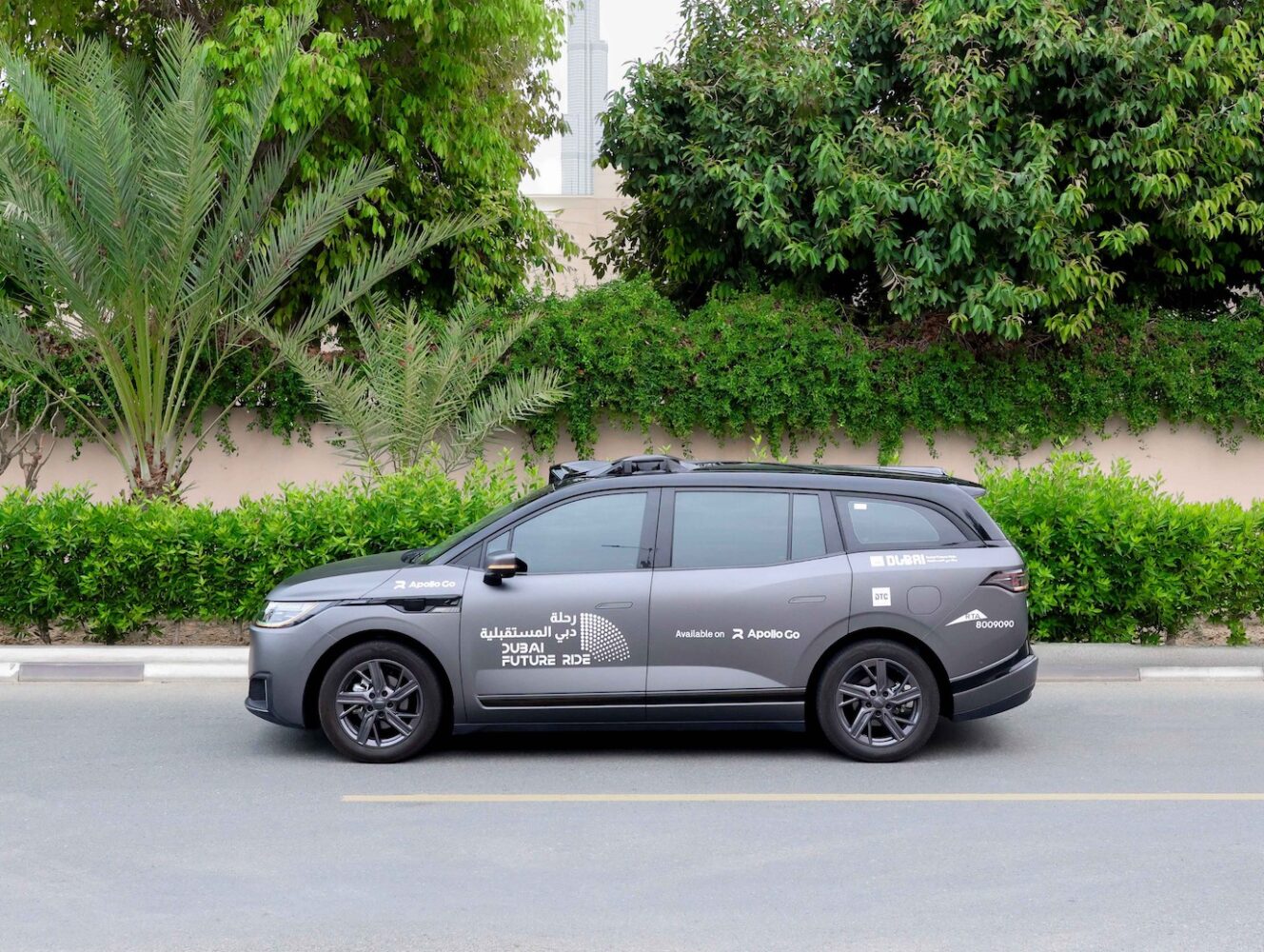
Dubai has begun rolling out fully driverless commercial taxi services through a partnership between Dubai Taxi Company (DTC) and Baidu’s Apollo Go platform, marking a notable step in the city’s broader push toward autonomous transport.
The service allows passengers to book rides using the Apollo Go app, which is now available internationally for the first time. This initial deployment introduces autonomous vehicles into Dubai’s public transport network, with plans to gradually expand availability through additional ride-hailing platforms as the system scales.
The rollout will start with a relatively small fleet of 50 vehicles in its first year. Over time, that number is expected to grow to more than 1,000 units, reflecting a phased approach rather than a rapid, large-scale deployment. This measured expansion aligns with Dubai’s stated goal of converting 25 percent of all transportation trips into autonomous journeys by 2030, part of its long-term mobility strategy.
The partnership combines Baidu’s autonomous driving system with DTC’s existing infrastructure and operational experience in managing large fleets. Dubai Taxi Company currently operates thousands of taxis and limousines across the city, and its role in this initiative centers on integrating driverless vehicles into real-world transport conditions while maintaining service reliability and safety standards.
This commercial launch follows earlier regulatory progress. In January 2026, Baidu received Dubai’s first permit allowing fully autonomous vehicles to operate without a safety driver, a key requirement for scaling driverless services. Around the same time, the company established an operations hub in Dubai to support regional expansion and manage fleet operations.
Globally, Apollo Go has already logged millions of rides, with a significant portion conducted without human drivers. The company reports extensive testing mileage and a strong safety record, though independent validation and long-term performance in new markets like Dubai will likely shape broader adoption.
While the introduction of driverless taxis reflects ongoing investment in smart mobility, several practical considerations remain. These include how autonomous vehicles handle complex urban environments, how regulations evolve alongside deployment, and how public acceptance develops over time. For now, Dubai’s approach appears focused on gradual integration rather than immediate transformation.