

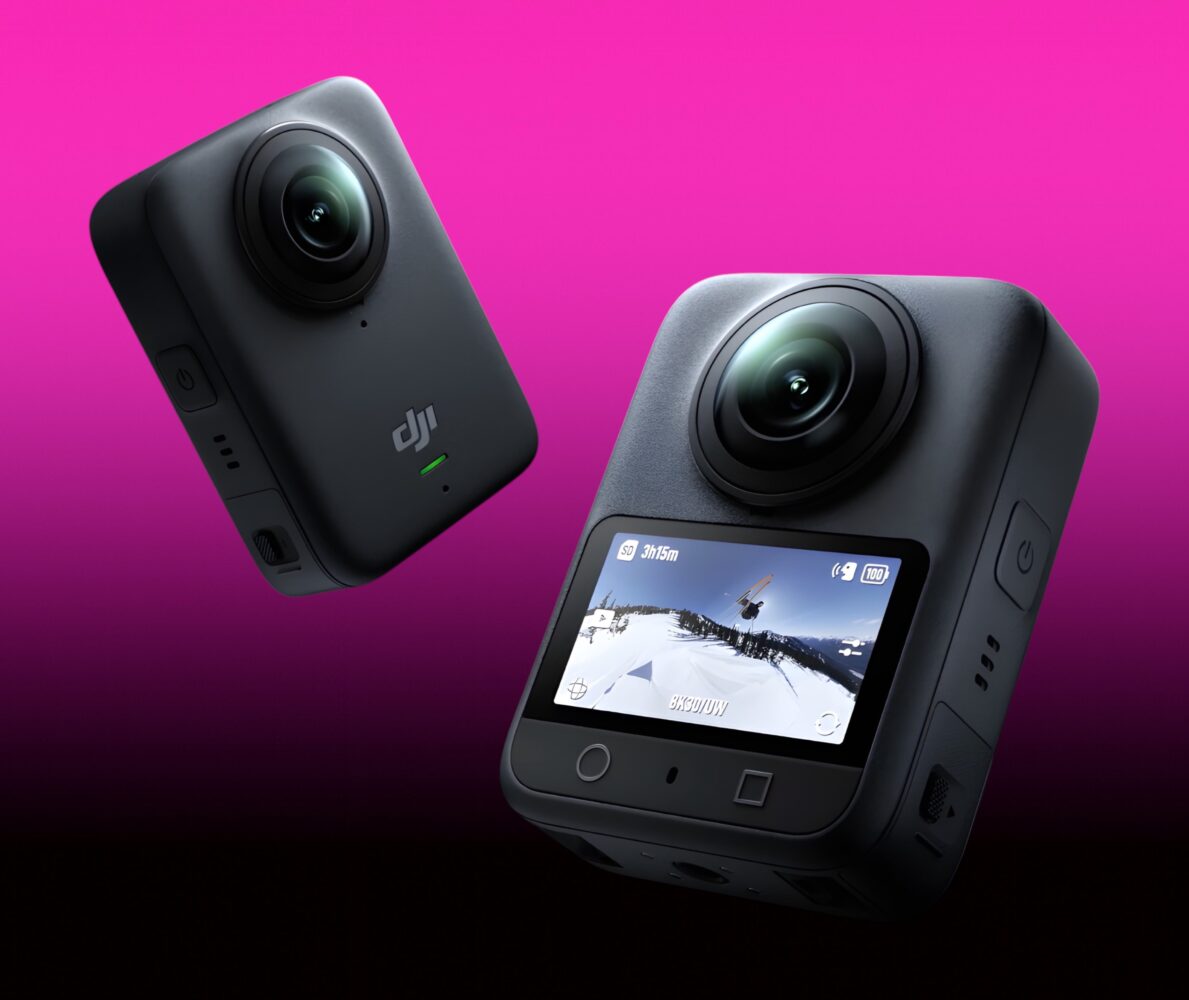
DJI has introduced its first 360-degree action camera, the Osmo 360, expanding its Osmo lineup into immersive video capture. The device is positioned as a high-end option for creators looking to record in ultra-high resolution, with the ability to shoot 8K panoramic footage at 30 frames per second for up to 100 minutes, or at 50fps using upscaling.
The Osmo 360 features two 1/1.1-inch CMOS sensors designed specifically for 360-degree shooting. Combined, they deliver the light intake of a single 1-inch sensor, offering a claimed dynamic range of 13.5 stops and an f/1.9 aperture. ISO sensitivity ranges from 100 to 51,200, giving it flexibility in various lighting conditions. For faster frame rates, the camera supports up to 100fps in 4K mode. Single-lens shooting is also possible, with resolutions reaching up to 5K at 60fps or 4K at 120fps for ultra-wide footage.
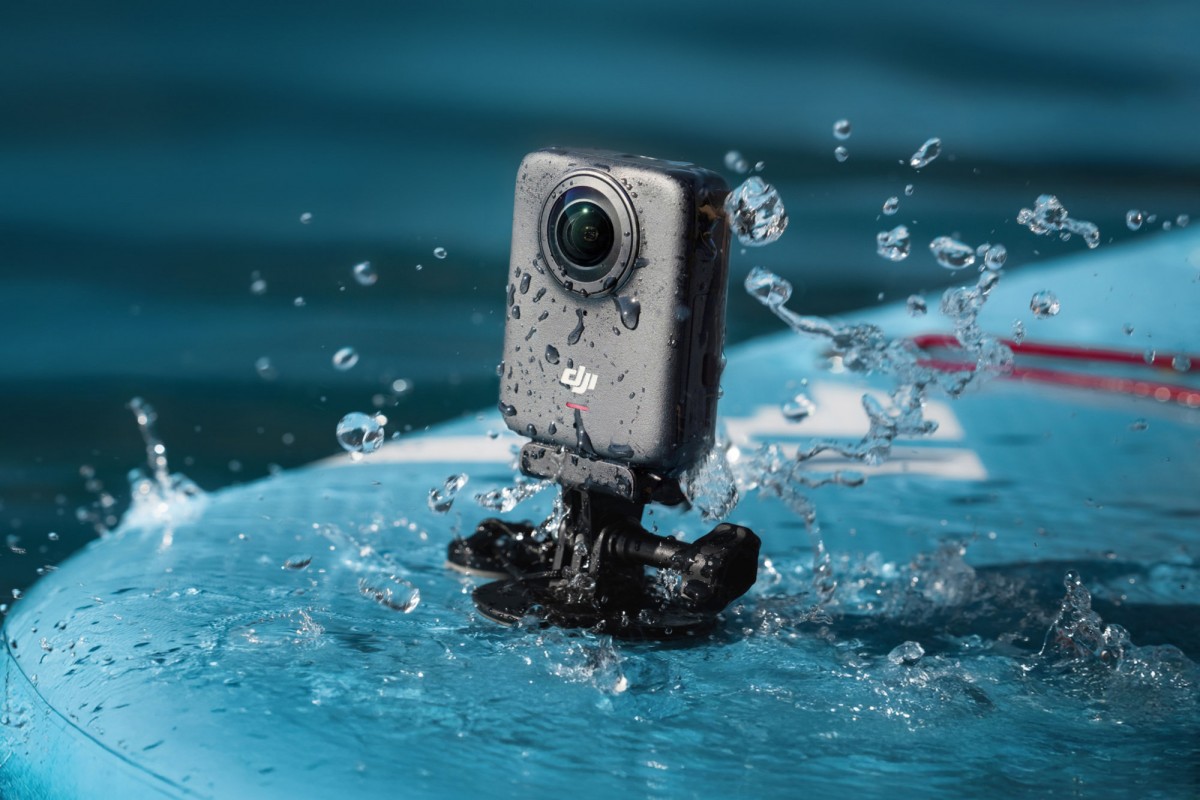
In addition to video, the Osmo 360 supports high-resolution stills, producing 30.72MP images from a single lens or 120MP panoramic shots from both lenses. Built-in stabilization is handled by DJI’s HorizonSteady and RockSteady 3.0 systems, which aim to keep footage level and smooth during movement.
Battery life is another area of focus. DJI claims up to 190 minutes of recording in 6K 24fps panoramic mode and 1.5 hours of use at temperatures as low as -20°C. The camera comes with 128GB of internal storage (105GB usable) and supports microSD expansion up to 1TB. Connectivity options include Wi-Fi 6 and Bluetooth, with gesture and voice control for hands-free operation.
The Osmo 360 is available in two packages: the Standard Combo (€480 / £410) with the camera, protective pouch, and lens protector, and the Adventure Combo (€630 / £540) that adds a 1.2m Invisible Selfie Stick, two Extreme Battery Plus units, and a multifunctional battery case.
With its 8K capture, long recording times, and cold-weather durability, the Osmo 360 is aimed at action sports enthusiasts, travel vloggers, and content creators who want an all-in-one 360-degree video solution without carrying multiple cameras. Whether it will stand out in a market already served by GoPro Max and Insta360 will depend on how DJI’s image quality and workflow integration hold up in real-world use.