
TL;DR: “The Grand Design” turns Daredevil: Born Again into the Wilson Fisk show with bold flashbacks, killer performances (especially D’Onofrio), and a smart reframe of Vanessa that makes everything click. It’s not perfect, but it’s compelling as hell and proves sometimes the best problems are the ones you lean into hardest.
Daredevil: Born Again
Man, I sat down for Daredevil: Born Again Season 2 Episode 5 expecting another pulse-pounding night in Hell’s Kitchen, but what I got instead was a full-on Wilson Fisk origin remix that hit me like a billy club to the chest.
This hour, titled “The Grand Design,” doesn’t just flirt with the idea that the show has a Kingpin problem. It leans all the way in, grabs the steering wheel, and announces loud and clear: Daredevil: Born Again is the Wilson Fisk show now. And honestly? I’m not even mad about it.
From the cold open that picks up seconds after Vanessa’s shocking death in the previous episode, the episode pivots hard into memory lane. We’re thrown into flashbacks that rewire not only this season but large chunks of the original Netflix run. It’s bold. It’s risky. And thanks to Vincent D’Onofrio doing what he does best, it mostly works like gangbusters.
Let’s talk about that opening scene first, because holy hell it sets the tone.
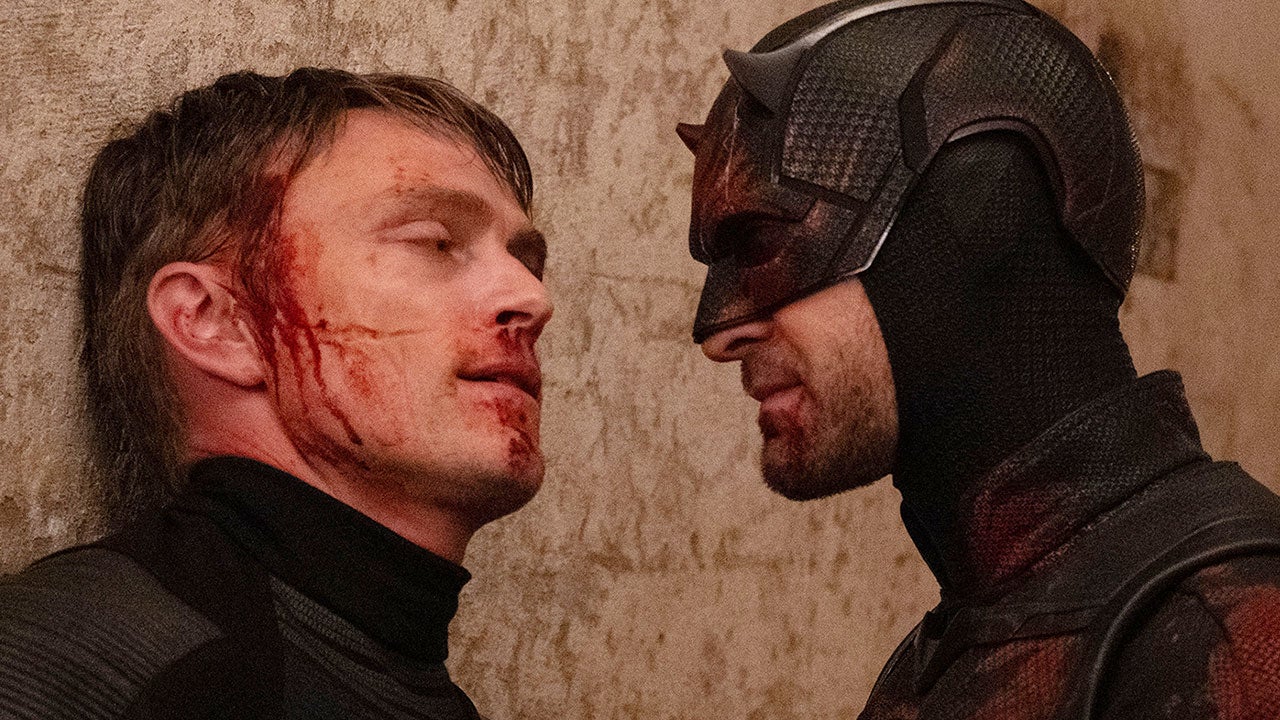
Fisk stands there in the aftermath, raw and exposed in a way we rarely see from the big man. A well-meaning surgeon steps in for what he thinks is a comforting hug. Big mistake. D’Onofrio’s face shifts from pure, childlike grief to volcanic rage in the span of a heartbeat. Those wide, watery eyes that make you feel sorry for the guy suddenly go dead, and then boom — the doctor gets crushed like a soda can. It’s visceral, it’s uncomfortable, and it reminds you exactly why Kingpin has always been Marvel’s most terrifying street-level threat. Not because he’s invincible, but because his pain makes him dangerous.
This single moment reframes everything that follows. The episode dives deep into Fisk’s past, specifically the early days when he was still more urban legend than public mayor. We see the Kingpin before the white suit became his daily uniform, before the political machine, before he tried (and mostly failed) to play nice with polite society.
And that’s where the real magic — and the real friction — of “The Grand Design” lives.
The flashbacks pull us back to a time when Matt Murdock and Foggy Nelson were still wide-eyed young lawyers hustling to make a name for themselves. Bringing back Elden Henson as Foggy is pure fan service done right. He and Charlie Cox slip back into that old chemistry like they never left, even if the de-aging makeup team clearly lost the fight against time. Watching those two jittery 20-somethings agree to defend Foggy’s old childhood bully feels like stepping into a warm, familiar comic book panel.
But the real star of these sequences isn’t Matt or Foggy. It’s the slow, creeping introduction of the man who would become the Kingpin. We get Toby Leonard Moore sliding back in as James Wesley like he never missed a beat. That quiet, loyal right-hand energy still gives me chills. The way the underworld whispers about “the Kingpin” without ever saying the name out loud? Chef’s kiss to the original Netflix vibe.
What’s fascinating is how “The Grand Design” uses these flashbacks to basically hold up a mirror to both versions of the Daredevil story. The Netflix series had its slow-burn episodes that sometimes spun wheels in the mud. Born Again has its own pacing quirks, especially when it tries to turn Fisk into a believable mayor. D’Onofrio plays him like a wounded baby elephant stuffed into a giant’s body — emotionally fragile, physically unstoppable, and somehow never quite convincing as a guy who could win an election in the MCU’s version of New York.
Yet the episode knows exactly what it’s doing by inviting that comparison. It’s almost meta in the best way. Instead of pretending the Netflix show didn’t exist, it reaches back, grabs threads, and starts weaving them into something new.
And nowhere is that reweaving more effective than with Vanessa.
Ayelet Zurer has always been great in the role, but Born Again has been slowly turning her into something closer to a Lady Macbeth figure — ambitious, calculating, and more than happy to nudge her husband’s darker impulses toward her own social climbing goals. The flashbacks in Episode 5 finally reconcile the two portrayals in a way that feels earned.
We see young Vanessa at the art gallery, pushing her boss to display that infamous all-white painting “Rabbit in a Snowstorm” even when he resists. The conversation reveals everything. She wasn’t some innocent who stumbled into Fisk’s world and got corrupted by his vulnerability. She saw power in him — raw, unformed, almost blank — and decided she could shape it. She wanted the monster because she knew she could point it in useful directions.
That revelation lands like a gut punch and makes every previous scene with the couple click into sharper focus. Suddenly Vanessa isn’t just the wife who humanized Kingpin. She’s the architect who helped build the version of him we fear most. It’s tragic, it’s twisted, and it makes her death hit even harder.
The writing by Jesse Wigutow and direction from Angela Barnes keep the episode from feeling like pure filler. The flashbacks are woven with purpose. Every trip to the past informs the present-day grief and rage boiling inside Fisk. You feel the weight of every decision, every suppressed memory, every moment where Wilson Fisk could have chosen a different path but didn’t.
There’s also something quietly brilliant in how the episode uses the idea of “grand design.” Fisk has always seen himself as a man of vision — someone building something bigger than the streets, bigger than crime, bigger even than politics. But Vanessa’s death rips that illusion apart. The grand design was never just his. It was theirs. And now he’s left holding the pieces with nothing but blood on his hands and that terrifying emotional openness that D’Onofrio weaponizes so effectively.
I keep coming back to the acting because it really is the glue holding this ambitious episode together. Charlie Cox still brings that perfect mix of righteous anger and Catholic guilt to Matt Murdock, even when he’s playing the younger, less broken version. But D’Onofrio? He’s operating on another level here. The man makes you feel sympathy for one of Marvel’s most brutal villains without ever softening the edges. That’s not easy. That’s special.
Does the episode completely solve Daredevil’s long-standing Kingpin problem? Nah. If anything, it doubles down on it. The show still struggles to give Matt’s other rogues the same gravitational pull that Fisk commands whenever he’s on screen. Bullseye is fun when he shows up, but he feels like a chaotic side dish next to the main course that is Wilson Fisk’s psyche.
Yet after watching “The Grand Design,” I’m starting to think maybe that’s not entirely a bug. Maybe it’s the feature. The original Netflix series couldn’t escape Fisk’s shadow either, and it still delivered some of the best superhero television ever made. Born Again seems to have accepted that reality and decided to lean into the Kingpin story with both fists.
And you know what? I’m here for it.
The episode doesn’t shy away from the messier implications of making Fisk the emotional center. His grief feels real and ugly and human in ways that most MCU villains never get to explore. When he crushes that surgeon, it’s not just rage — it’s the sound of a man realizing that no amount of power will ever make the world treat him as anything other than the monster he became. That level of psychological depth is rare in this sandbox, and D’Onofrio milks every drop of it.
The flashbacks also give the supporting cast room to breathe. Foggy’s return feels like a warm hug for longtime fans, even if it comes with the bittersweet knowledge that this version of him is long gone in the current timeline. The way he and Matt spark off each other in those early-lawyer days reminds you why their friendship was always the heart of the Netflix show. It makes you miss what could have been.
Visually, the episode keeps the grounded, gritty aesthetic that made the original series stand out from the brighter MCU fare. The boxing match aftermath, the dimly lit flashbacks, the way shadows play across Fisk’s face during his most vulnerable moments — it all feels deliberate and cinematic. Director Angela Barnes knows when to let the performances carry the scene and when to crank up the tension with tight framing and smart editing.
Of course, not everything lands perfectly. Some of the younger versions of characters stretch credulity, and the political angle of Mayor Fisk still feels like it’s trying to fit a square peg into a round hole. But those are minor quibbles in an episode that otherwise feels like a love letter to what made Daredevil special in the first place: messy human beings with complicated moral codes trying (and often failing) to impose order on chaos.
By the time the credits roll, you’re left with a strange mix of emotions. Sadness for what Fisk has lost. Excitement for where his grief might take him next. And a renewed appreciation for how Vincent D’Onofrio turned a comic book crime lord into one of television’s most compelling characters, full stop.
This is the kind of episode that rewards rewatching. The callbacks, the subtle reframing, the way it ties threads from years ago into the current story — it’s dense in the best possible way. It doesn’t move the main plot forward at lightspeed, but it deepens the emotional stakes in a manner that will pay dividends down the line.
And that, fellow geeks, is what great serialized storytelling is supposed to do.
Daredevil: Born Again Season 2 Episode 5 doesn’t pretend the Kingpin problem doesn’t exist. It stares it dead in the eye, gives it a hug, then snaps its neck in broad daylight while crying. And somehow, that contradiction makes the whole thing even more fascinating.