Anthropic has begun beta testing a new Apple Health integration that allows its AI assistant, Claude, to access and interpret user health data. The feature marks a practical step toward using conversational AI as a tool for understanding the growing volume of information generated by fitness trackers and health platforms, rather than simply collecting it.
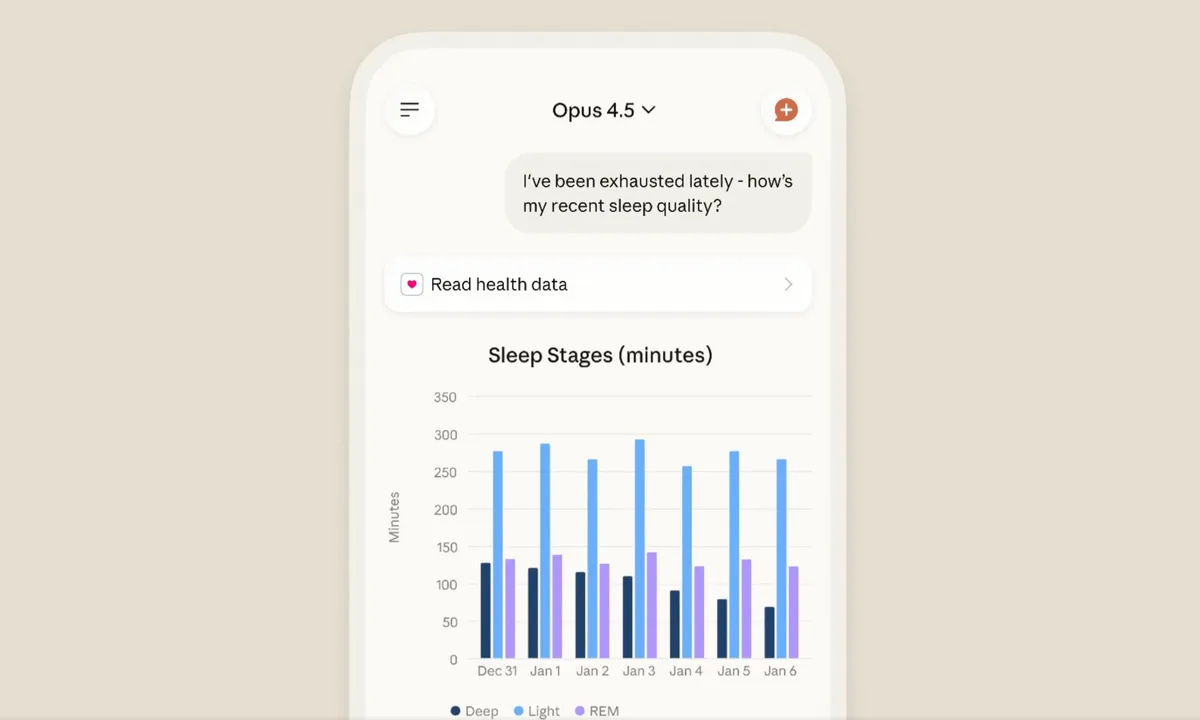
The integration is currently available in beta to Claude Pro and Max subscribers in the United States and can be enabled through both iOS and Android apps. After explicit user consent, Claude can read selected data stored in Apple Health, including activity levels, sleep patterns, and movement trends often gathered through devices like the Apple Watch. Anthropic emphasizes that participation is optional and granular, allowing users to decide exactly which categories of data are shared and to revoke access at any time.
Rather than presenting health metrics as static charts or raw numbers, the system is designed to translate that data into conversational insights. Users can ask Claude to summarize long-term trends, explain test results in simpler terms, or highlight changes in activity or sleep habits over time. The assistant can also help users organize questions ahead of medical appointments, potentially making discussions with healthcare professionals more focused and informed. While Claude does not provide medical diagnoses, the intent is to support understanding and preparation rather than replace clinical advice.
Anthropic has been careful to frame the feature around privacy and control. According to the company, health data accessed through Apple Health is not used to train Claude’s underlying models and remains isolated to the user’s account. This positioning reflects broader concerns around sensitive personal data as AI systems become more deeply embedded in daily life.
Apple Health is only one part of a wider health-related rollout. Anthropic is also testing integrations with Health Connect on Android, as well as platforms like HealthEx and Function, signaling an effort to support users across different ecosystems rather than limiting functionality to Apple devices.
The timing of the beta release is notable. It follows closely after OpenAI introduced ChatGPT Health, which similarly connects to Apple Health to help users review weekly fitness and wellness data. Together, these launches suggest a broader shift in how AI assistants are positioned, moving beyond productivity and writing tasks toward more personal, data-driven use cases.
As wearables and health apps continue to generate detailed records of daily life, tools like Claude’s Apple Health integration point to a future where understanding that data may matter as much as collecting it