

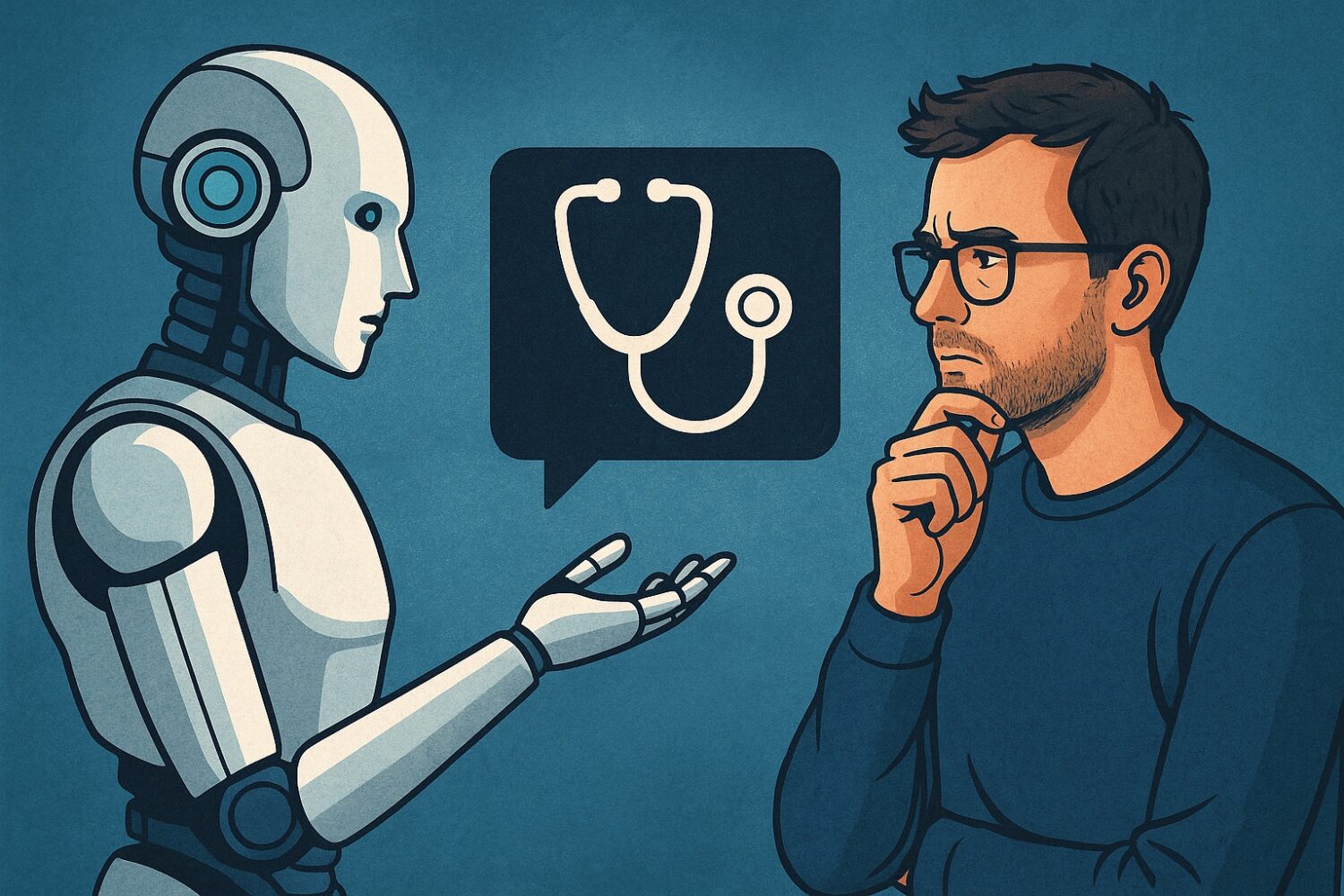
Okay, so apparently ChatGPT has been hitting the medical journals and is now auditioning for a residency. Someone digging around in its web app code (props to Tibor Blaho from AIPRM for catching this) found something called “Clinician Mode.” Sounds fancy, right? Like it just swapped its chatbot hoodie for a lab coat.
There’s no official announcement yet from OpenAI, but if you believe the code crumbs — and a few smart guesses from developers like Justin Angel — this new mode might be designed to dish out health advice using only verified medical research. So instead of ChatGPT drawing its wisdom from the wilds of the internet (you know, where essential oils cure everything), it could be restricted to peer-reviewed studies, trusted guidelines, and actual science.
On paper, that sounds great. In practice? I’m still skeptical.
See, I’m old enough to remember when we were all Googling our symptoms and diagnosing ourselves with 47 rare diseases before lunch. Then we learned that WebMD is basically a horror generator with a search bar. Now, ChatGPT — the same AI that hallucinated so many times, wants to step in as my personal digital doctor? Yeah… I think I’ll pass.
Don’t get me wrong — I’m all for AI that helps doctors. I actually love the idea of tech assisting real professionals, not replacing them. Projects like Stanford’s ChatEHR — which lets doctors talk to patient records naturally — make sense. They make medical work easier, not sketchier. OpenAI even tested something similar earlier this year with Penda Health, where an AI assistant supposedly cut diagnostic errors by 16%. That’s impressive.
But what worries me is how quickly people blur the line between AI that helps doctors and AI that replaces doctors. You just know someone, somewhere, will start using Clinician Mode as their personal ER. “Oh, you’re coughing blood? Just ask ChatGPT, it’s got ‘mode’ in the name now!”
And look, we’ve seen how this goes. A few weeks ago, a researcher detailed a real case where someone followed ChatGPT’s medical advice and spiraled into a psychotic episode. That’s not just concerning — that’s nightmare fuel. We can’t just slap a shiny new label on a chatbot and pretend it’s suddenly safe to take prescriptions from it.
Plus, let’s not ignore the obvious: ChatGPT still hallucinates. It still makes things up when it’s unsure. That’s fine when it’s writing fanfiction or helping me draft a snarky email, but not when it’s potentially giving someone life-or-death advice. A Scientific Reports study recently warned that AI can spew out technically correct-sounding nonsense, packed with medical jargon that even professionals find confusing.
And as someone who’s been covering tech long enough to see every “AI revolution” come and go, I’ve learned to treat these breakthroughs with a mix of curiosity and suspicion. Clinician Mode might be a step toward safer, smarter AI — or it could just be another fancy coat of paint on the same unpredictable machine.
I mean, sure, maybe one day AI really will revolutionize healthcare — diagnose illnesses faster, spot diseases earlier, even personalize treatment. That’s the dream. But that future depends on careful testing, tight regulation, and humans staying firmly in charge. Not some chatbot that just graduated from YouTube University and thinks “fever” means “turn up the GPU.”
So yeah, if Clinician Mode ever rolls out, I’ll probably try it — because I’m curious and a little reckless. But I’ll treat it the same way I treat every AI medical assistant: like a clever intern who still needs supervision.
Because if ChatGPT ever tells me to take two lines of code and call it a night, I’m unplugging it immediately.