
OpenAI has quietly introduced a standalone translation product called ChatGPT Translate, marking its most direct attempt so far to compete with Google Translate. While translation has long been one of the many things users could do inside ChatGPT, this new tool separates that function into a dedicated interface, signaling clearer ambitions in the language services space. ChatGPT Translate supports translations between more than 50 languages and includes automatic language detection, mirroring the basic structure most users already recognize from established translation platforms.
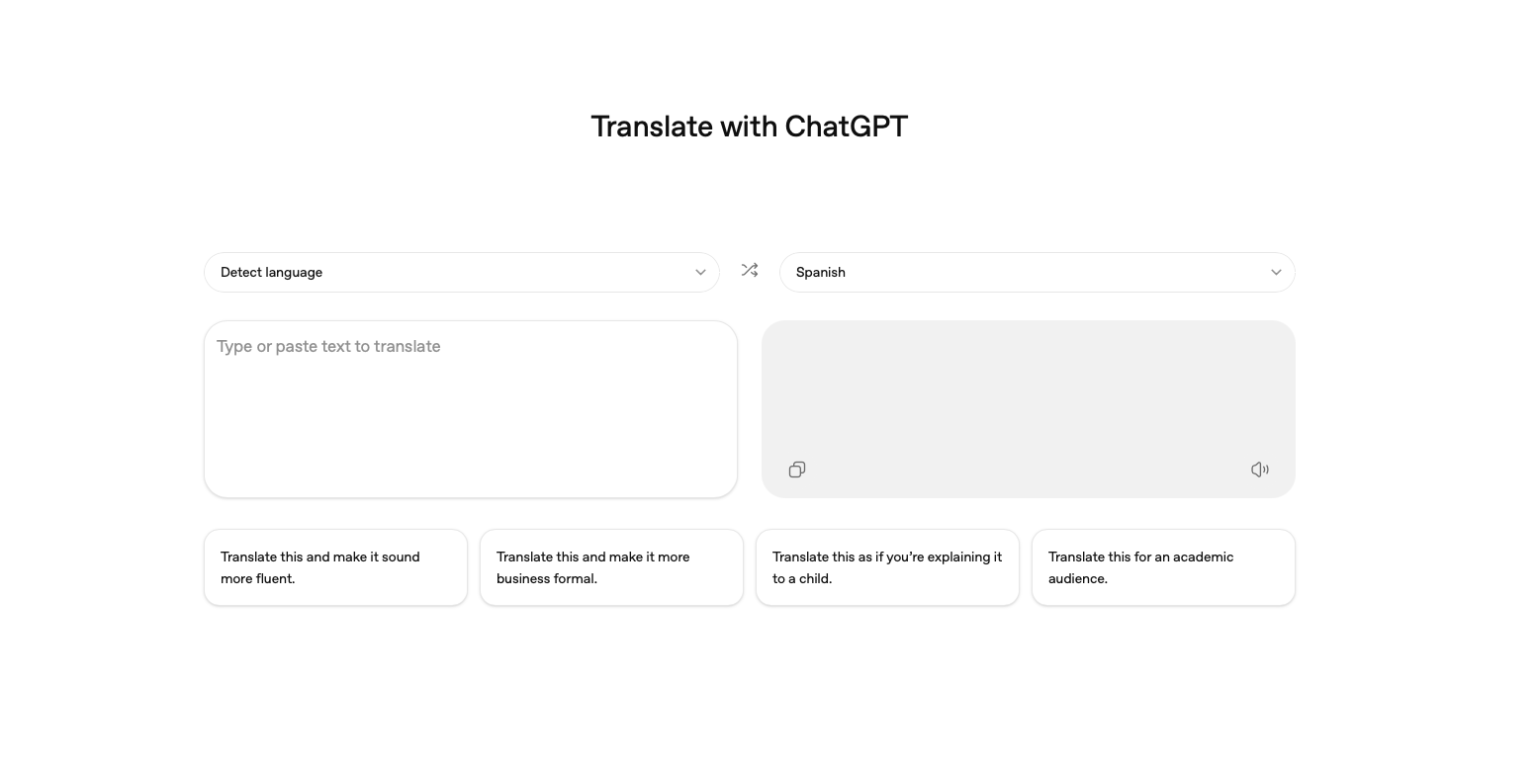
At first glance, the experience feels intentionally familiar. Users are presented with two text boxes, one for the source language and one for the translated output. Text can be typed directly, dictated via microphone on mobile browsers, or pasted in from other sources. In practical terms, ChatGPT Translate covers the fundamentals expected of a modern translation tool, but its core value proposition sits less in raw translation accuracy and more in what happens after the translation appears.
Unlike traditional translation services that aim to produce a single “best” output, ChatGPT Translate leans into customization. Beneath the translated text, users can select from a set of prompt shortcuts that reshape the output based on tone, audience, or intent. Options include making the translation more fluent, rewriting it in a formal business style, simplifying it for children, or adjusting it for academic use. Choosing one of these options seamlessly transfers the user into the main ChatGPT environment with a pre-filled prompt, allowing for additional refinements or contextual instructions. This design reflects OpenAI’s broader emphasis on generative flexibility rather than fixed outputs.
That said, the limitations are hard to ignore. Despite references to image translation on the product page, the current interface does not allow users to upload images. Document translation, handwriting recognition, website translation, and real-time conversation modes are also absent. These are areas where Google Translate, developed by Google, has spent years building depth and reliability. Google Translate also supports significantly more languages, making it the more practical option for global or professional use cases at present.
Google is not standing still either. Recent updates to Google Translate, powered by Gemini, have focused on better handling of idioms, slang, and regional expressions, along with experimental live speech-to-speech translation using headphones. These additions reinforce Google’s lead in multimodal and real-time translation, especially for travel and accessibility scenarios.
In its current form, ChatGPT Translate does not replace Google Translate, nor does it seem designed to. Instead, it points toward a different interpretation of what translation tools might become: systems that adapt language not just across borders, but across contexts and audiences. If OpenAI expands language coverage and introduces image, document, and real-time support, ChatGPT Translate could evolve from a quiet launch into a meaningful long-term competitor. For now, it serves as an early indicator that the future of translation may be shaped as much by intent and tone as by linguistic accuracy.