
The rollout of iOS 26.4 has quietly expanded what developers can do with in-car software, and one of the first visible results is a new version of the ChatGPT iPhone app built specifically for CarPlay. The update introduces a voice-only interface designed to align with Apple’s restrictions around driver safety and limited on-screen interaction.
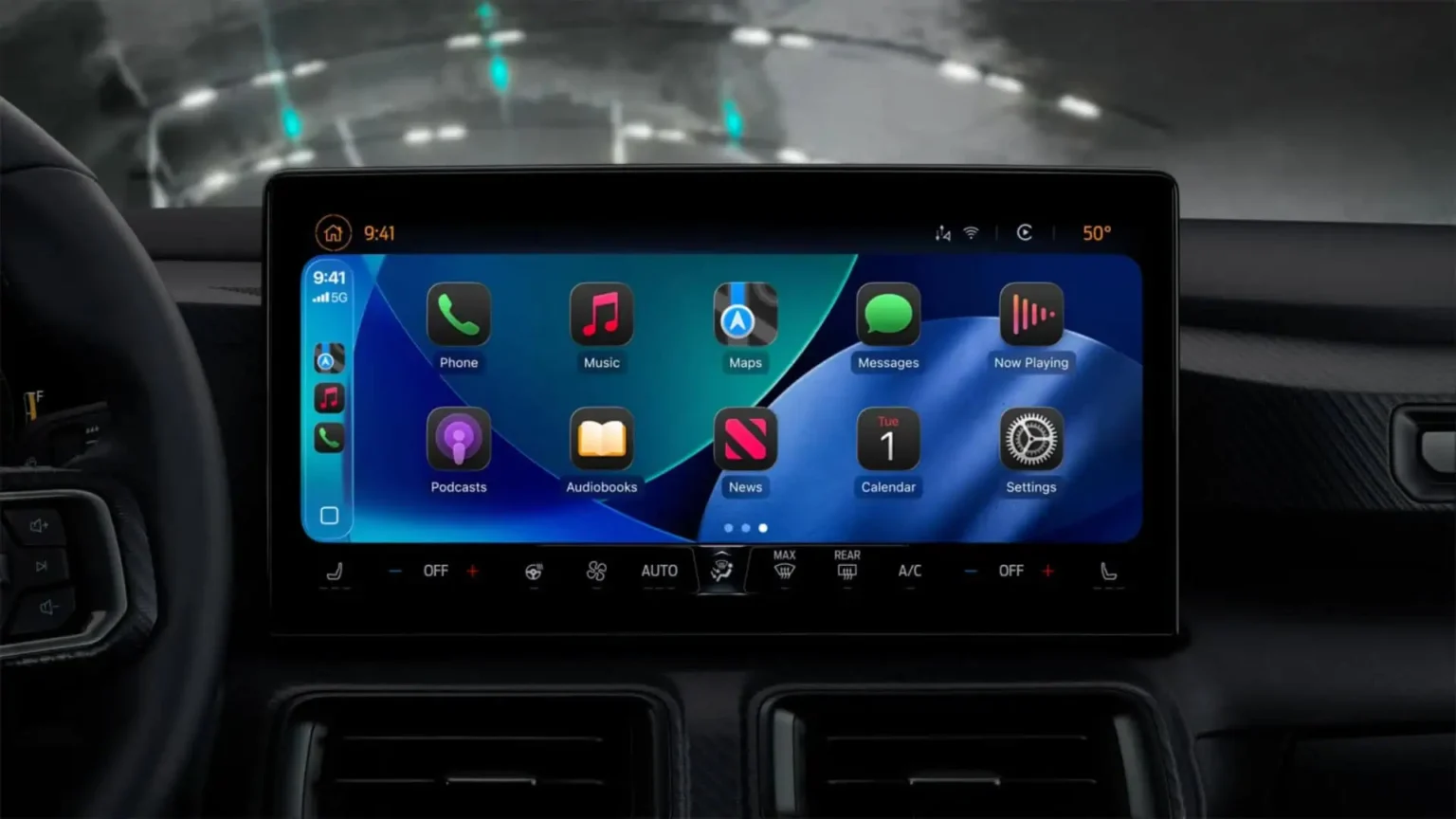
Until now, CarPlay apps have largely been confined to a narrow set of categories such as navigation, audio playback, and messaging. Apple’s decision to allow “voice-based conversational apps” marks a shift, opening the door for AI assistants to operate more directly within the driving environment. The ChatGPT CarPlay app is an early example of how that category might function in practice.
The implementation is intentionally minimal. There is no text display, no visual responses, and very little in the way of interface elements. Users interact entirely through voice, with only basic controls available to end a session or mute the microphone. This design follows Apple’s guidelines, which prioritize reduced visual distraction and emphasize hands-free operation while driving.
In practical terms, the experience mirrors the voice mode already available on the iPhone version of the app, but adapted for in-car use. Users can ask questions, request information, or carry out simple tasks without needing to look at a screen. A history of past voice interactions is accessible, though the interface remains secondary to the conversational aspect.
This approach highlights both the potential and the limitations of bringing AI tools into vehicles. On one hand, voice-first interaction fits naturally into driving scenarios, where attention must remain on the road. On the other, the absence of visual feedback may reduce usefulness in cases where context or detailed information would normally be displayed.
The timing of this release suggests a broader push toward embedding AI assistants into everyday environments beyond smartphones. However, it also underscores the constraints imposed by platform owners. Developers must work within Apple’s predefined templates, which standardize the experience but limit differentiation between apps.
For users, the feature is straightforward to access: it requires the latest version of the ChatGPT app and a device running iOS 26.4 or later. Once installed, the CarPlay version becomes available automatically when connected to a compatible vehicle.
While this is an early step, it signals how conversational AI may increasingly extend into contexts where traditional app interfaces are impractical. Whether these integrations become essential tools or remain niche features will likely depend on how well they balance convenience, safety, and real-world usability.