
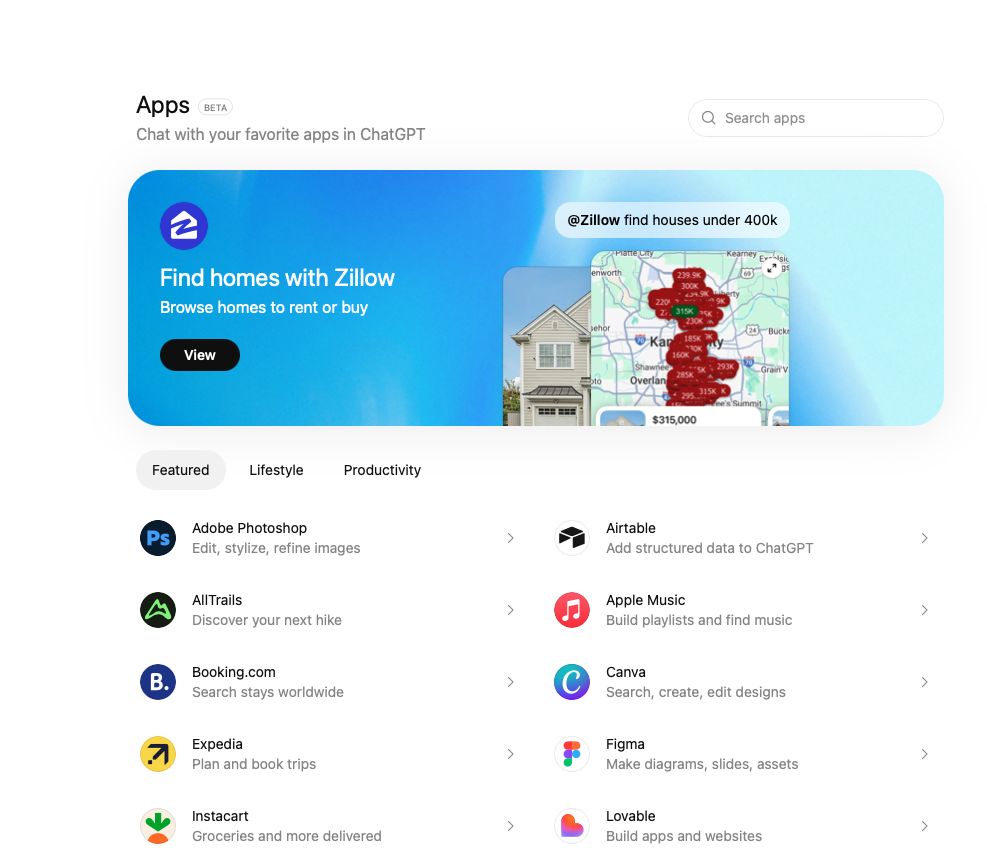
There’s a quiet but important shift happening inside ChatGPT, and it’s one of those updates that doesn’t scream for attention yet fundamentally changes how you work once you notice it. ChatGPT now supports Apps, a feature that allows you to chat directly with your favorite apps without ever leaving the conversation. No links, no context switching, no endless copy-paste rituals. Just intent, expressed in plain language, and tools responding in real time.
For years, AI tools have lived beside our workflows. They were helpful, clever, and sometimes impressive, but always separate. You’d ask a question, get an answer, then jump back into another app to actually do the work. Apps collapse that distance. ChatGPT stops being a smart assistant on the side and starts acting like a central control panel where your tools, files, and services quietly assemble around the task at hand.
At its core, Apps let ChatGPT connect to external services and interact with them conversationally. You can ask it to pull information from a document, work with files, analyze content, or use specialized tools directly inside the chat. Instead of re-explaining what you’re doing every time you switch platforms, the conversation becomes the context. The AI remembers what you’re working on, understands the goal, and uses the connected app to help you move forward.
What makes this powerful isn’t novelty, it’s friction removal. Modern work is fragmented. Tabs multiply. Windows pile up. Every task becomes a small exercise in mental bookkeeping. Apps reduce that overhead by letting you stay in one place and speak naturally. You’re no longer operating software; you’re collaborating with it.
This shift matters because it quietly changes the role of the interface. Instead of opening an app and adapting to its structure, you describe what you want to accomplish and the tools respond. ChatGPT becomes the surface layer, while apps turn into capabilities rather than destinations. It’s less “where do I click?” and more “what do I want done?”
The current beta already hints at how broad this can become. Apps can search and read documents, interact with media services, analyze uploaded files, and tap into specialized systems designed for very specific jobs. The exact lineup will evolve, but the pattern is clear. ChatGPT is becoming a place where tools don’t compete for attention, they cooperate.
Of course, this is still a beta. Some integrations are limited, others are clearly early, and not every app you rely on will be available yet. That’s expected. What’s important is the foundation being laid. Features like this don’t explode overnight; they spread slowly until one day you realize your workflow feels strangely broken without them.
For creators, developers, researchers, and anyone who spends their day juggling context, Apps feel like a natural next step. Less repetition. Fewer interruptions. More momentum. It’s the difference between asking for advice and having someone sit beside you, understand the full picture, and help you execute.
In the bigger picture, Apps aren’t just another ChatGPT feature. They’re a signal. Interfaces are shifting away from rigid menus and endless navigation toward intent-driven interaction. You don’t manage tools anymore; you express goals and let the system assemble what you need.
It’s not flashy. It’s not loud. But it’s the kind of change that sneaks into your daily routine and refuses to leave.
And once your apps start talking back, going silent again feels oddly inefficient.