


The AI wearable category has spent the past few years promising far more than it has delivered. Devices have arrived with ambitious claims about replacing phones, streamlining daily life, or acting as constant digital companions, only to fall short once people tried to live with them. Against that backdrop, the arrival of the Looki L1 at CES 2026 positions itself less as a radical reinvention and more as a practical experiment in offloading memory.
Priced at $199, the Looki L1 is a small, waterproof wearable camera designed to be worn throughout the day. Rather than asking users to actively record moments or issue voice commands, the device relies on a mix of visual, audio, and motion sensors to infer context and decide when something is worth capturing. The stated goal is simple: create a searchable log of daily interactions, conversations, and locations that can later be reviewed, summarised, or used as a prompt for follow-ups.
This approach reflects lessons learned from earlier high-profile attempts at AI wearables. Products like the Humane AI Pin and the Rabbit R1 generated attention with bold concepts but struggled with reliability, battery life, and the basic question of why users should carry another device. The Looki L1, by contrast, does not try to replace a phone or become a conversational assistant. It focuses narrowly on passive capture and later organisation of information, which may prove easier to justify in everyday use.
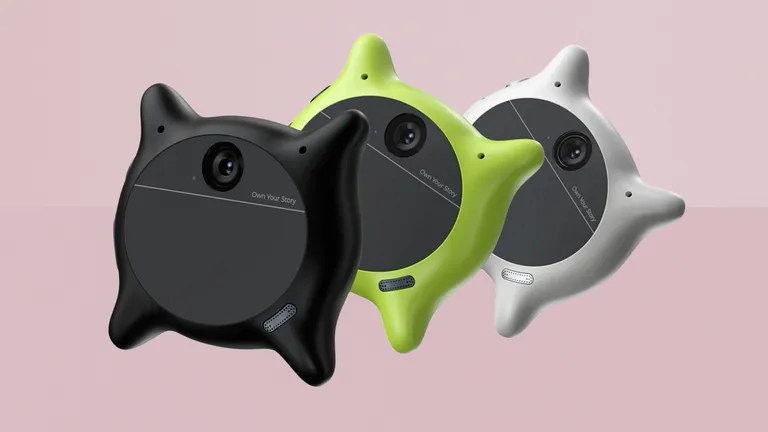
Looki suggests the L1 could be especially useful in fast-moving settings such as conferences or trade shows, where conversations blur together and business cards go missing. An “Expo Mode” is intended to automatically log meetings, booth visits, and discussions, then generate summaries and suggested follow-ups afterward. For journalists, creators, or sales teams, that kind of recall could be genuinely useful if it works reliably and with minimal manual input.
At the same time, this functionality highlights unresolved social questions around constant recording. Automatically capturing people nearby, even with the intention of private note-taking, raises concerns about consent and etiquette. These issues have shadowed wearable cameras for more than a decade, and software-level solutions have rarely been sufficient on their own.
Looki has tried to address privacy more directly than some predecessors. Data is processed and stored locally on the device for up to five days, with users choosing what is uploaded. Content flagged as sensitive is reportedly filtered before any cloud transfer, and approved data is stored regionally using Amazon Web Services infrastructure. How accurately the system identifies sensitive scenes, and what metadata is retained, will matter as much as the headline claims once independent testing begins.
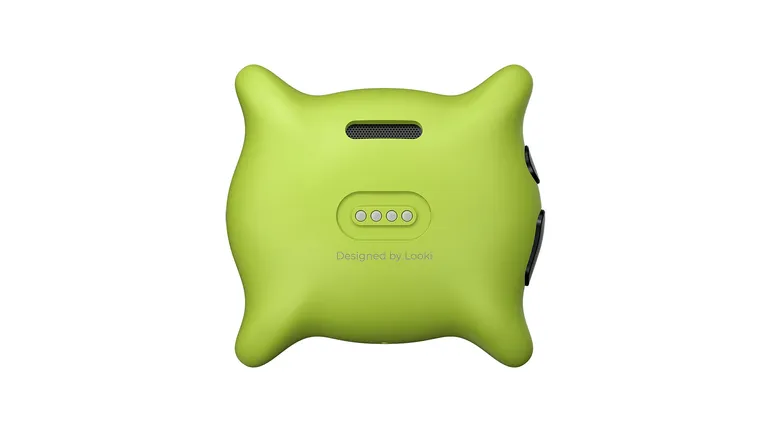
With up to 12 hours of battery life and 32GB of onboard storage, the Looki L1 is positioned as something you can wear without much thought. Its relatively low price lowers the barrier to entry compared to more experimental AI devices, but it also sets expectations. For $199, users are unlikely to tolerate complexity or inconsistent results.
Whether the Looki L1 succeeds will depend less on its specifications than on how invisible it feels in daily life. If proactive recording and automated summaries reduce mental overhead, it may find a niche among people who attend lots of meetings or travel frequently. If it adds friction or social discomfort, it risks becoming another well-intentioned device that sounds better in a demo than in practice.