


The smartphone world is bracing for a tectonic shift in 2026 — one driven not by new designs or shiny features, but by the invisible economics of memory chips. Research from IDC paints a stark picture: the global memory shortage that has been forming through late 2025 is poised to reshape the smartphone and PC markets for years to come. What was once a cyclical blip looks to be a structural transformation — and the industry’s long-held assumption that components always get cheaper is being rewritten.
Memory chips like DRAM and NAND have always been fundamental to devices, but they’ve historically followed a familiar rhythm: supply expands, prices drop, and manufacturers can add more specs without hiking retail prices. In 2026, that rhythm breaks. IDC’s analysts report that global memory supply growth next year — both for DRAM and NAND — will be significantly below historical norms as production shifts toward high-performance memory for AI data centers and enterprise systems. The result: constrained supply and sharply rising prices for the memory that powers smartphones and PCs.
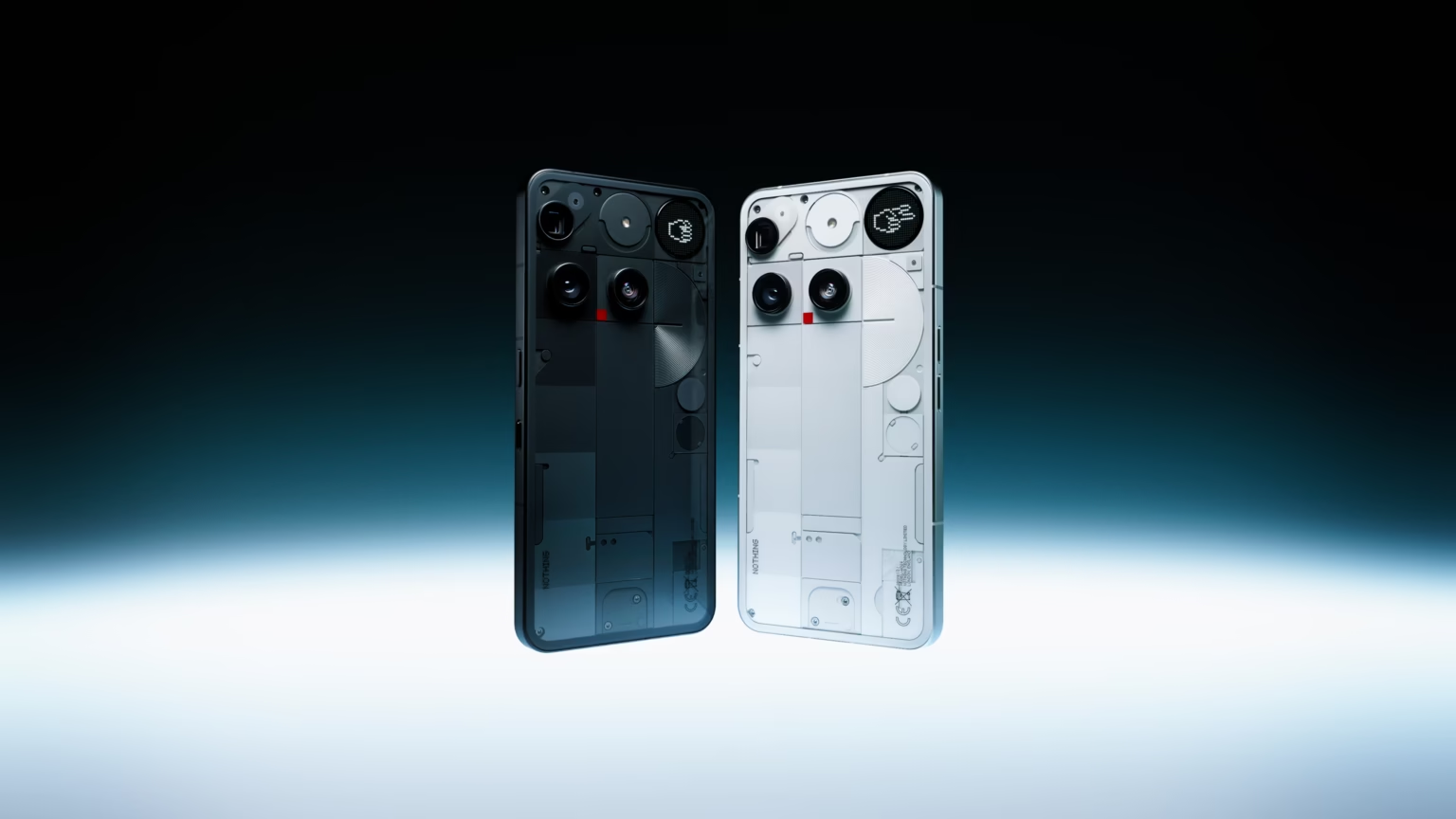
Into this landscape steps Carl Pei, with a blunt message that echoes the data: 2026 will be unprecedented for consumer electronics — especially smartphones. Pei’s comments aren’t just colorful rhetoric; they dovetail with IDC’s observations about memory markets being remapped by AI demand.
Pei notes that for fifteen years, the smartphone industry banked on components steadily getting cheaper. Even with short-term hiccups, the long-term trend allowed annual spec bumps without retail price hikes. In 2026, that model breaks — not because of cyclical disruption, but due to a sharp, unprecedented surge in memory costs. That surge is driven by AI data centers snapping up wafer capacity years in advance, leaving less memory available for smartphones. This puts smartphones in direct competition with AI infrastructure — a reality IDC also identifies as reshaping memory allocation and pricing.
IDC’s analysis shows exactly how unusual this situation is: instead of expanding conventional DRAM and NAND capacity, memory makers are prioritizing high-bandwidth and enterprise-grade modules used in AI servers. That strategic reallocation of wafer capacity is not a seasonal blip; it’s a broad shift with ripple effects across the entire device ecosystem. For smartphone manufacturers, it means higher bill-of-materials costs and tighter supply of key components.
For phones, the impact isn’t theoretical. IDC’s moderate scenario projects smartphone average selling prices could rise by roughly 3–5% in 2026, while a more pessimistic scenario sees price increases of 6–8%, particularly in thin-margin, entry-level segments. In both cases, manufacturers will have to either raise prices or dial back specs to absorb rising memory costs — a theme Pei highlighted when he said brands now face the choice of increasing prices or downgrading specs. In IDC’s downside scenarios, global smartphone volumes could contract by between about 3% and 5% in 2026, underscoring the market strain.
Pei’s argument resonates with these macro trends: the era of “cheap silicon” — where memory gets cheaper every year, enabling bigger numbers on spec sheets with little cost impact — is over. AI’s voracious appetite for memory has upended that model, pushing memory toward becoming one of the most expensive components in a smartphone’s bill of materials. What IDC finds for the broader market is precisely this structural shift, and Pei frames it as a turning point for the smartphone industry itself.
That’s why Pei is so emphatic about 2026 being the year the “specs race” ends and experience becomes the real differentiator. When memory costs more and supply is tighter, stacking RAM and storage just to win benchmark bragging rights becomes an unsustainable strategy. Instead, brands that elevate design, software experience, and frictionless user interaction will have the upper hand — a philosophy Nothing says it has embodied from day one, and one that IDC’s memory-driven pricing reality may finally force the broader industry to adopt.
In a world where artificial intelligence is driving memory demand to unprecedented heights, the economics of smartphones are transforming. Higher prices, altered product roadmaps, and slower volume growth are on the horizon as the old assumption of ever-cheaper components gives way to a new era defined by constraint, competition with AI infrastructure, and the need for meaningful design over raw specs.