

Apple has expanded its desktop monitor lineup with a refreshed Studio Display and a new Studio Display XDR, both designed to pair with the latest Mac systems and address a wider range of workflows, from everyday productivity to HDR video grading and 3D rendering. The displays will be available for pre-order starting March 4, with retail availability beginning March 11.
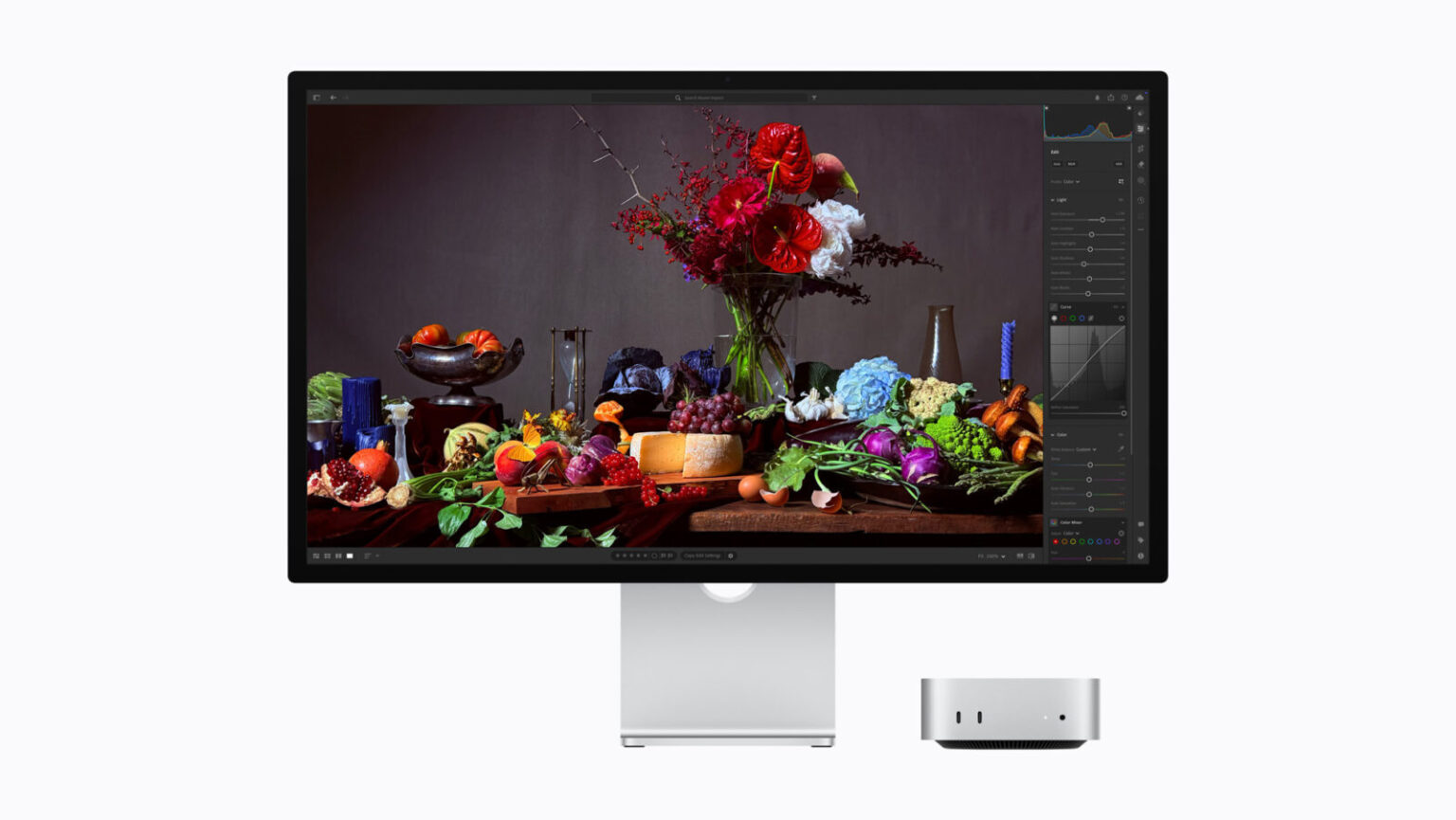
The updated Studio Display retains its 27-inch 5K Retina panel with 5120-by-2880 resolution, over 14 million pixels, 600 nits of brightness, and P3 wide color support. The emphasis this time is on connectivity and integrated features. It now includes Thunderbolt 5, allowing higher bandwidth for accessories and support for daisy-chaining multiple displays. Apple says users can connect up to four Studio Display units to compatible systems, creating a multi-monitor setup that approaches 60 million total pixels.
The built-in 12MP Center Stage camera has been upgraded, with improved image processing and support for Desk View, which shows both the user and a top-down view of their workspace during calls. A three-microphone array with directional beamforming and a six-speaker system with force-canceling woofers and Spatial Audio support aim to reduce the need for external peripherals in home and studio setups. The included Thunderbolt 5 cable can provide up to 96W of charging power, enough for fast-charging a 14-inch MacBook Pro.
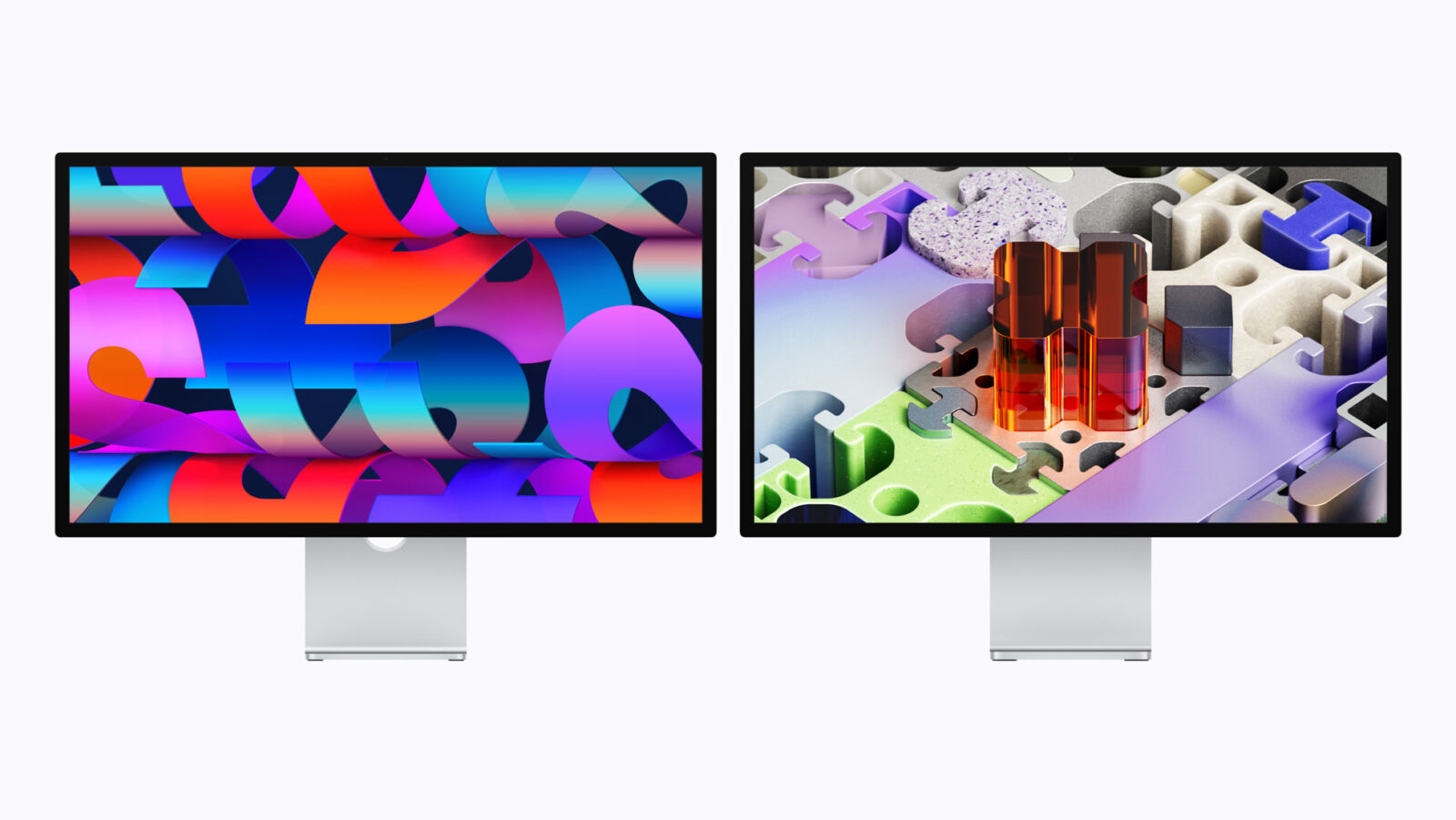
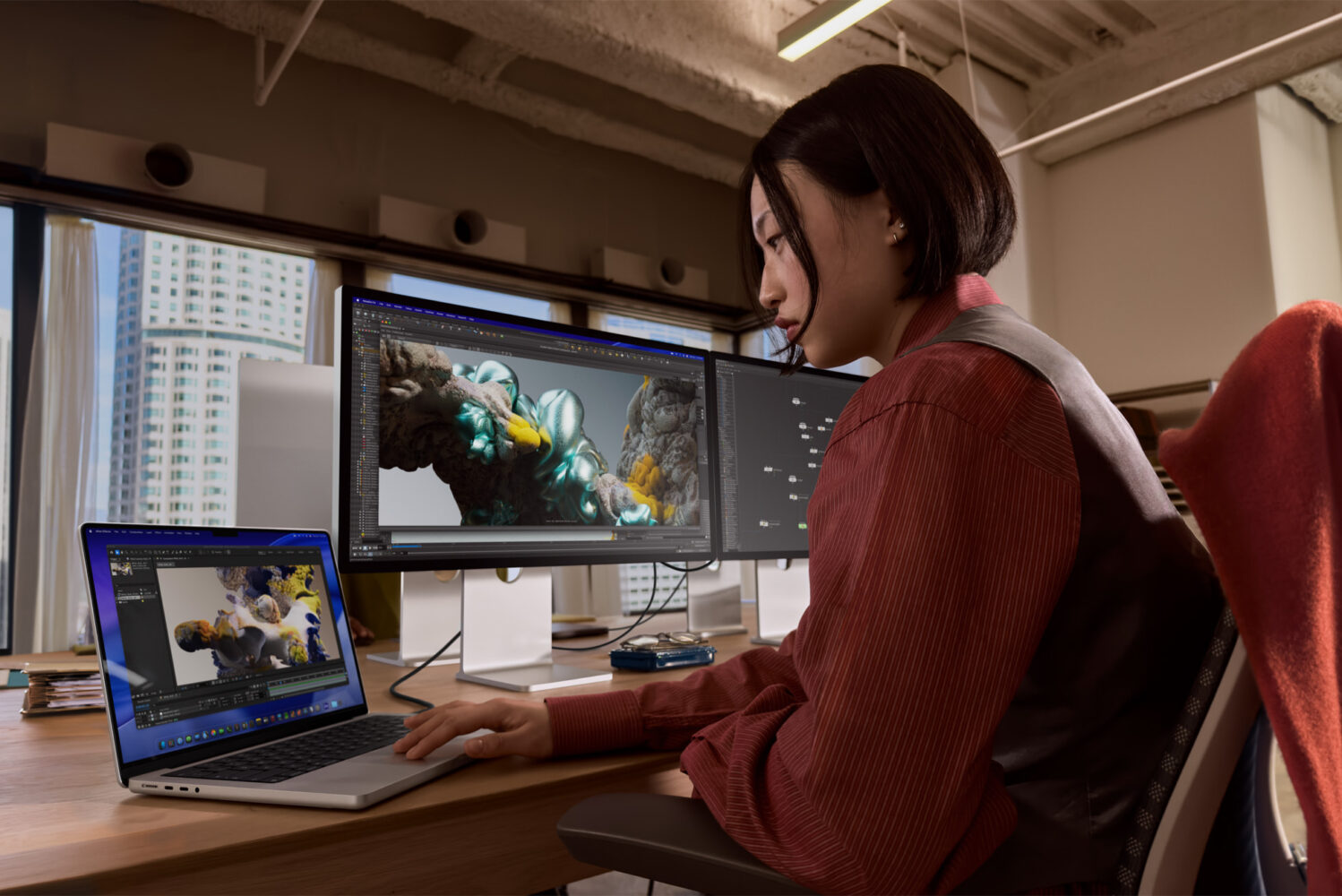
The more significant addition is Studio Display XDR, which replaces the Pro Display XDR in Apple’s lineup. It keeps the 27-inch 5K form factor but introduces a mini-LED backlight system with 2,304 local dimming zones. Apple rates the panel at up to 1000 nits of sustained SDR brightness and 2000 nits of peak HDR brightness, with a claimed 1,000,000:1 contrast ratio. The goal is to provide more precise control over highlights and shadows while reducing halo and blooming artifacts that can appear in edge-lit displays.
Studio Display XDR also adds a 120Hz refresh rate with Adaptive Sync, dynamically adjusting between 47Hz and 120Hz depending on content. While high refresh rates are often associated with gaming, they also improve motion clarity in editing timelines, animation work, and fast-moving HDR content.
Color support extends beyond P3 to include Adobe RGB, a key requirement for print and design professionals. Apple states that the display covers more than 80 percent of Rec. 2020 for HDR workflows, making it suitable as a reference monitor for video editors and colorists working in broader color spaces.
Like the standard model, Studio Display XDR integrates a 12MP Center Stage camera, three-microphone array, and six-speaker system. Thunderbolt 5 connectivity is complemented by additional USB-C ports, and the display can deliver up to 140W of charging power through the included cable, sufficient for fast-charging a 16-inch MacBook Pro.
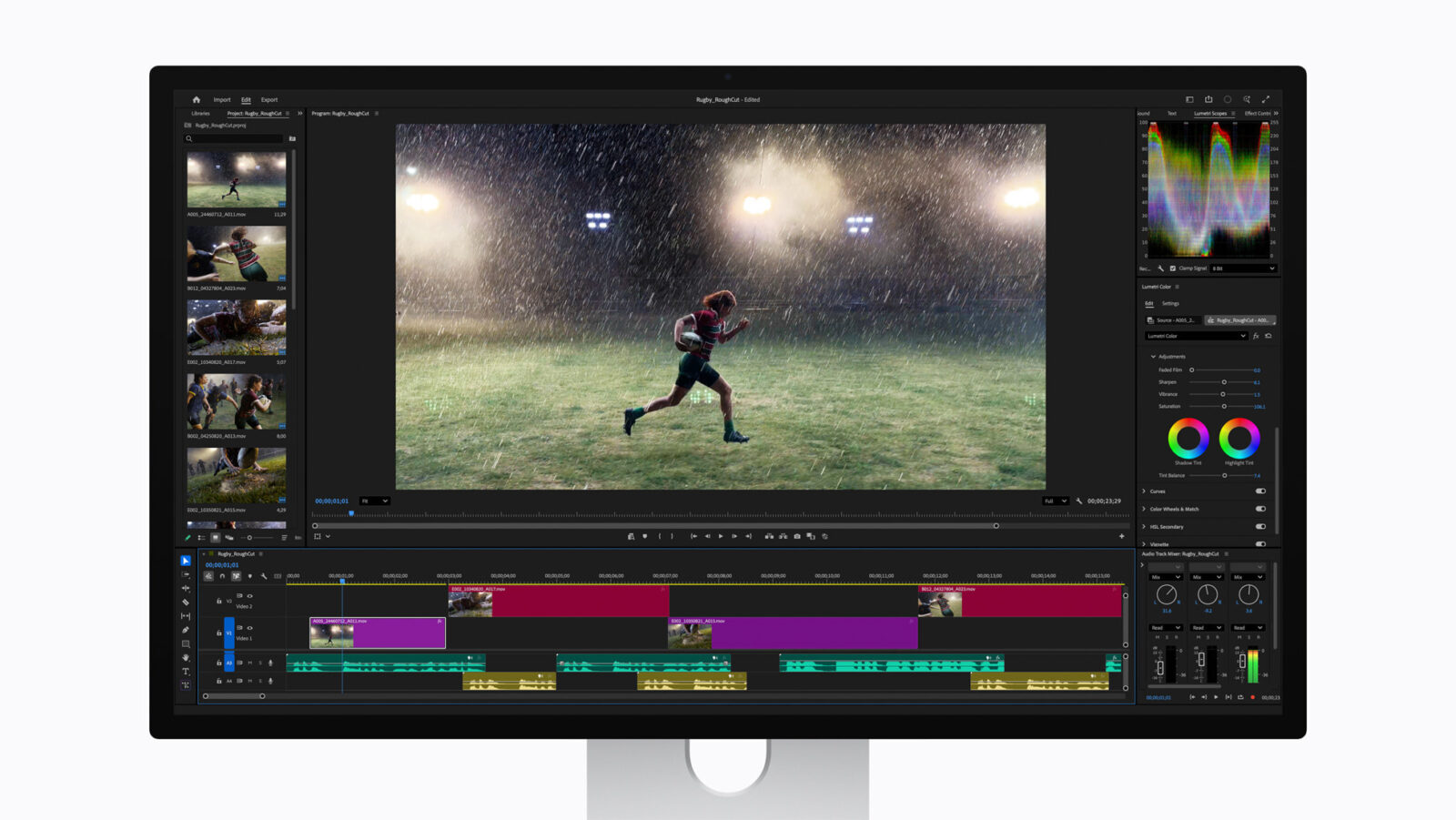
Both displays are available with standard or nano-texture glass options to reduce glare in bright environments. The Studio Display includes a tilt-adjustable stand by default, with optional height adjustment or VESA mounting. Studio Display XDR comes standard with a tilt- and height-adjustable stand featuring a 105mm height range and a counterbalanced arm.
In the UAE, Studio Display starts at AED 6,499, while Studio Display XDR starts at AED 13,499. Apple says both models incorporate recycled materials, including fully recycled aluminum in the stand and a high percentage of recycled glass, as part of its broader 2030 carbon neutrality goal.
With this update, Apple is consolidating its display strategy around a single 27-inch size while differentiating primarily on backlighting technology, brightness, color support, and refresh rate. For most users, the standard Studio Display will remain a high-resolution companion to a Mac. For professionals working in HDR video, advanced color grading, or detailed 3D environments, Studio Display XDR introduces features that move closer to dedicated reference monitors, albeit within Apple’s integrated ecosystem.