
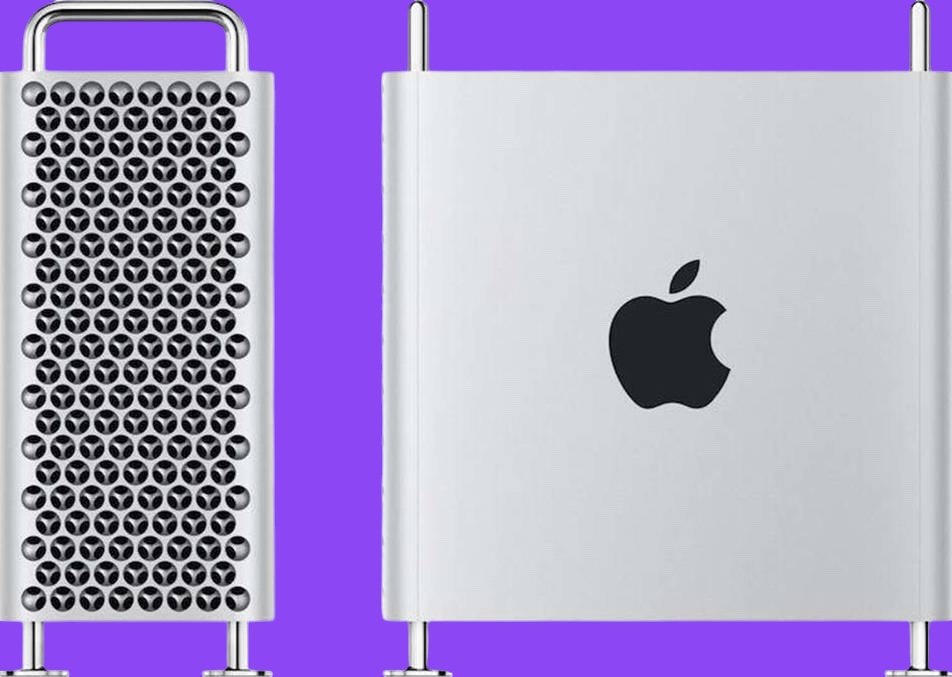
Apple has quietly removed the Mac Pro from its product lineup, effectively ending the company’s long-running experiment with a modular, high-performance desktop. The Mac Pro discontinuation closes a chapter that has struggled to find relevance in recent years, particularly as Apple shifted to its own silicon and redefined what “pro” hardware looks like.
According to the report , the Mac Pro was taken off Apple’s website without a formal announcement, and the company has confirmed there are no plans for a future version. The move follows the last update in mid-2023, when the system received the M2 Ultra chip but retained its 2019-era tower design and a starting price of $6,999. Despite that update, the hardware offered little practical advantage over smaller and less expensive alternatives.
The core issue lies in how Apple’s chip architecture reshaped the purpose of the Mac Pro. Earlier Intel-based models were built around modularity, allowing users to swap GPUs, expand memory, and customize internal components. With Apple silicon, many of those upgrade paths disappeared. Memory and graphics became integrated into the system-on-a-chip design, removing the flexibility that once defined the Mac Pro. What remained was a large chassis with limited differentiation beyond support for certain expansion cards.
In practice, this left the Mac Pro competing directly with the Mac Studio, a more compact desktop that delivers similar performance at a lower cost. For most professional users, the Mac Studio became the more practical choice, reducing the need for a larger, more expensive tower.
Apple appears to be shifting its high-end desktop strategy accordingly. The Mac Studio now serves as the company’s primary workstation, with ongoing updates expected to keep it aligned with newer chip generations. Instead of internal expansion, Apple is leaning into external solutions. Features like low-latency data transfer over Thunderbolt 5, introduced in recent macOS updates, suggest a future where performance scaling happens across multiple connected systems rather than within a single machine.
The discontinuation also simplifies Apple’s desktop lineup, which now consists of the iMac, Mac mini, and Mac Studio. This more streamlined approach mirrors its laptop range, where clearer segmentation has replaced overlapping product roles.
There are also manufacturing implications. The Mac Pro was one of the few Apple devices assembled in the United States. With its removal, Apple plans to shift some domestic production efforts to other products, including the Mac mini, as it expands operations in Texas.
The Mac Pro’s exit reflects a broader shift in computing priorities. Instead of emphasizing internal customization, Apple is focusing on tightly integrated systems and external scalability. For users who relied on traditional workstation flexibility, that transition may still feel incomplete. For Apple, however, the decision suggests that the era of large, user-upgradable desktops no longer fits its direction.