
Apple has rolled out an Apple Music app for ChatGPT, allowing users to search, explore, and manage music directly within the conversational interface. The launch follows an accidental early mention in a blog post and represents another step in the growing integration between ChatGPT and third-party services.
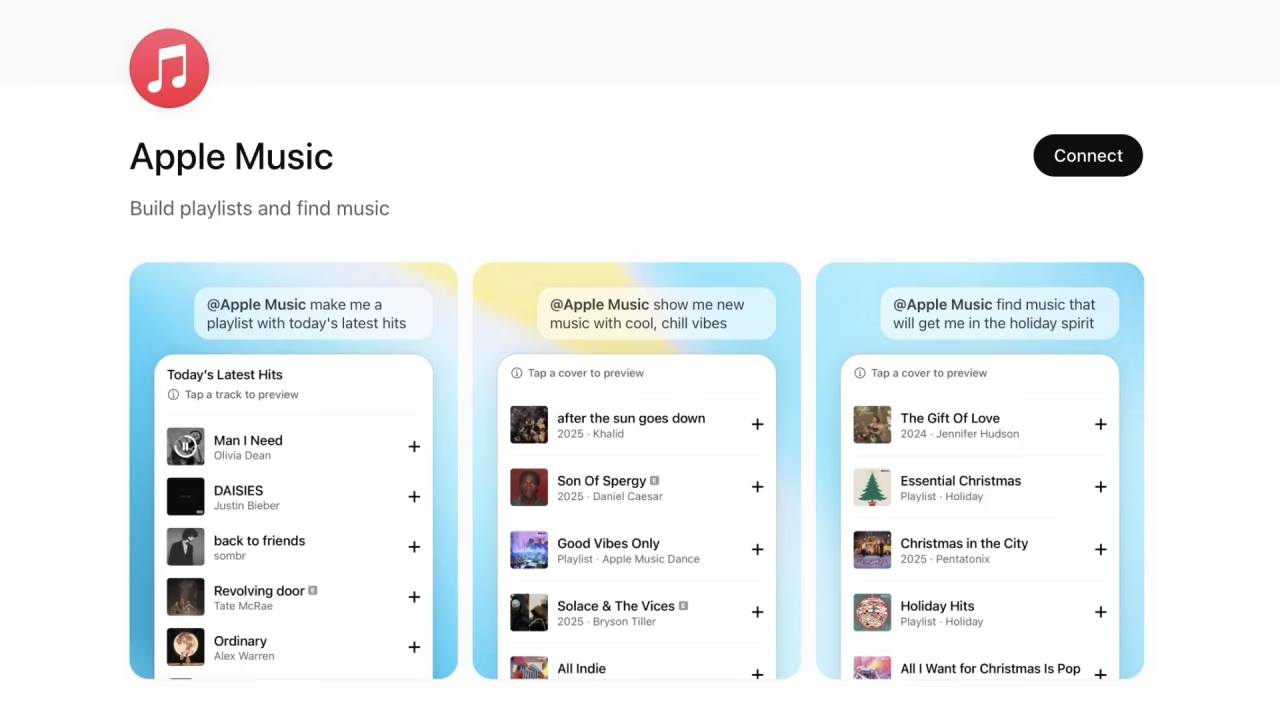
At its core, the Apple Music app for ChatGPT enables basic discovery features without requiring a subscription. Users can search for songs, artists, albums, and playlists from Apple’s music catalog using natural language. The app also surfaces track previews, making it possible to sample music results without leaving the chat environment. This positions ChatGPT as a lightweight discovery layer rather than a replacement for a full music streaming app.
The experience expands for users who connect an active Apple Music subscription. Once authenticated, ChatGPT can take direct actions on a user’s behalf, including creating new playlists, adding tracks or albums to an existing library, and organizing music collections based on conversational requests. Instead of navigating menus or search fields, subscribers can describe what they want in plain language, such as building a playlist around a specific mood, era, or activity, and let the system handle the setup.
This release reflects a broader shift in how OpenAI is positioning ChatGPT. Rather than functioning solely as a question-and-answer tool, the platform is increasingly designed to support actions across connected services. The Apple Music app joins a growing catalog of integrations that aim to make ChatGPT more practical for everyday tasks, from creative work to research and media discovery.
The timing of the launch also aligns with a deeper collaboration between Apple and OpenAI. ChatGPT has recently been integrated with Siri in iOS 26.1, signaling Apple’s interest in augmenting its existing assistant with more advanced conversational capabilities. In parallel, OpenAI has released a native ChatGPT Atlas browser for macOS, further embedding the service into Apple’s ecosystem. The Apple Music integration fits neatly into this trajectory, offering a controlled way to bring Apple services into conversational workflows without fully merging platforms.
From a user perspective, the new app is less about replacing Apple Music’s interface and more about reducing friction for common tasks. Searching for music, building playlists, or rediscovering tracks becomes faster when handled through conversation, especially for users who already rely on ChatGPT as a daily tool. However, the experience still depends on Apple Music’s existing catalog and subscription model, with advanced features gated behind a paid account.
The Apple Music app for ChatGPT is available now through ChatGPT’s app integrations. While it does not radically change how music streaming works, it highlights how conversational interfaces are increasingly being used as control layers for established digital services rather than standalone destinations.