

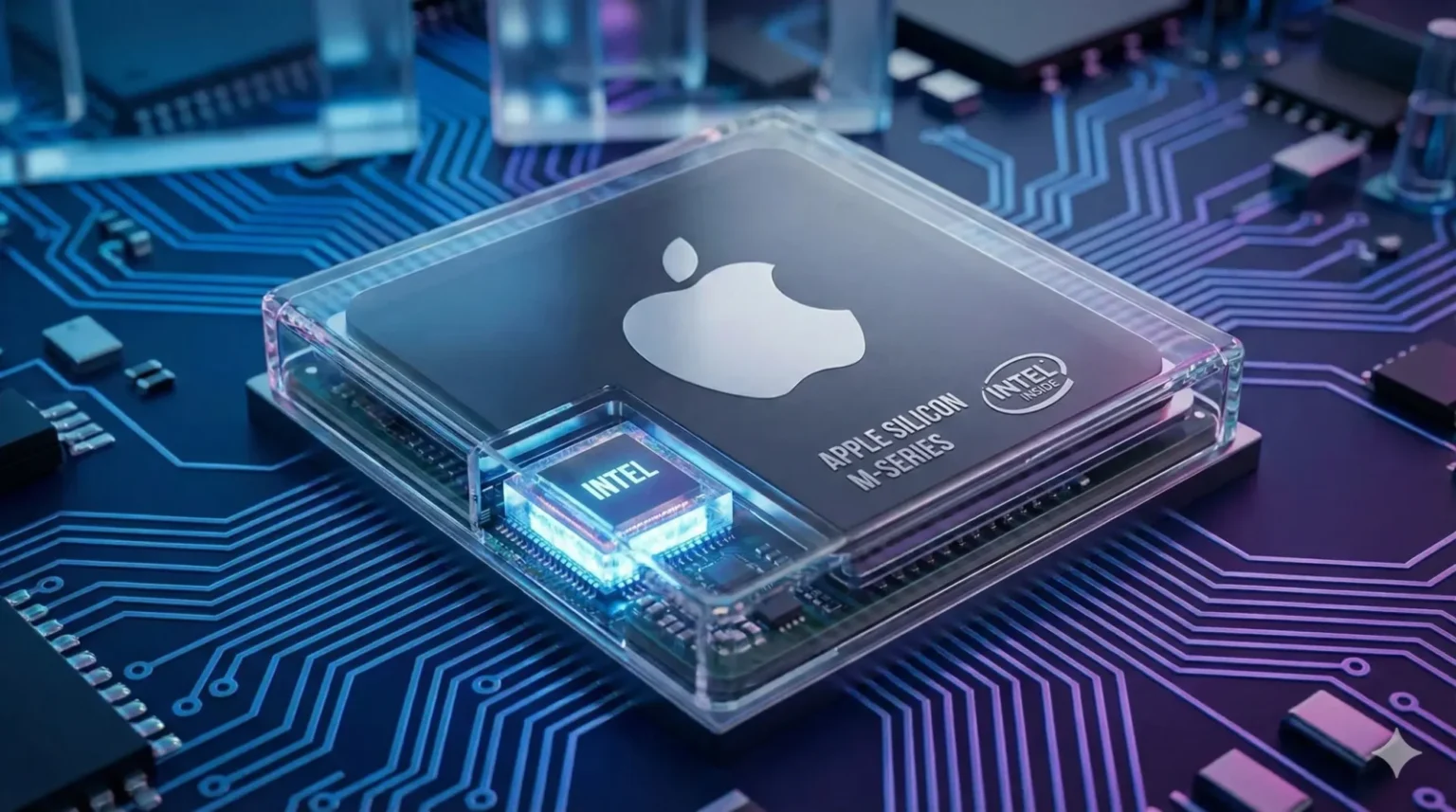
Apple may again rely on Intel for part of its Mac and iPad lineup, though not in the way it once did. Instead of returning to Intel-designed CPUs, Apple is reportedly considering Intel as a manufacturing partner for future low-end M-series processors. If the current timeline holds, those Intel-fabricated Apple silicon chips could appear in devices as early as 2027, with the MacBook Air and iPad Pro among the first to adopt them.
This potential shift stems from Intel’s renewed push into the foundry business. After years of losing ground in the CPU market, Intel has been seeking external clients to utilize its advanced manufacturing nodes. Apple, which fully transitioned away from Intel CPUs in 2020 and now relies on TSMC for all Apple silicon production, appears to be exploring Intel as a secondary supplier. Analyst Ming-Chi Kuo recently noted a significant uptick in visibility around Intel becoming an advanced-node supplier for Apple, citing ongoing internal surveys and industry discussions.
According to these reports, Apple has signed an NDA for Intel’s 18AP process design kit, signaling at least a formal evaluation of the technology. Apple is tracking Intel’s technical milestones closely, and early projections suggest that fabrication of lower-tier M-series chips could begin in the second or third quarter of 2027. These would not replace Apple’s highest-end processors but instead offer a way to diversify production, reduce reliance on a single manufacturer, and align with political pressure to expand U.S.-based semiconductor output.
TSMC, which currently manufactures everything from baseline M-series chips to higher-end variants, is not expected to experience a meaningful revenue impact if Apple shifts only its entry-level processors. For Intel, however, securing even a portion of Apple’s business would be significant. It would give Intel a high-profile customer for its foundry roadmap and potentially open the door to additional work if timelines and yields meet Apple’s expectations.
Market dynamics add another layer to the picture. With Apple rumored to be preparing a more affordable MacBook line, sales of the MacBook Air and iPad Pro are projected to slip from roughly 20 million units in 2025 to somewhere between 15 and 20 million in the following two years. Diversifying manufacturing partners may help Apple manage costs and scale production more flexibly across product segments.
The arrangement is far from guaranteed. Apple has historically been demanding about process efficiency, and if Intel’s node does not compete with TSMC’s in performance or power use, Apple may keep its mainstream chips with its existing supplier. But if Intel delivers, the situation would create a rare reversal: a former CPU supplier manufacturing Apple’s custom processors instead of providing its own designs. It would underscore the shifting nature of the semiconductor industry, where design and fabrication have become increasingly decoupled, and partnerships evolve based less on history and more on capacity, geography, and long-term strategy.