

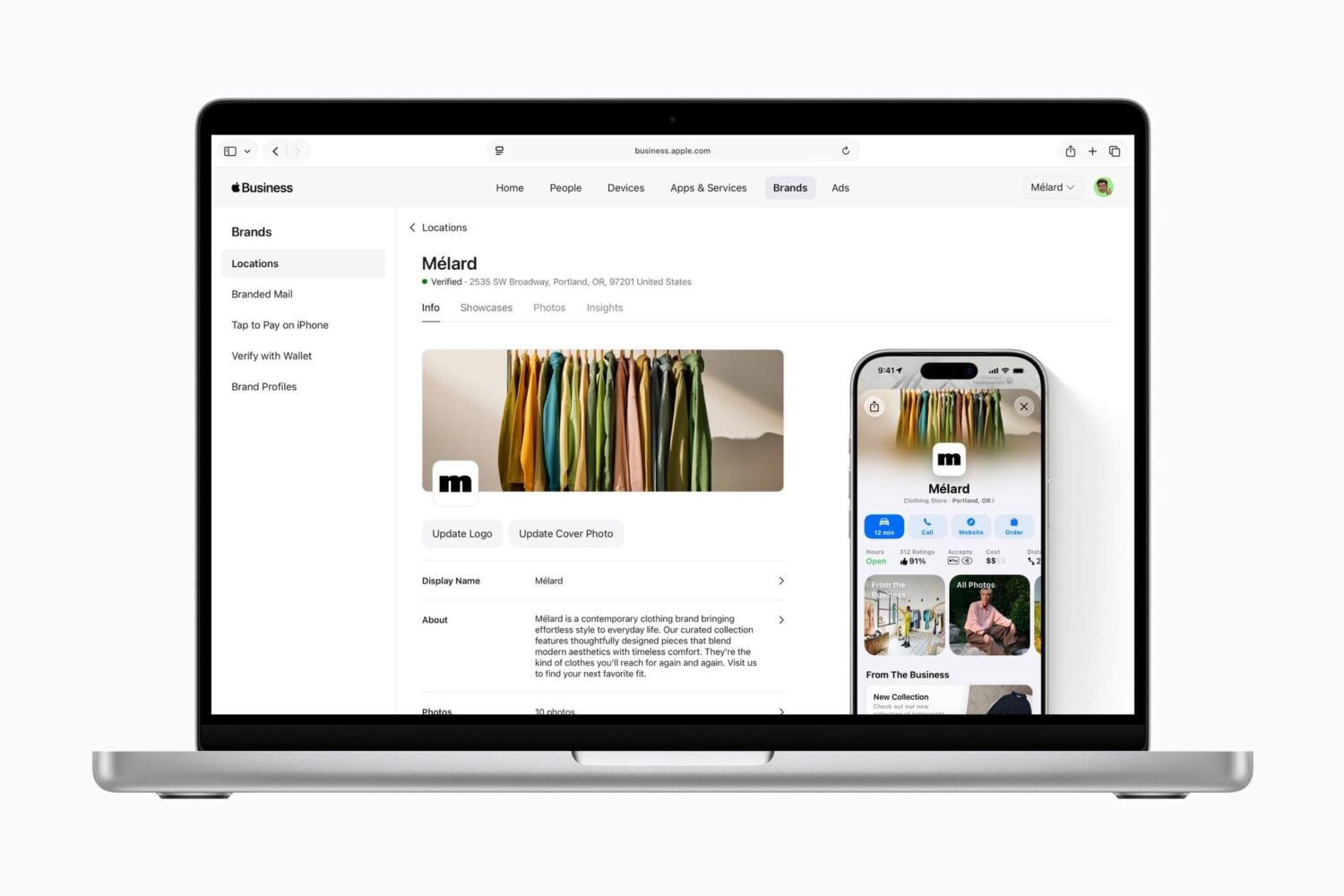
Apple has introduced Apple Business, a new platform that brings together device management tools, business-facing services, and advertising within Apple Maps. The system is set to roll out on April 14 and reflects a broader effort to consolidate how businesses interact with Apple’s ecosystem.
On the device management side, Apple Business functions as a centralized hub for handling employee devices and accounts. Companies can manage onboarding, configure access to services like email and calendars, and control iCloud backups and syncing. The platform also allows organizations to distribute internal or approved apps directly to employees. A key element here is the separation of work and personal data, which aligns with existing enterprise expectations around privacy and security, especially in bring-your-own-device environments.
While Apple has offered device management capabilities before through various enterprise tools, this approach appears to package them into a more unified interface. The goal seems to be simplifying administration for businesses that rely on Apple hardware, though its effectiveness will depend on how well it integrates with existing IT workflows and third-party systems.
Another notable addition is advertising within Apple Maps. Businesses will be able to promote listings that appear in search results, particularly when users look for general categories such as restaurants or nearby services. These promoted placements may also show up in a new “Suggested Places” feature, which highlights locations based on trends, user activity, and proximity.
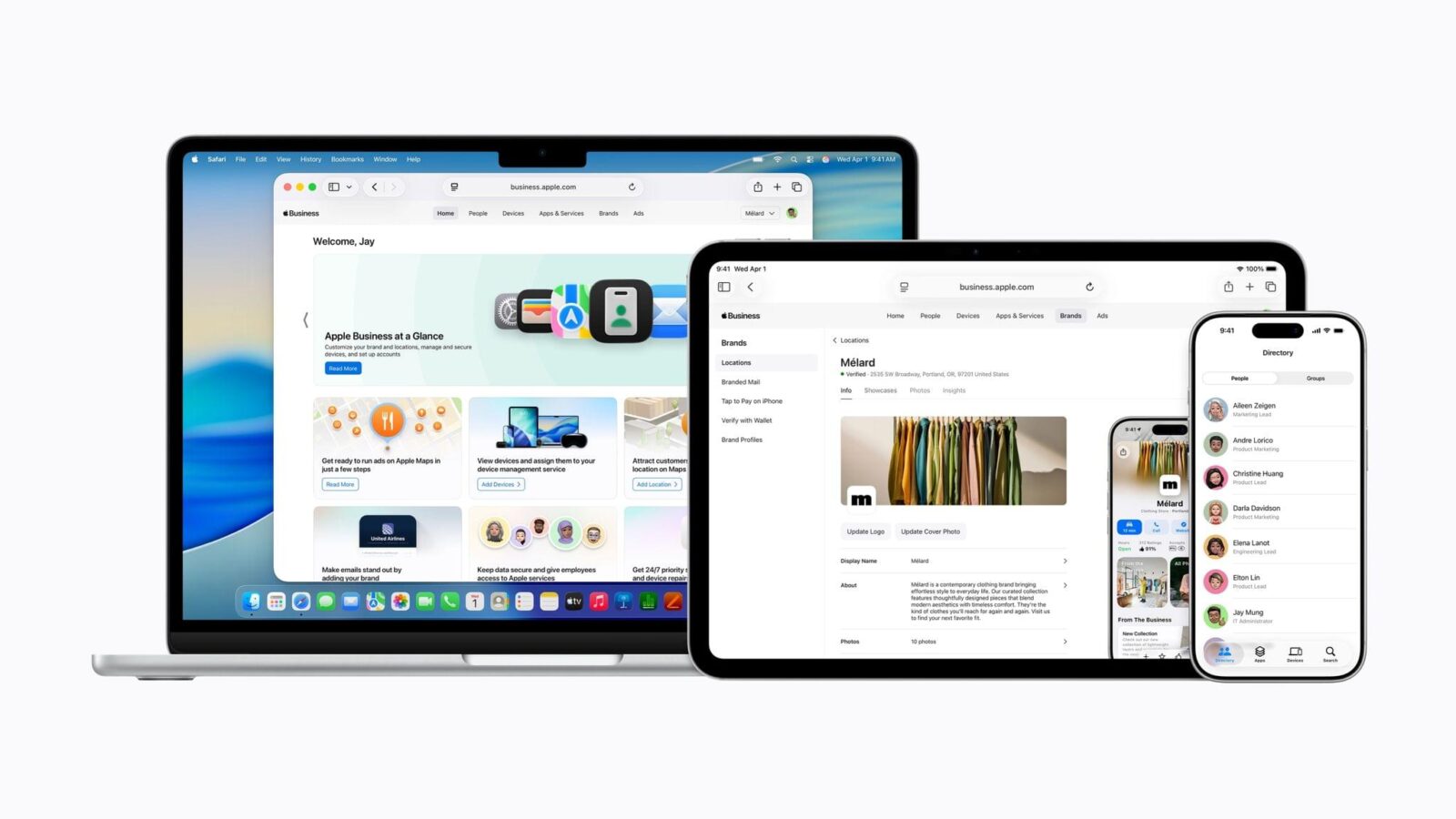
Apple says these ads will be clearly labeled and designed with privacy protections in place. According to the company, advertisers will not have access to individual user location data, nor will they be able to track specific ads viewed by users. This continues Apple’s positioning of privacy as a differentiator, although the introduction of ads into Maps represents a shift toward further monetization of its services platform.
How this balance plays out in practice remains to be seen. Ads tied to broad searches could be useful in some contexts, especially when users are exploring options in unfamiliar areas. However, their presence in more specific searches—such as looking up a particular business—could feel less appropriate if not carefully implemented. Much will depend on how prominently ads are displayed and how relevant they are to user intent.
In addition to these features, Apple Business consolidates several existing tools related to branding and customer interaction. Businesses can manage their presence across Apple services, including Wallet, email communications, Tap to Pay, and place cards that appear in Maps, Safari, and Spotlight. Bringing these elements into a single system may reduce fragmentation, particularly for companies already operating within Apple’s ecosystem.
Overall, Apple Business represents a combination of practical enterprise tools and new commercial opportunities within Apple’s platforms. While the device management side builds on familiar ground, the integration of advertising into Maps signals a more noticeable shift in how Apple is expanding its services business.