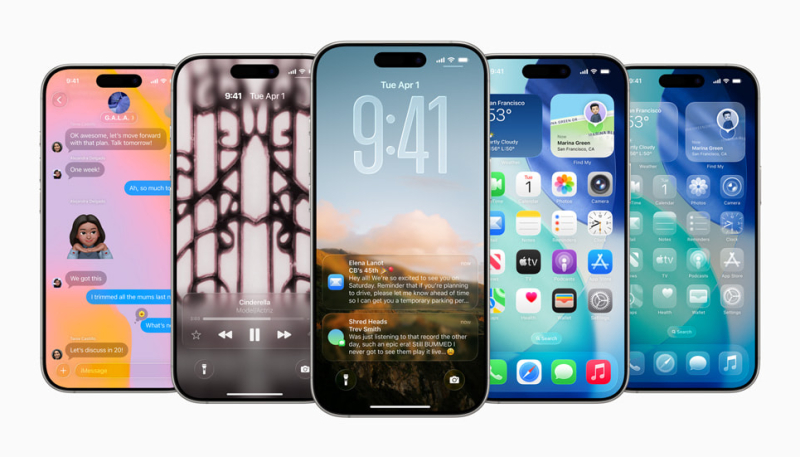


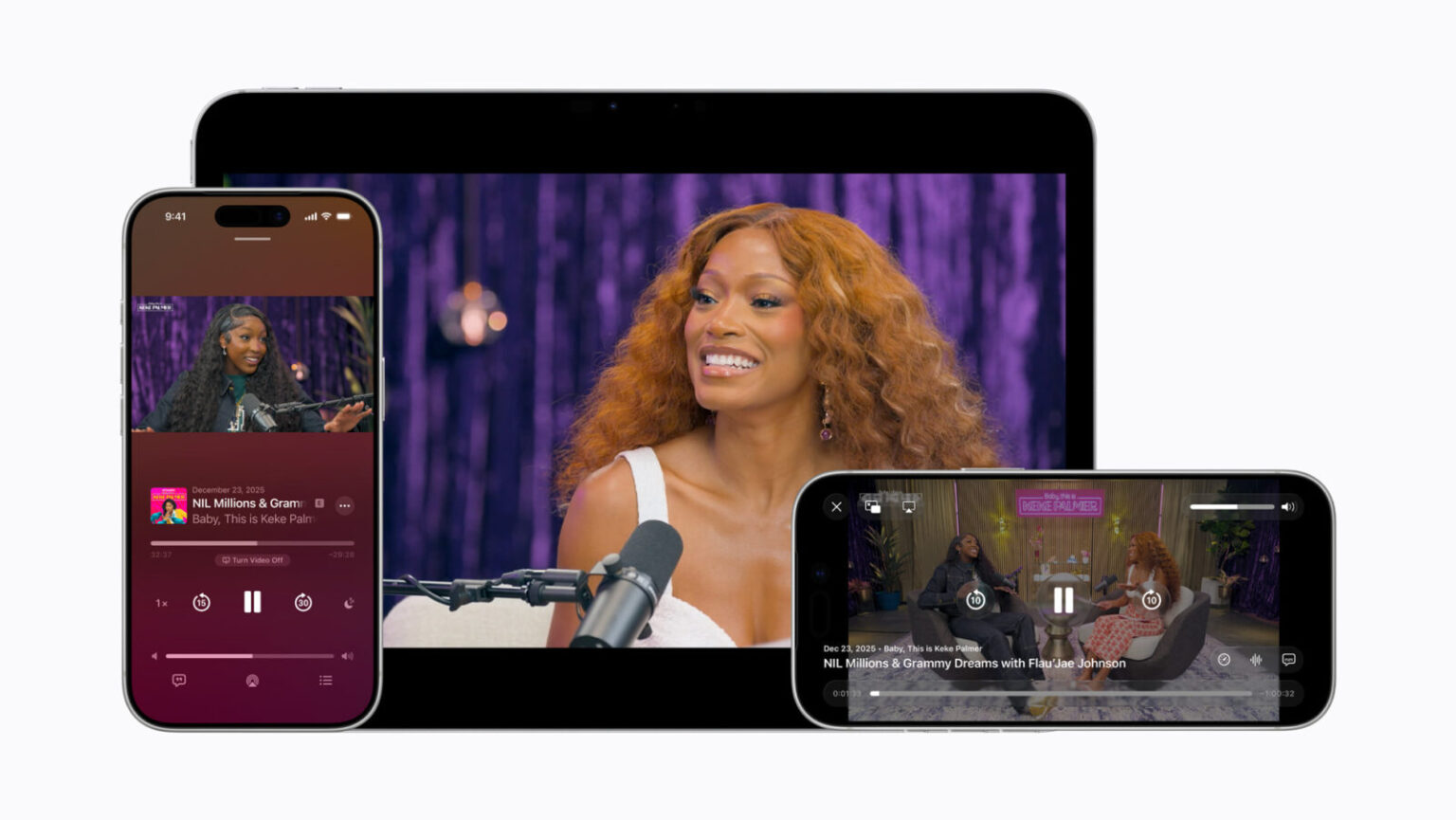
Apple has announced an upcoming update to Apple Podcasts that will introduce native support for HLS video podcasts, marking a notable shift in how the platform approaches video content. The rollout is scheduled for this spring, with testing already underway in beta versions of iOS 26.4, iPadOS 26.4, and visionOS 26.4. Once fully released, the new video podcast experience will be available across iPhone, iPad, Apple Vision Pro, and the web version of Apple Podcasts.
The update centers on HTTP Live Streaming, or HLS, Apple’s adaptive bitrate streaming technology. HLS is widely used for video delivery across Apple devices, automatically adjusting video quality based on network conditions. By integrating HLS video podcasts directly into Apple Podcasts, the company is expanding the app beyond its traditional audio-first design. Users will be able to switch between listening and watching within a single episode, rotate into full-screen landscape mode, and download video episodes for offline viewing. Playback quality will adjust automatically depending on whether the user is connected to Wi-Fi or cellular data.
This move places Apple more directly into a video podcast landscape that has increasingly been shaped by platforms like YouTube, where creators have found broader monetization options through video advertising. Rather than hosting video files itself in a centralized way, Apple will allow creators to distribute HLS video through participating hosting providers and ad networks. Launch partners include Acast, ART19 (an Amazon company), Triton Digital’s Omny Studio, and SiriusXM, including SiriusXM Media, AdsWizz, and Simplecast. Additional providers are expected to join over time.
For creators, the key change is the ability to dynamically insert video ads, including host-read spots, into HLS video podcasts. This opens access to video advertising budgets while maintaining the RSS-based distribution model that underpins much of the podcast ecosystem. Apple says it will not charge hosting providers or creators to distribute podcasts via RSS/MP3 or HLS video. However, the company will introduce an impression-based fee for participating ad networks that deliver dynamic ads in HLS video on Apple Podcasts later this year.
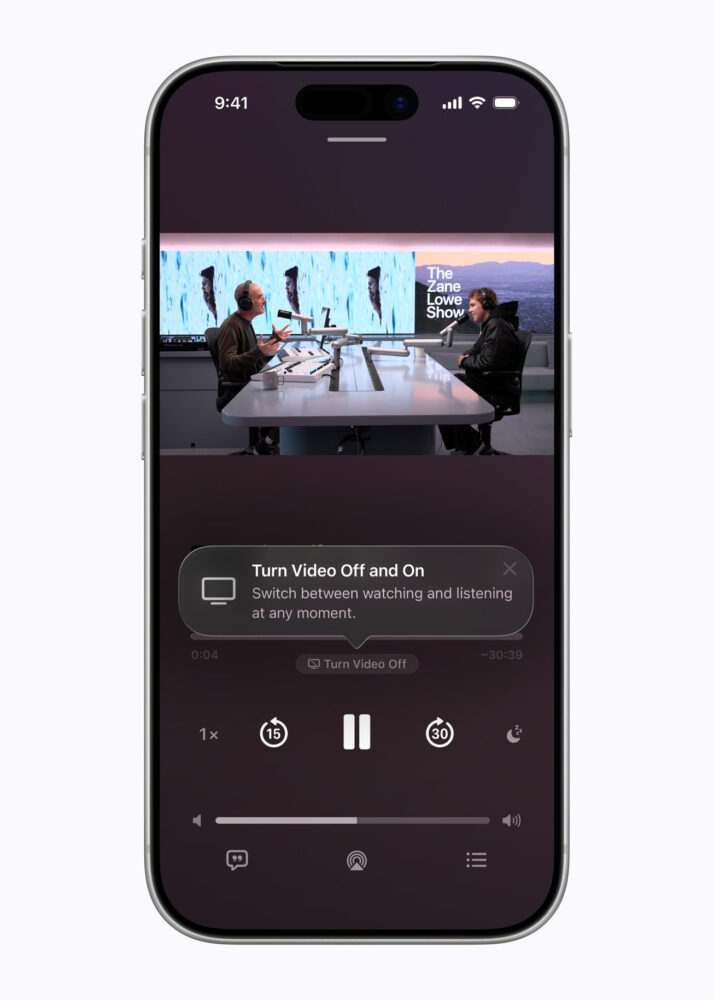
The update also integrates video into existing Apple Podcasts features such as personalized recommendations, editorial curation, category browsing, playback speed controls, chapters, timed links, and transcripts. Apple notes that its catalog spans more than 170 countries and regions, with over 125 million episodes featuring transcripts in 13 languages. Premium subscriptions, which allow listeners to support creators through ad-free listening or exclusive content, will remain part of the broader monetization structure.
From a strategic standpoint, the addition of HLS video podcasts reflects the broader convergence of audio and video formats. Many podcast creators already record video versions of their shows, often publishing them separately on video platforms. By incorporating video directly into Apple Podcasts, Apple is responding to changing audience habits without abandoning the open distribution framework that has defined podcasting since its early integration into iTunes nearly two decades ago.
Whether this update significantly shifts where audiences choose to watch video podcasts will depend on creator adoption and advertiser interest. What is clear is that Apple is positioning Apple Podcasts as a platform capable of handling both audio and video at scale, using HLS video streaming as the technical foundation.