


Google is expanding its Find Hub platform with a feature designed to make lost luggage easier to recover. The latest update introduces “Share Item Location,” a tool that allows travelers to generate a live tracking link for their suitcase and send it directly to an airline during a baggage claim.
Bluetooth luggage trackers have become common for frequent flyers, but the process of resolving missing baggage has often remained inefficient. Travelers could see their bag’s location on their phone, while airlines relied on separate internal systems. The result was a disconnect: passengers might know their suitcase was sitting in another terminal or airport, yet customer service agents had no direct access to that same data.
With the new Find Hub update, that gap narrows. Users can open the app, select the tracker attached to their luggage, and create a shareable link showing its live location. That link can then be submitted through an airline’s baggage claim portal or app. In theory, this gives airline staff real-time visibility instead of relying solely on written descriptions or delayed database updates.
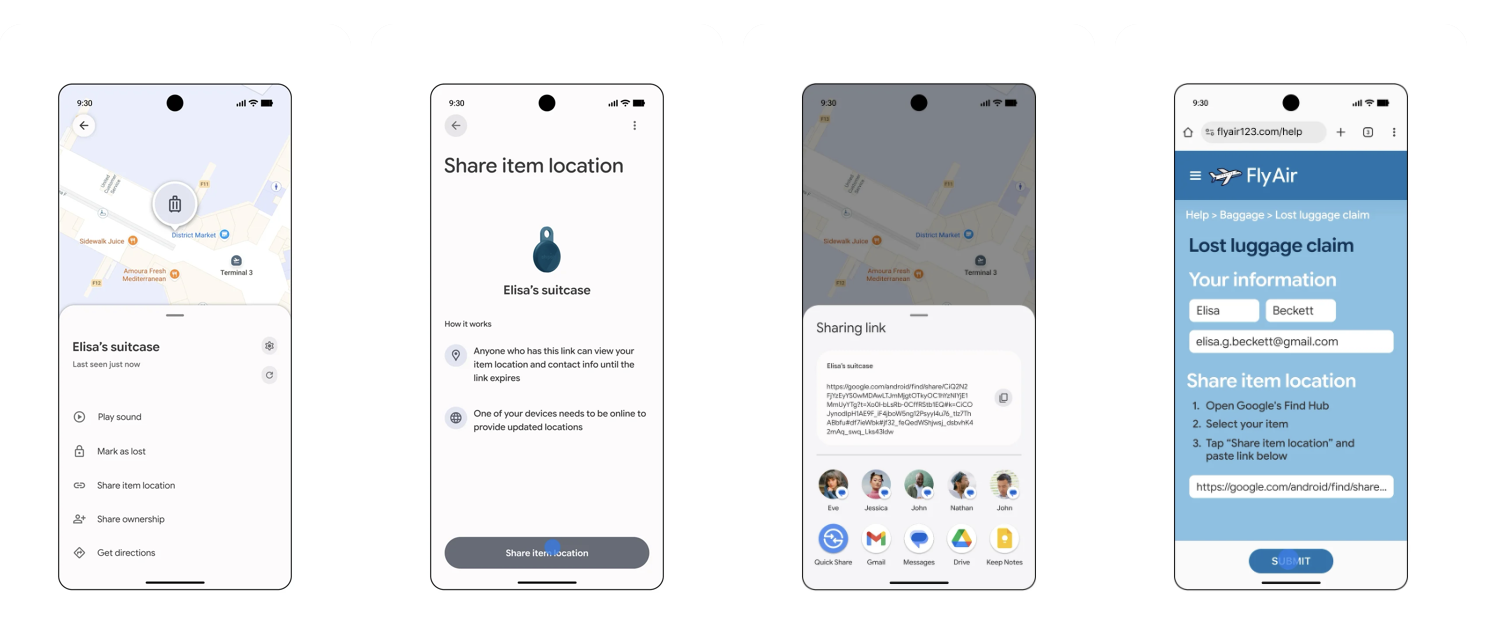
The move is significant not just because of the feature itself, but because of the partnerships behind it. Google says more than 10 major airlines are already participating, including Lufthansa, Air India, and Turkish Airlines, with Qantas expected to join. The company has also integrated with WorldTracer and NetTracer, two widely used baggage tracking systems in airports worldwide. That integration is key; without it, shared links would remain a consumer-side tool with limited operational value.
The broader strategy is clear. Google is positioning Find Hub as a cross-industry tracking network rather than a standalone Android feature. In addition to airlines, luggage brands such as Samsonite and July are building Find Hub compatibility directly into their suitcases. This reduces the need for separate tracker tags and could help normalize built-in tracking hardware in travel gear.
From a competitive standpoint, this places Find Hub in more direct competition with Apple’s Find My network, which has been widely adopted by travelers using AirTag devices. Apple established an early lead by leveraging its large device ecosystem. Google’s advantage may lie in scale across Android devices and partnerships that extend beyond personal tracking into airline systems themselves.
For travelers, the practical impact will depend on execution. Real-time link sharing sounds straightforward, but successful recovery still relies on airline processes, staffing, and internal logistics. Even so, providing baggage teams with precise, passenger-supplied location data could shorten resolution times in some cases.
As lost luggage remains a persistent frustration for air travelers, Google’s Find Hub update reflects a broader shift: consumer tracking technology is no longer just for peace of mind. It is becoming part of the formal infrastructure airlines use to locate and return misplaced bags.