

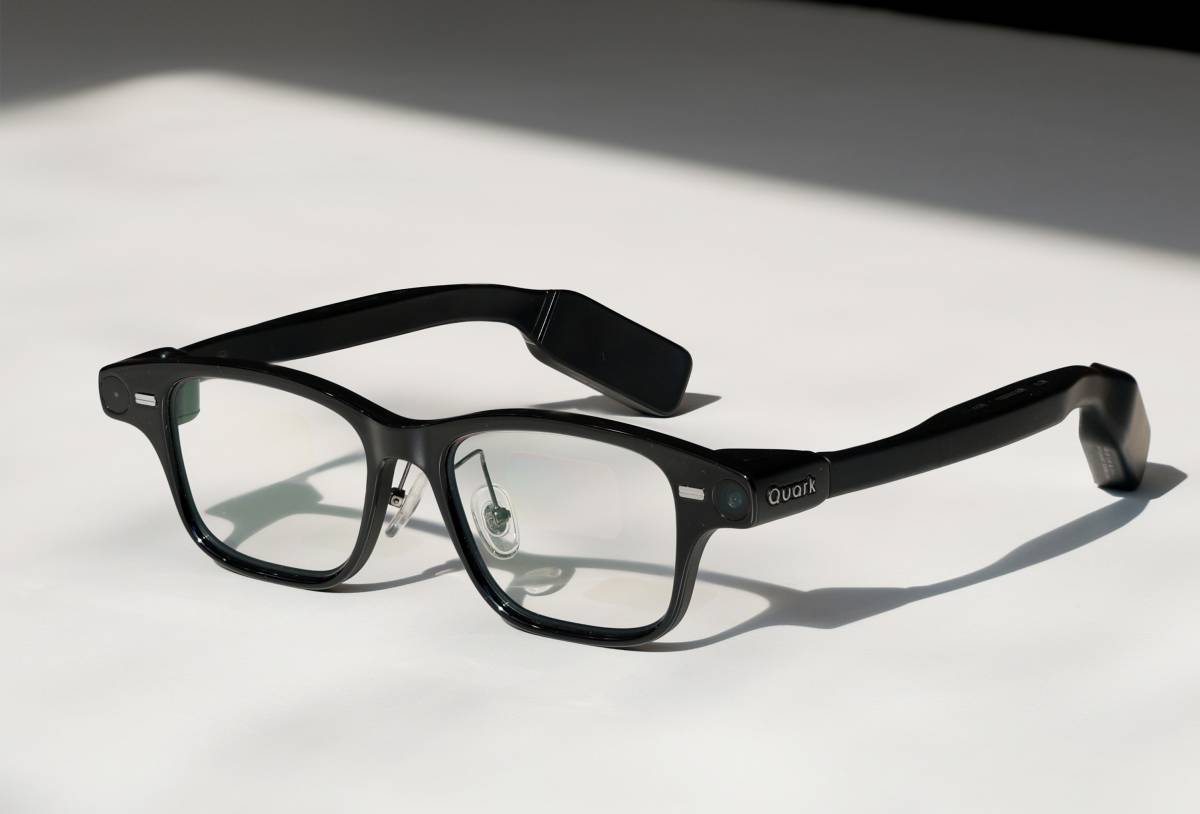
Alibaba has entered the AI-wearables race with the launch of its Quark smart glasses, now available for purchase in China. The company introduced two product lines — the flagship S1 and the lighter, lower-cost G1 — each offered in three variants. Both pairs connect to Alibaba’s new Qwen App, which serves as the interface for voice assistance, on-device translation, and AI-generated summaries such as meeting notes. Touch controls round out the interaction model, and unsurprisingly, the devices sit tightly within Alibaba’s broader software ecosystem, offering access to Alipay, Taobao, and popular Chinese music platforms like QQ Music.
The approach mirrors a growing trend in consumer tech: eyewear that blends heads-up displays with lightweight AI tools. Meta’s Ray-Ban line helped nudge these devices toward mainstream visibility, and Alibaba’s take follows a similar path. The S1 model uses micro-OLED lenses capable of projecting higher-quality visuals — up to 3K resolution for images and AI-enhanced 4K for video — while also packing a dual-chip system aimed at handling more demanding processing tasks. It’s tuned for better performance in dim environments, which is often a weak spot for display-equipped wearables.
The G1 distinguishes itself by being significantly lighter and geared toward all-day use. It trades the S1’s higher-end components for comfort and lower cost, emphasizing casual, everyday functionality rather than cinematic output or advanced processing. With both models, Alibaba is clearly trying to position the glasses as practical tools for communication, quick-reference tasks, and simple on-the-go computing rather than experimental hardware.
For now, Alibaba hasn’t signaled whether a global launch is planned. Both lines are currently available through Chinese e-commerce sites, with the S1 starting at ¥3,799 (around $537) and the G1 starting at ¥1,899 (about $268). As more companies explore AI-forward wearables, Alibaba’s entry adds another contender to a category still figuring out its long-term role — whether as productivity tools, multimedia companions, or stepping stones toward more immersive AR devices.