

OpenAI is preparing to introduce advertising into ChatGPT, a move that signals a clear shift toward a more traditional platform monetization model. Ads are expected to begin appearing in the coming weeks and will coincide with the global rollout of ChatGPT Go, a lower-cost subscription tier that OpenAI is positioning as an entry point for everyday AI use.
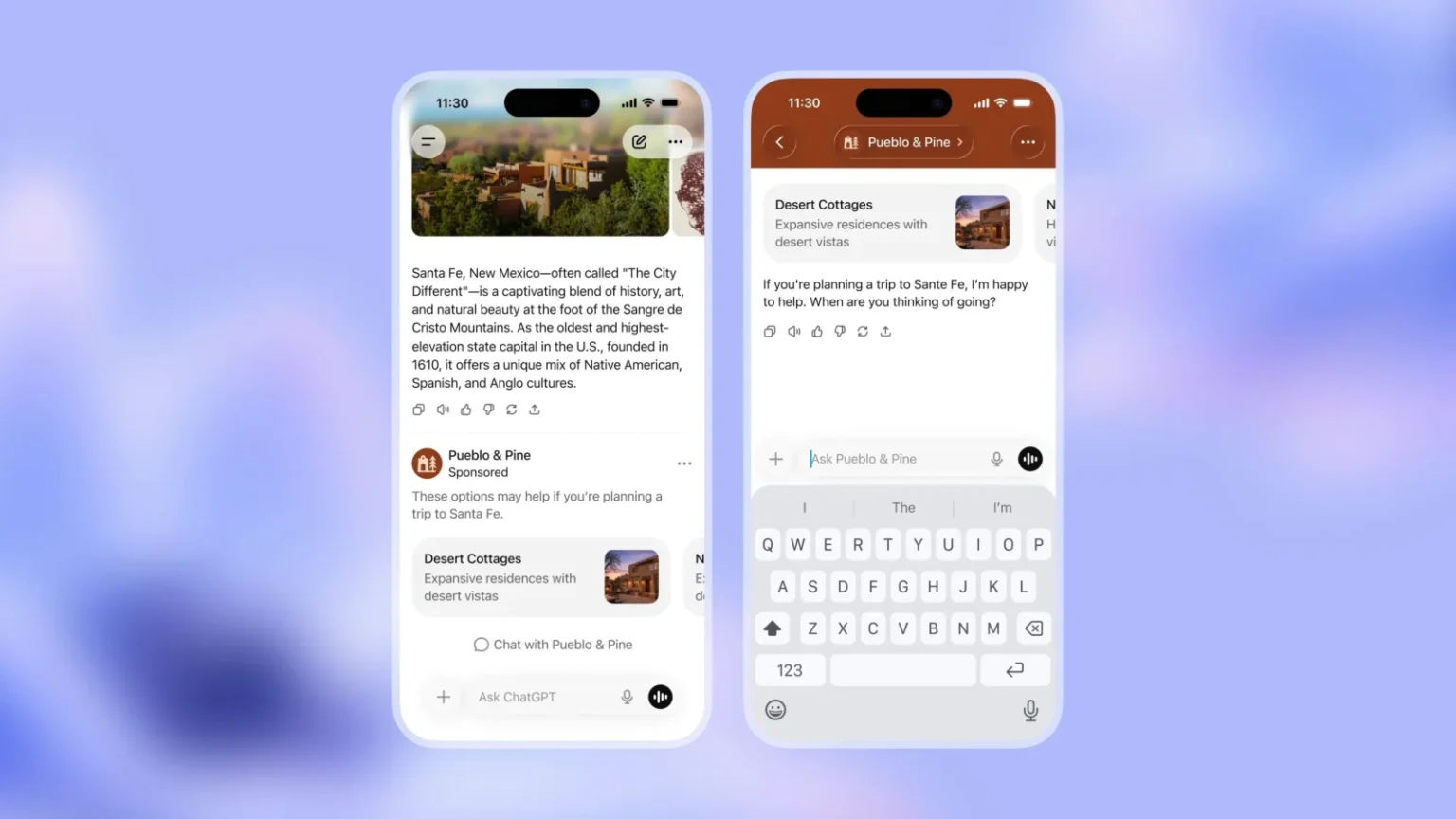
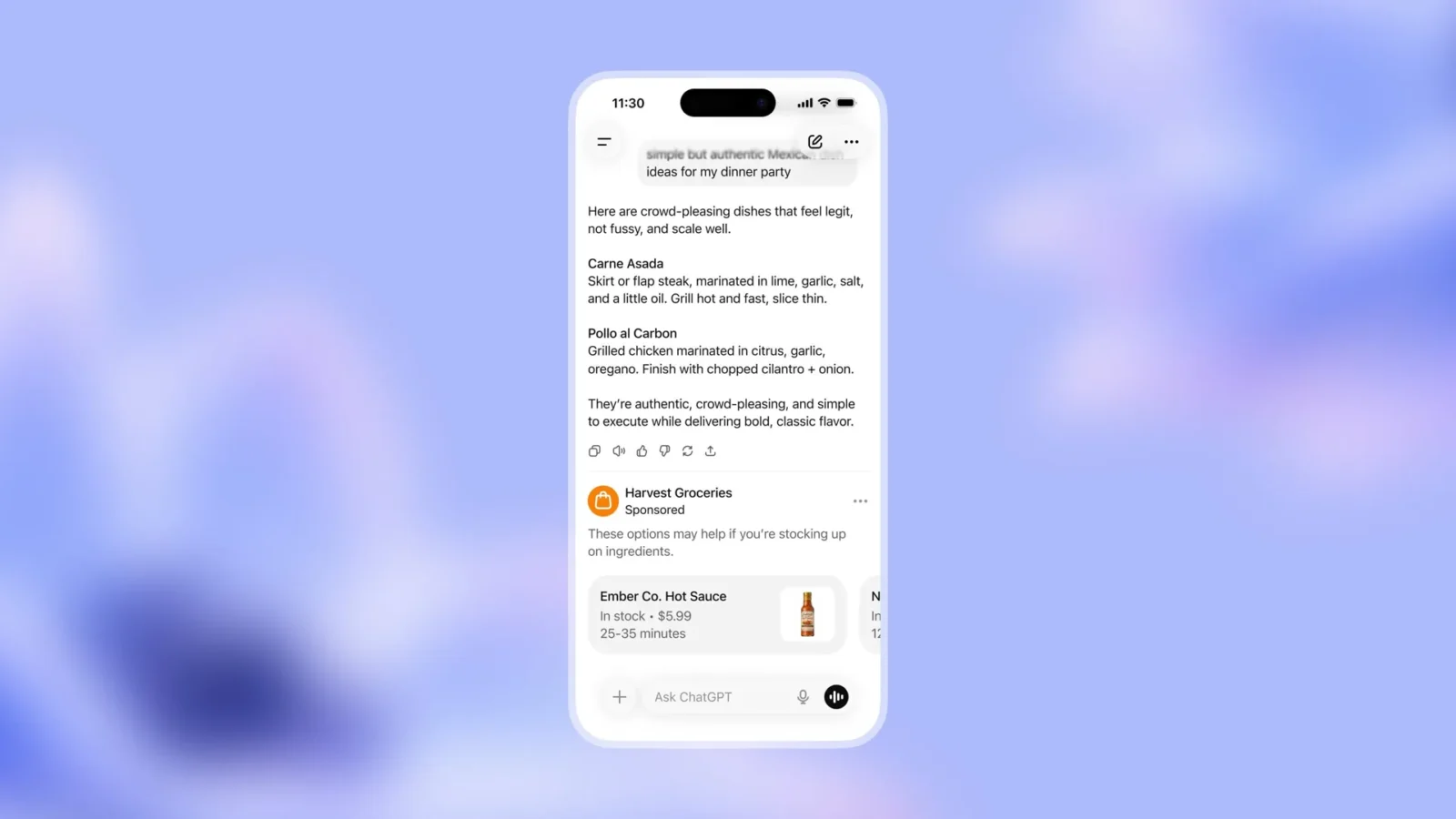
Advertising will appear in both the free version of ChatGPT and the ChatGPT Go plan. Higher-priced tiers, including ChatGPT Plus, Business, Enterprise, and Pro, will remain ad-free. In early mockups, ads are shown at the bottom of ChatGPT responses with a visible “Sponsored” label, linking out to third-party websites. While current ChatGPT interactions are largely text-based, these placements are expected to introduce more visual elements, including images, into standard conversations.
OpenAI says advertisements will not influence how ChatGPT answers questions, stating that responses will continue to be optimized around usefulness rather than commercial relationships. The company also says it will not share individual conversations with advertisers, though ad-related data may be used for personalization. Users will be able to turn off ad personalization and clear advertising data through settings. For now, ads will not appear for users who are logged out, though OpenAI has not committed to keeping that option permanently.
Alongside ads, OpenAI has confirmed the global availability of ChatGPT Go. First launched in India in August 2025, Go expanded rapidly to more than 170 countries and has become the company’s fastest-growing subscription plan. Starting today, ChatGPT Go is available worldwide wherever ChatGPT operates. In the US, the plan is priced at $8 per month, with localized pricing in other regions.
ChatGPT Go is aimed at users who want more capability than the free tier without stepping up to higher-priced plans. It offers expanded access to GPT-5.2 Instant, including roughly ten times more messages, file uploads, and image generation compared to the free version. The plan also includes longer memory and a larger context window, allowing ChatGPT to retain more useful details over time and support longer conversations.
With this rollout, ChatGPT now has three consumer subscription tiers globally. ChatGPT Go sits at the lower end, followed by ChatGPT Plus at $20 per month, which targets more demanding tasks such as document editing, research, and data analysis. Plus includes access to more advanced models like GPT-5.2 Thinking, higher usage limits, and tools such as the Codex coding agent. At the top is ChatGPT Pro, priced at $200 per month, which offers access to GPT-5.2 Pro, maximum memory and context limits, and early previews of new features intended for power users.
OpenAI has framed its approach to advertising as an attempt to make ads more interactive and potentially useful. Future formats may allow users to ask questions directly within an ad to clarify product details before clicking through. CEO Sam Altman has previously spoken favorably about advertising when it adds value, though earlier experiments involving partner app suggestions drew criticism from some users.
Taken together, the arrival of ads and the global launch of ChatGPT Go highlight OpenAI’s effort to balance growth, accessibility, and revenue. For users, the changes introduce clearer trade-offs between price, features, and commercial presence as ChatGPT continues to evolve from a tool into a large-scale consumer platform.