

Acer is expanding its Predator gaming ecosystem in the Middle East with a broad lineup of desktops, laptops, monitors, and accessories aimed at players who want a cohesive, high-performance setup. Rather than focusing on a single device, the company is presenting an entire hardware stack built around consistent design language and feature priorities, from cooling systems to display refresh rates. The expanded range reflects the growing demand for PC gaming equipment that balances raw power with practical ergonomics and long-term reliability.
At the top of the ecosystem sits the Predator Orion 7000, a desktop geared toward users who need substantial processing and graphics capabilities for modern titles or intensive creative workflows. It supports configurations up to an Intel Core Ultra 9 Processor 285K and NVIDIA GeForce RTX 5090 graphics, placing it among the more powerful pre-built options currently available. The system incorporates visible design elements, including ARGB lighting and a transparent, EMI-shielded side panel, but the technical focus is on sustained thermal performance. Cooling is handled through Acer’s multi-fan Predator system and FrostBlade fans, while PCIe Gen4 storage and built-in AI acceleration support tasks such as streaming, video processing, and resource-heavy gameplay. Although manufacturer claims around “extreme” performance are common across this category, the Orion 7000 positions itself as a workstation-level machine tailored to gaming environments.

For players who prefer portability, Acer’s Predator Helios Neo 16 AI offers laptop-class mobility with higher-end components. Powered by processors up to the Intel Core i9-14900HX and equipped with a 240Hz WQXGA display, the system is intended to deliver smooth visuals across both competitive and visually dense games. The device uses a blend of metal-based thermal compounds, AeroBlade 3D fans, and vector heat pipes designed to maintain performance under continuous load. Acer emphasizes local AI acceleration, noting that the system can run a wide range of AI-driven apps without cloud dependence. Features such as Copilot in Windows 11, PurifiedView, and PurifiedVoice 2.0 round out its productivity profile, positioning the laptop as a hybrid machine for both play and creative work.
On the display front, the Predator XB273UV3 monitor offers a 27-inch WQHD panel with a 180Hz refresh rate, a 0.5ms response time, and AMD FreeSync Premium support. These specifications place it squarely in the mid-to-upper tier of gaming monitors, appealing to players who want fluid motion handling without stepping into ultra-high-refresh models. The use of Agile-Splendor IPS technology is intended to improve color and clarity while preserving wide viewing angles. Adjustable ergonomics, HDR compatibility, and support for NVIDIA G-SYNC add flexibility for users who split time between gaming, content consumption, and creative projects.
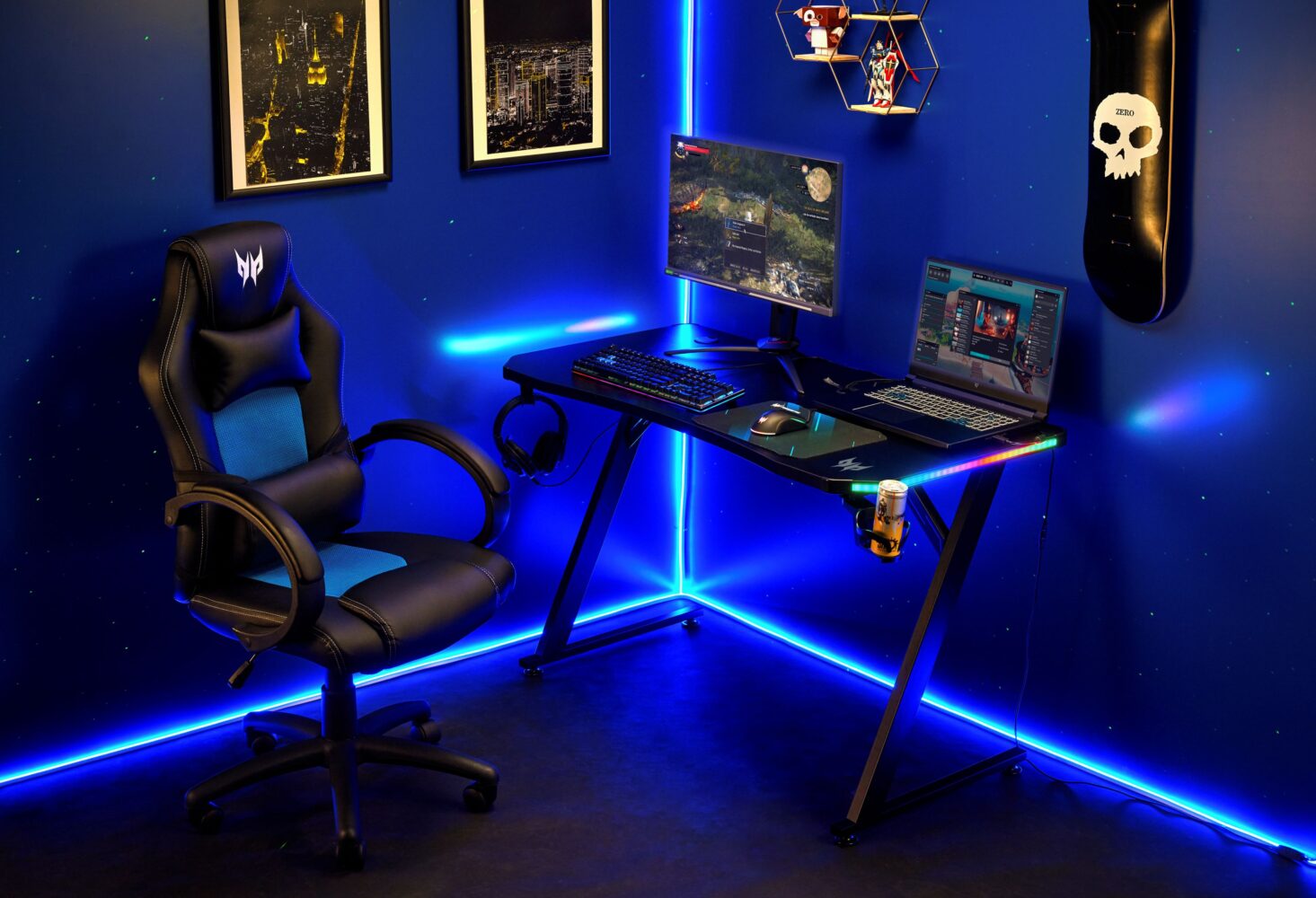
Acer is also promoting a range of Predator-branded accessories to complete the ecosystem. The Predator Gaming Chair is designed for long sessions, with cushioning, adjustable support, and a frame meant to withstand extended use. The Predator Gaming Desk provides a structured workstation, incorporating cable management, a headset hook, RGB lighting accents, and a dedicated drink holder—features increasingly common in gaming furniture aimed at reducing clutter. For mobility, the Predator Gaming Backpack features padded compartments, water-repellent fabric, and shock-absorbing elements to protect laptops and peripherals up to 15.6 inches. These accessories indicate Acer’s interest in expanding beyond core hardware into lifestyle-oriented gear that complements gaming setups.
Taken together, the Predator lineup reflects a strategy focused on offering a full-suite ecosystem rather than standalone devices. Gamers in the region looking for integrated setups may find value in the unified design and spec consistency, while others may prefer mixing brands based on component-level priorities. As competition intensifies in the gaming hardware sector, ecosystems like this one attempt to create continuity for users seeking both performance and a cohesive setup aesthetic.