

This might not be football tech as we know it, meaning Goal Line Technology and VAR (coming soon), but it’s something worth dipping into as we arrive to the brink of the 2018 World Cup.
The subtleties in design have been the difference as the ball evolved from a 32-panel, hand-stitched model to the light and modern Brazuca used at the 2014 tournament. Here’s a breakdown of the different ‘eras’.
The lace-ups – pre 1950s
You know how if you want to fill up your ball today, you stick a pin into a valve and hit a switch, and within seconds, you’re pumped up and ready to get kicking. Easy peasy, not-even-lemon-squeezy. Well, that’s not how it always was.
In fact, back in the day, the balls were made of pig bladder leather, and had to be manually laced up to get them round and ready. In 1930, the first official World Cup was held in Uruguay (though it was not the first international football competition *cough* Olympics *cough*), and the official match ball that they carried out wasn’t the sleek-looking, perfect sphere you see referees bringing out of the tunnel today.

The ball was a thick leather hide, laced up to resemble something that looks like Rambo coming out of the woods all cut and bruised. This British-made bad-boy came in two variations, and one of them was the ‘T-Model’ (very mod for the pre-2000s, wouldn’t you say?), named so because of the T-shaped panels on either side.
The hosts took on an Argentina side that many of you won’t be familiar with, and in an epic repeat of the 1928 Olympics, they emerged 4 – 2 winners on the night.
The lace-ups continued throughout the Mussolini era, right up to the Allen used in the 1938 World Cup in France (a 13-panel ball with laces) before a 12-year hiatus during the Second World War.
The valve! 1950 – 1970
I guess they must have got tired of lacing every single ball, each and every time. I mean, you try it, see how you fare after lacing up your fifth one. Well, in the 1930s, an Argentinian company called Tossolini (Toss Mussolini?) got behind closed doors to discuss this very strenuous way of ball-pumping, before they finally made a breakthrough.
And at last, when the World Cup returned in 1950, and the teams took to the pitches in Brazil, they finally seemed to find a viable solution to their problems: the valve. A concealed device that could be used to blow balls up was a revelation at the time, and it generally made it easier for everyone all round. After all, isn’t that what technology is supposed to do? Reduce human effort?
In 1958, FIFA began selecting their official balls by way of competition. That means, may the best ball win. In this year, for the tournament in Sweden, Swedish company Sydsvenska Laderoch Remfabriken were the stand-out winners from a randomised trial featuring more than 100 balls, and the Top Star was praised for its waterproof waxed surface.
Geoff Hurst put his boot through the last pre-Adidas ball (25 stitched panels, and no markings) in 1966 to complete his hattrick, allowing Queen Elizabeth II (wow) to present the English national team with the much sought-after trophy after they beat West Germany 4 – 2 in extra time.
Adidas era part 1: 1970 – 1998
In came Adidas to signal the end of brand-less balls, and for the 1970 World Cup in Mexico, we got the revolutionary, iconic black-and-white, 32-paneled, hecta-pentagonal ball that would define an entire age of football balls. Named Telstar supposedly because it looked great visually on the television (although it was actually in tribute to the Telstar communications satellite), few can argue that Adidas got it wrong.
Arguably the most popular version, especially if you were raised in the 80s and 90s, playing kick-about with the big boys in the courts, was the 1978 Tango, AKA the official match ball in the 1978 World Cup in Argentina.

Still maintaining that easy-on-the-eye 32-paneled hecta-pentagonal design, this one featured a unique triangular print that made it even more beautiful to look at, just like watching two people tango (hence the name).
With the design itself not really changing, Adidas kept it fresh by introducing new emblematic prints that reflected the host nation. This was first seen in 1986 with fancy Aztec-inspired handiwork in Mexico, the year that Diego Maradona cemented his place as one of the world’s footballing greats.
The power of the Aztecs was with him as he planted a miracle Hand-of-God goal past Peter Shilton, before beating five outfield players, bamboozling Shilton and slotting home for arguably one of the best World Cup goals to have been scored.
The Tricolore, used in France 1998, was what many would call a ‘transition’ ball. It marked the end of the Tango era, as we bade a fond farewell to the legendary black-and-white back-yard ball.
The Tricolore was the first multicoloured ball used in the World Cup, featuring the French colours of blue, red, and white, and will go hand-in-hand in memory with Zidane’s masterclass to thrash a talented Brazilian side boasting the likes of (the real) Ronaldo.
Adidas era part 2: post ‘98
It was once said that football is a gentleman’s game played by hooligans. It used to be rough and tough, thick-skinned ball that you really had to stick your boot through, a butch, hard-man’s game indeed. Ask Stan Mortensen or Bobby Charlton.
As of the year 2002, things just got a little, well, light. Maybe too light even. The Adidas Fevernova presented a number of important changes in the design of the ball. No more pig bladder leather, this one was fashioned out of syntactic foam, which was a sort of hollow-balloon composite that drastically decreased the weight of the ball.
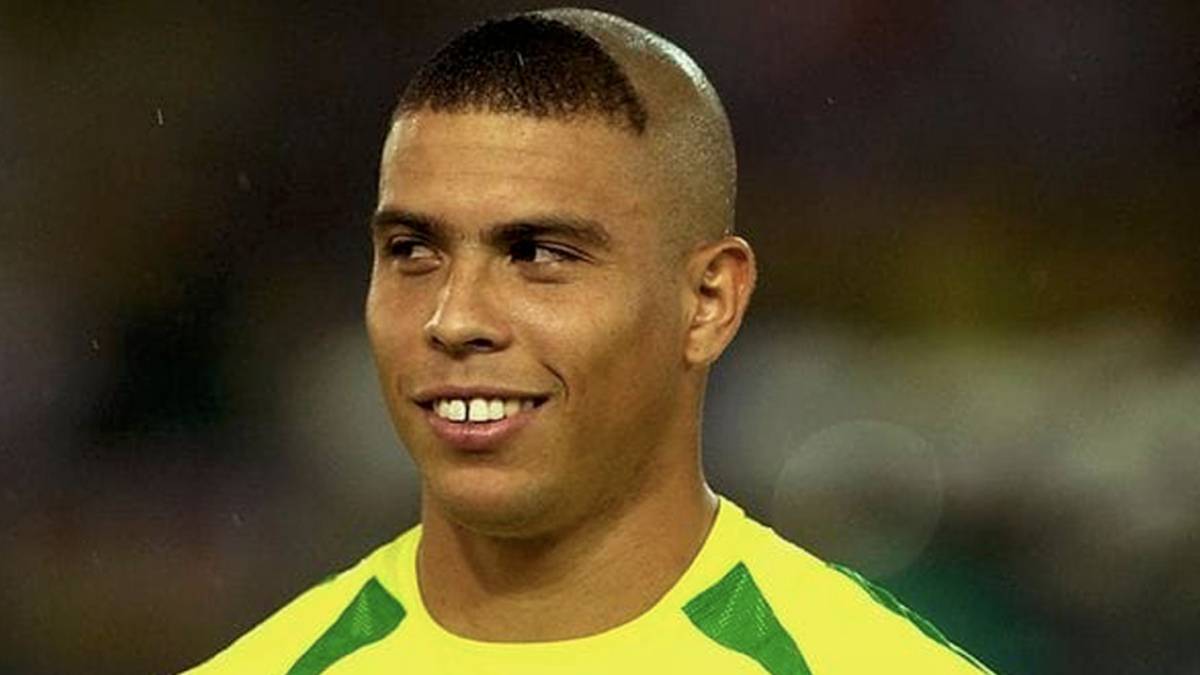
Even the nostalgic hecta-pentagonal design wouldn’t throw critics off its scent, and goalkeepers in particular voiced their qualms with this airy, swervy ball. Ronaldo ‘El Fenomeno’ wouldn’t be complaining as he returned with a vengeance, scoring twice to spearhead his team to victory in Japan (that haircut though).
And then things turned kinda weird. They ditched the hecta-pentagonal design, and the 2006 Teamgeist ball incorporated what looked like panty-liners slapped onto the surface. Not sure what brought that on, but if we can get past that, the technology was actually quite impressive.
This new 14-panel design had no stitches on it. No, the seams were heat-sealed, so you had a neat and glossy surface. Crucially, this was the first completely water-proof ball, and served as a major technological breakthrough for Adidas.

Not sure, but maybe the dailies-inspired design somehow prompted Zidane to bring out the handbags and headbutt Marco Materazzi that led him being sent off in the final. I don’t know, I’m starting to get the feeling there’s more to a ball than meets the eye.
With each model, aren’t you supposed to build upon lessons learnt and improve the next model? It seemed like they didn’t think so, and in 2014, we had one of the most hated balls of all time (including the pair between Sepp Blatter’s legs).
The eight-paneled Jabulani, as it was known, was supposedly an improvement over its predecessor, but there was nothing impressive about it and it was eventually labelled a ‘disaster.’ Lionel Messi would certainly leap at the chance to have a go at the ball, which, along with the annoying Vuvuzelas, made this one to forget for him.
And finally, four years ago, we took it down from 32 panels, to an astounding 6. The ball developers at Adidas really listened this time, and as a result, the Brazuca was apparently the most tested ball of all time. There was even footage of it being kicked around by a robotic foot, although not sure he will be playing in the World Cup anytime soon.
As to whether or not it could be blamed for Argentina not overcoming Germany in the final? Only Messi and co. will know, but one thing’s for sure, a good workman does not blame his tools.
The Telstar 2018
It looks like we’re taking it back to the past, and last year in November, Lionel Messi himself named the 2018 official ball: Telstar 2018, in tribute to Adidas’ first release 48 years ago. In naming it so, it looks as though he is done playing around with the Jabulani and Brazuca, and wants to take it back to a time when football was football.

It remains to be seen how well the Telstar 2018 will serve him and the rest of the players in Russia, kicking off in just under 2 days!
What is your favourite ball? Have your say in the comments section below.