


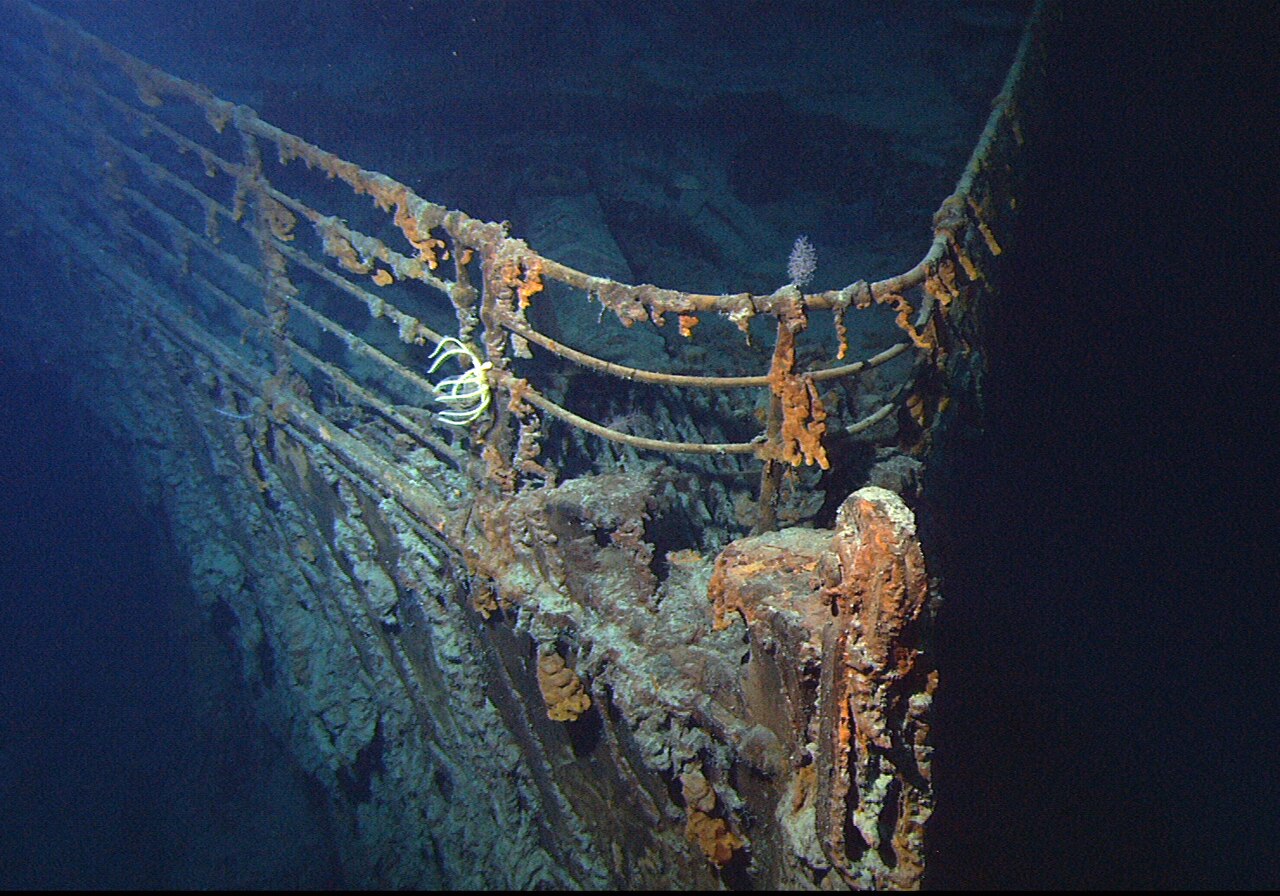
More than a century after its sinking, the final hours of the RMS Titanic have been reconstructed in unprecedented detail using modern supercomputer modeling. The research, published toward the end of 2025, draws on decades of physical surveys, historical testimony, and high-resolution mapping of the wreck site to produce one of the most comprehensive simulations yet of how the ship was damaged, flooded, and ultimately broken apart.
When the Titanic departed on its maiden voyage in 1912, it was widely regarded as a technological benchmark of its era. That reputation did not prevent the vessel from striking an iceberg and sinking less than 400 nautical miles off the coast of Newfoundland. Since the wreck’s discovery in 1985, repeated expeditions using remotely operated vehicles and crewed submersibles have gathered increasingly precise data about the ship’s condition on the seafloor, more than 12,000 feet below the surface. These surveys revealed extensive structural damage caused not only by the collision but also by the immense pressures involved in the descent to the ocean floor.
The new study sought to move beyond isolated observations by reconstructing the entire sequence of events, beginning with the iceberg impact and ending with the ship’s separation into two main sections. Researchers combined digitized blueprints, metallurgical analysis, eyewitness accounts, and sonar scans of the wreckage to create a physics-based model of the sinking. One of the central aims was to evaluate long-standing questions about how quickly water spread through the lower compartments and whether survivor testimonies aligned with the physical evidence.
According to the simulation, flooding began at a rate far beyond what the Titanic’s onboard systems could handle. Estimates suggest that between 138 and 243 tons of seawater per minute entered the ship during the first hour after impact. Even at the low end of that range, the five ballast pumps and three bilge pumps installed on the vessel, which together could remove only about 11.4 tons of water per minute, were insufficient to slow the flooding in any meaningful way. This imbalance helps explain why the situation deteriorated so rapidly despite the ship’s advanced design for its time.
The model also recreated the ship’s structural failure as it sank, including the stresses that led to the hull breaking apart. When compared with the current positions of the bow and stern sections on the seabed, the simulated breakup closely matched observed debris patterns and sonar-mapped terrain, lending credibility to the results.
One of the more debated findings involves an alternative scenario: a head-on collision with the iceberg. The simulations indicate that such an impact may have limited flooding to four compartments instead of six, potentially allowing the ship to remain afloat. Reduced speed prior to impact further improved the outcome in these models, reinforcing the role that both angle and velocity played in the disaster.
While the study does not rewrite history, it offers a clearer, data-driven explanation of events that have long been shaped by partial evidence and speculation. By combining modern computing power with historical records, researchers are narrowing the gap between firsthand accounts and physical reality, providing a more complete understanding of one of the most studied maritime tragedies in history.