

At CES 2026, Samsung outlined its television lineup for the coming year, focusing on incremental OLED improvements, expanded screen sizes, and a continued push into lifestyle-oriented displays. The announcements cover OLED, Neo QLED, and art-style TVs, alongside refinements to the company’s processing hardware and software features.
Samsung’s OLED range is led by the new S95H, which replaces the S95F from last year. The S95H remains a QD-OLED model in most sizes and introduces a revised physical design with a metal frame and slimmer wall-mount profile. One notable change is the handling of external connections. Rather than relying solely on a separate box, the TV now includes built-in ports while also supporting Samsung’s wireless Zero Connect system as an option. This setup allows users to connect devices either directly to the panel or wirelessly via an external hub, effectively increasing flexibility rather than removing cables entirely.
Brightness has been modestly increased, with Samsung claiming up to a 35 percent gain over the S95F. As with many such figures, real-world performance will depend on viewing modes and content. The S95H will be offered in 55, 65, 77, and 83-inch sizes, though Samsung has not yet clarified whether the largest version continues to use a different panel type, as was the case last year.
Below the flagship, the S90H moves Samsung’s glare-reduction technology into the mid-range OLED tier. Previously limited to higher-end models, the matte-style anti-reflection screen is designed to make OLED viewing more practical in brighter rooms. The S90H also retains a strong gaming feature set, including 4K at 165Hz, variable refresh rate support, and compatibility with major PC gaming standards. Entry-level OLED duties will be handled by the S85H, which expands the range with a new 48-inch option, targeting buyers looking for smaller screens without stepping up to premium pricing.
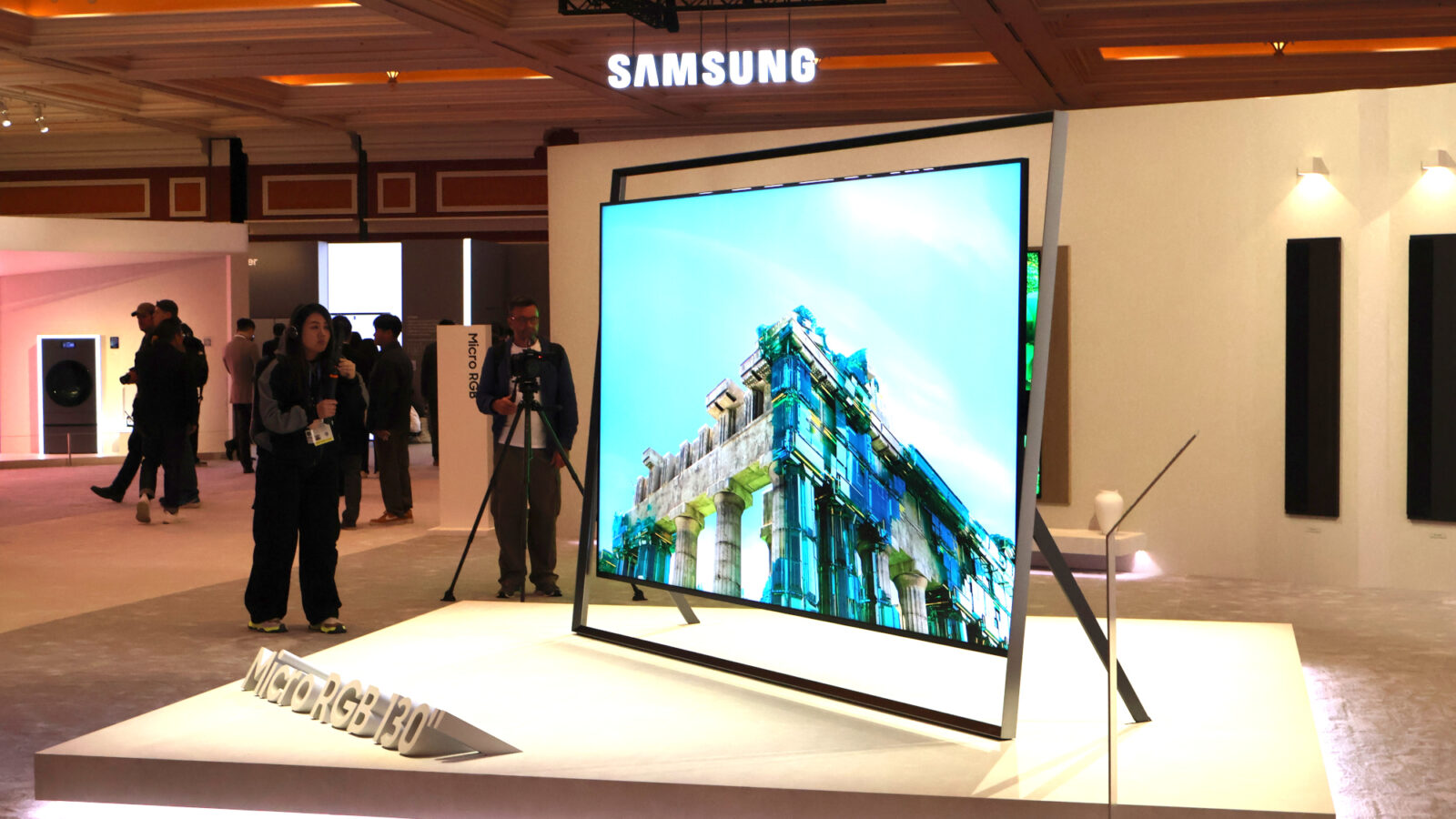
Beyond OLED, Samsung is leaning heavily into large-format displays. Its Neo QLED mini-LED lineup adds a 115-inch QN90H and a 100-inch QN80H, reinforcing a strategy that prioritizes scale alongside processing enhancements. These models will rely on Samsung’s latest NQ4 AI processor, which brings updated upscaling, automated picture adjustments based on content type, and expanded audio controls. New software modes, such as AI-driven sports presets, are positioned as convenience features rather than transformative upgrades.
Lifestyle TVs also remain a focus. The Frame series grows in both directions, with a new 98-inch version becoming the largest art-style TV Samsung has released so far, while The Frame Pro adds a smaller 55-inch option. In a shift that simplifies installation, standard Frame models will increasingly rely on built-in connections instead of the external One Connect box.
Overall, Samsung’s CES 2026 TV announcements emphasize refinement rather than reinvention. OLED improvements are evolutionary, AI features continue to expand gradually, and the most visible changes come from sheer screen size. For buyers, the lineup suggests more choice across sizes and price tiers, but few fundamental shifts in how Samsung’s TVs are expected to perform day to day.