
TL;DR: Your Friends & Neighbors season 2 is chaotic, messy, and occasionally brilliant. Jon Hamm and James Marsden carry a show that still struggles with its identity, but when it leans into its wild, addictive energy, it becomes hard to look away. Not prestige perfection — but definitely binge-worthy.
Your Friends & Neighbors Season 2
I don’t think I’ve seen a show this confused about its own identity and still somehow remain this watchable. That’s the weird magic trick Your Friends & Neighbors season 2 pulls off. It’s like watching a luxury sports car with no steering — sleek, loud, undeniably impressive in bursts, but constantly veering off course when it matters most.
And yet… I couldn’t stop watching.
That’s the paradox at the heart of Your Friends & Neighbors season 2, and honestly, it’s what makes reviewing it such a strange experience. Because depending on what you’re looking for — sharp satire, prestige drama, or just messy, addictive chaos — your mileage is going to vary wildly.
So let’s get into it.
Welcome back to chaos, but make it shinier
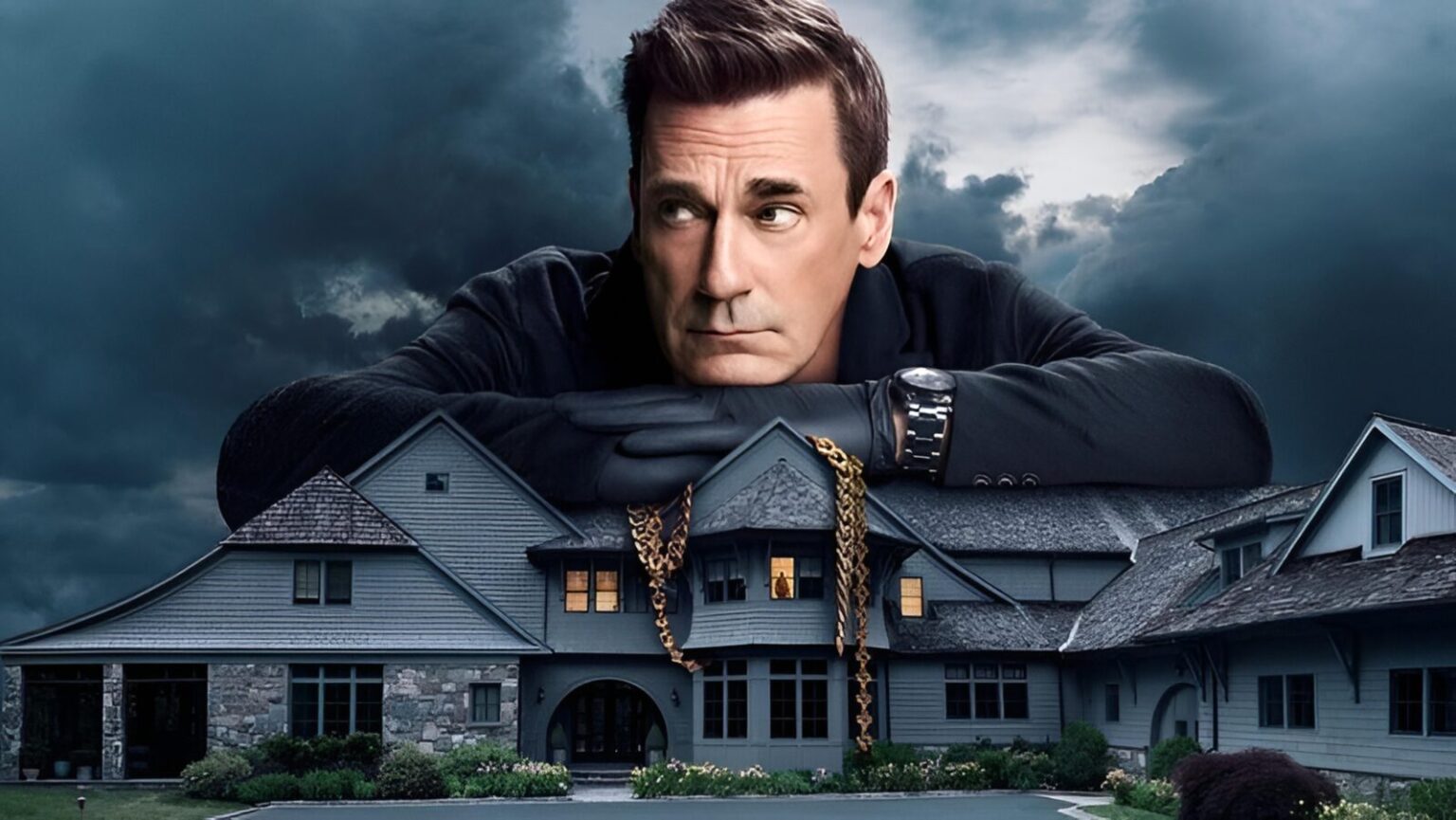
Season 2 picks up with Andrew “Coop” Cooper still doing what might be the most casually unhinged side hustle in modern TV: robbing his rich neighbors to maintain his own collapsing lifestyle. It’s still one of the show’s best ideas — this ironic loop of wealth cannibalizing itself — and for a while, it gives the season a strong pulse.
There’s something inherently compelling about watching Coop navigate this double life. On one side, he’s still embedded in this hyper-curated suburban ecosystem of wealth, infidelity, and social politics. On the other, he’s sneaking through those same mansions like a morally conflicted Ocean’s Eleven extra who took a wrong turn into a therapy session.
Season 2 leans into that duality more than before, and when it works, it really works.
But here’s the catch: it takes its sweet time getting there.
The slow burn… that almost burns out
The opening stretch of this season feels like the show is reintroducing itself — not just to the audience, but to its own identity. There’s a lot of setup, a lot of repositioning, and a lot of narrative table-setting that doesn’t immediately pay off.
And I’ll be honest: there were moments early on where I wondered if the show had lost its edge entirely.
But then something clicks.
Not all at once, but gradually. A reveal here, a character shift there — and suddenly the show starts to feel alive again. It’s like the writers remembered that this is supposed to be fun, chaotic, and just a little bit dangerous.
Once it finds that groove, the season becomes significantly more engaging.
The mess is the point… and also the problem
If season 1 was “Big Little Lies meets Breaking Bad,” then season 2 is more like “what if both those shows had a few drinks too many and started making questionable decisions?”
And weirdly, that’s kind of the appeal.
This season is messy. Not in a lazy way, but in a deliberately chaotic, “let’s see how far we can push this” kind of way. Storylines spiral, characters make increasingly reckless choices, and the show leans harder into its more outrageous tendencies.
Sometimes, that results in genuinely gripping television. Other times, it feels like narrative overindulgence — like the show is throwing twists at the wall just to see what sticks.
And not everything sticks.
Some subplots feel undercooked, others feel like they wandered in from a completely different show, and a few just quietly disappear into the background like guests leaving a party no one noticed they were attending.
Still, there’s an energy here that’s hard to ignore.
Jon Hamm: still the MVP of controlled chaos
Let’s not overcomplicate this: Jon Hamm is still the reason this show works.
There’s something about the way he plays Coop that makes even the most absurd situations feel grounded. He has this ability to project control and vulnerability at the same time, which is perfect for a character who is constantly one bad decision away from total collapse.
This season gives him more room to explore that vulnerability, especially as the consequences of his choices start catching up with him. There’s a moment midway through the season — without spoiling anything — that genuinely reframes how you see Coop. It’s one of the few times the show slows down in a way that actually adds depth instead of just padding runtime.
And Hamm absolutely nails it.
Even when the writing wobbles, he doesn’t.
James Marsden shows up and chooses chaos
If Hamm is the anchor, James Marsden is the wildcard.
His introduction this season is exactly the kind of shake-up the show needed. He plays Owen Ashe with this slick, unpredictable energy that instantly raises the stakes. You’re never quite sure what he’s going to do next, and that unpredictability injects tension into scenes that might otherwise feel flat.
What I loved most is how he plays off Hamm.
Their dynamic is electric — part rivalry, part reluctant partnership, part psychological chess match. It’s easily one of the strongest elements of the season, and whenever the show leans into it, everything else fades into the background in the best way possible.
It’s the kind of pairing that makes you wish the show was more focused overall.
Because when it locks into this dynamic, it’s genuinely great TV.
The tone: sharper, but still all over the place
One thing I’ll give season 2 credit for is that it feels more self-aware.
There’s a clearer sense that the show understands how ridiculous its world can be, and at times, it leans into that with a bit more confidence. The satire is still there, but it’s less hesitant — more willing to embrace the absurdity of these ultra-privileged lives spiraling out of control.
The problem is consistency.
For every moment where the tone clicks — where the drama, humor, and tension align — there’s another where it feels like the show is juggling too many identities again.
You’ll go from a genuinely tense sequence to something that feels like it belongs in a completely different genre. And while that unpredictability can be exciting, it also makes the overall experience feel uneven.
It’s like a playlist that jumps from classical music to EDM to lo-fi beats without warning. Individually, the tracks might be great — but together, they don’t always flow.
When it goes big, it really goes big
The final stretch of the season is where things go full chaos mode.
And honestly? I kind of loved it.
The last few episodes crank everything up — the stakes, the drama, the sheer absurdity of it all. It pushes believability to its limits, but at that point, the show seems fully aware of what it’s doing.
It’s not trying to be subtle anymore. It’s trying to be entertaining.
And in those moments, Your Friends & Neighbors season 2 delivers.
It becomes the kind of show you binge not because it’s perfect, but because you need to see how far it’s willing to go.
That’s a different kind of success — but it’s still success.
So what’s the verdict?
Here’s the thing: this season is better and worse than it should be at the same time.
It’s better because it embraces its chaotic energy and doubles down on what makes it addictive. It’s worse because it still hasn’t figured out what it actually wants to be.
There’s a sharper, more confident version of this show hiding in here — one that could genuinely stand alongside the greats of the genre.
But for now, it’s still stuck in this in-between space.
Not quite satire.
Not quite prestige drama.
Not quite crime thriller.
Just… a very expensive, very entertaining mess.
And depending on your tolerance for that kind of storytelling, that might be enough.