TL;DR: Wonder Man is a quietly powerful MCU series that trades multiversal bombast for emotional honesty. With stellar performances from Yahya Abdul-Mateen II and Ben Kingsley, sharp Hollywood satire, and a character-first approach that feels refreshingly unburdened by franchise noise, it proves Marvel still knows how to take risks when it wants to.
Wonder Man
There’s a very specific kind of fatigue that sets in when you’ve been riding with the Marvel Cinematic Universe since the post-credits shawarma days. It’s not that I’m tired of superheroes. I’m tired of repetition. Tired of stories that feel algorithmically generated to slot into Phase Whatever like interchangeable LEGO bricks. So when I pressed play on Wonder Man, I’ll admit my expectations were somewhere between cautiously curious and emotionally armored.
By the time the credits rolled, that armor was gone.
What Wonder Man delivers isn’t just a refreshing MCU side quest or a clever genre remix. It’s a deeply human, oddly tender meditation on identity, performance, failure, and the strange alchemy of friendship. This isn’t a show trying to convince you that Simon Williams is the next A-list Avenger. It’s a show asking a far more interesting question: what happens when a man desperate to be seen finally gets a spotlight and realizes it might blind him?
That’s the trick Wonder Man pulls off. It sidesteps superhero fatigue not by denying the genre, but by shrinking it down to human scale. The explosions are there, the powers are there, the Marvel logo still slams onto the screen with corporate confidence. But the emotional weight lives elsewhere, in dressing rooms, auditions, bad decisions, and late-night conversations between two men who know exactly what it feels like to be laughed out of the room.
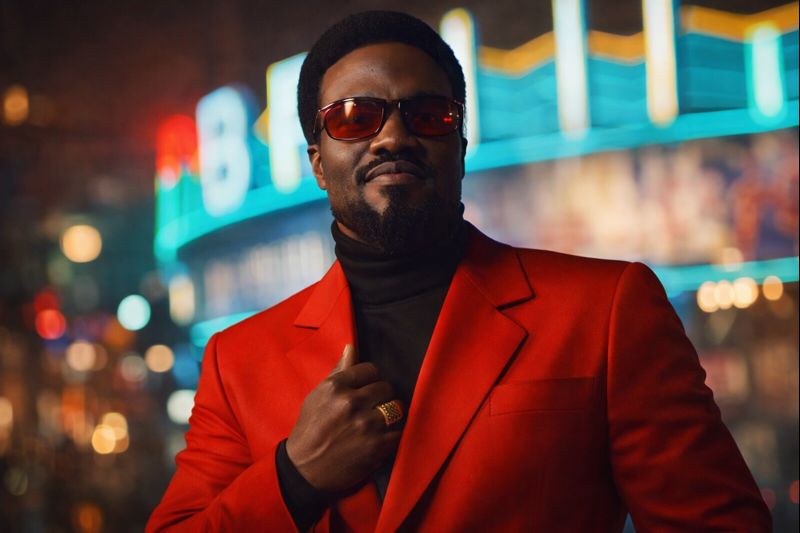
Simon Williams, played with startling vulnerability by Yahya Abdul-Mateen II, is introduced not as a hero but as an actor running on fumes. He’s talented, hungry, and quietly terrified that the window is closing. When he lands a role in a big-budget superhero reboot within the MCU’s own fictional Hollywood ecosystem, the show instantly becomes something deliciously meta. Wonder Man is a superhero series about a superhero series, and it uses that hall-of-mirror structure to interrogate what success actually costs.
I’ve known actors like Simon. Hell, anyone who’s chased a creative dream past their twenties has been Simon at some point. That mix of arrogance and insecurity. That belief that one break will fix everything. The show nails that psychology with uncomfortable precision. Simon isn’t always likable, and that’s the point. He’s raw, impulsive, and emotionally messy, and Abdul-Mateen II leans into those rough edges instead of sanding them down for likability metrics.
What surprised me most is how little Wonder Man rushes him into heroics. Powers arrive, yes, but they’re treated almost like a complication rather than a wish fulfillment. Strength becomes metaphor before spectacle, a physical manifestation of the pressure Simon feels to finally be extraordinary. It’s a clever inversion of the usual origin story dopamine hit, and it works because the show trusts the audience to care about the man before the myth.
Then there’s Trevor Slattery.
If you told me a decade ago that Trevor Slattery would become one of the most emotionally resonant characters in the Multiverse Saga, I would have assumed you’d been hit in the head with a repulsor blast. Yet here we are. Ben Kingsley takes what could have been another self-aware cameo and turns it into the emotional backbone of the series.
Trevor is no longer just the punchline from Iron Man 3. He’s a relic of a different Hollywood, a performer who tasted infamy instead of legacy and has been paying for it ever since. Watching him try to claw his way back into relevance alongside Simon is quietly devastating. Their friendship doesn’t form through quips or convenience. It forms through shared humiliation, through the understanding that the industry has chewed them up for different reasons but spit them out just the same.
The chemistry between Abdul-Mateen II and Kingsley is the kind you can’t fake. It feels lived-in, awkward, occasionally uncomfortable, and deeply sincere. Trevor becomes a mentor, a warning, and a mirror all at once. He’s comic relief, sure, but he’s also the ghost of Christmas Future whispering what happens when the applause fades and you’ve built nothing underneath it.
What makes Wonder Man special is how confidently it exists outside the usual MCU gravitational pull. Yes, this is part of the Multiverse Saga. Yes, it connects. But it never feels enslaved to lore homework. That freedom allows the show to do something Marvel has struggled with lately: let scenes breathe. Conversations linger. Silence matters. The camera isn’t afraid to sit on a character’s face and let emotion do the heavy lifting.
Destin Daniel Cretton’s influence is all over this, even when his name isn’t plastered on every frame. The tonal discipline here feels like a continuation of what worked in Shang-Chi, minus the third-act sky portals. Action is present but purposeful. When powers are used, they complicate relationships instead of simplifying them. Violence has consequences. Fame has consequences. Even success doesn’t come without collateral damage.
The Hollywood satire deserves its own standing ovation. Wonder Man skewers franchise filmmaking without turning cynical. Studio notes, branding meetings, reboot politics, the commodification of trauma, it’s all here, rendered with a wink that never curdles into bitterness. This is a show made by people who clearly love the industry and are deeply aware of how broken it can be.
There’s a moment midway through the series where Simon realizes that playing a hero is easier than being one, and that line hit me harder than any multiversal cameo ever could. That’s the thesis of the show distilled into a single, devastating truth. Wonder Man isn’t asking whether Simon can save the world. It’s asking whether he can save himself without losing the people who see him when the costume comes off.
For all its introspection, the series never forgets to be entertaining. The humor lands because it’s character-driven. The mystery elements add propulsion without hijacking the narrative. And when the show finally embraces its superhero DNA in earnest, it earns it emotionally rather than contractually.
What really impressed me is how Wonder Man feels like Marvel remembering what made the MCU work in the first place. Not spectacle. Not connectivity. Character. Risk. The willingness to bet big on someone audiences barely know and trust the storytelling to do the rest. That’s exactly what Iron Man did back in 2008, and the parallel isn’t accidental.
Will Wonder Man upset comic purists? Almost certainly. It takes liberties. It reframes. It prioritizes theme over canon worship. But that’s how genres evolve. That’s how stories survive. And frankly, after years of safe plays, Marvel needed a series willing to be weird, intimate, and unapologetically small in scale.
Wonder Man isn’t trying to redefine the superhero genre by shouting louder. It does it by lowering its voice and trusting you to lean in. It’s funny, thoughtful, occasionally heartbreaking, and easily one of the most emotionally grounded projects Marvel has released in years.