


TL;DR: Netflix’s Vladimir is a sharp and intellectually rich drama that explores power, desire, and generational conflict within the world of academia. Anchored by an exceptional Rachel Weisz performance, the series thrives on moral ambiguity and psychological depth rather than spectacle. It is thoughtful, provocative television designed for viewers who enjoy complex characters and stories that refuse easy conclusions, making it one of the most compelling adult dramas currently on streaming.
Vladimir
Every once in a while a television series arrives that reminds me the medium is still capable of something deeper than spectacle. We live in an era where TV is often powered by sprawling franchises, universe-building, and the constant chase for viral moments. Those shows can be wildly entertaining, but Vladimir feels like it comes from an entirely different philosophy of storytelling. Instead of explosions or plot twists every ten minutes, this Netflix adaptation of Julia May Jonas’s novel leans into something far rarer: uncomfortable intelligence. It is a character-driven drama that examines power, aging, sexuality, and self-deception with a scalpel rather than a sledgehammer, and the result is one of the most fascinating television experiences of the year.
At the center of Vladimir is Rachel Weisz delivering a performance that feels both effortlessly controlled and quietly devastating. She plays an unnamed English professor at a prestigious university, a woman who has built her life around intellect, reputation, and a carefully managed emotional distance. Her world is disrupted when her husband John, played by John Slattery, is suspended from the same university after multiple accusations that he had sexual relationships with students. The scandal ripples through their social and professional circles, forcing everyone to confront questions that have no easy answers. What makes the situation more complicated is that the professor has always known about her husband’s affairs. Their marriage has long functioned under an unspoken arrangement that resembles an open relationship, although one defined less by honesty and communication and more by a shared understanding that certain conversations simply will not happen.
The show immediately establishes that it has no interest in presenting a clean moral narrative. Instead it builds its tension from generational differences in how people interpret John’s behavior. Older faculty members remember a time when relationships between professors and students were not always treated with the same seriousness they are today, and some even recall their own experiences with a strange sense of nostalgia. Younger academics and students see those same relationships as obvious abuses of power that should never have been tolerated in the first place. The result is an atmosphere where everyone seems to be operating from a different moral framework, and the show carefully explores the discomfort that arises when those frameworks collide.
Rachel Weisz’s character exists right in the center of that storm, and the series becomes a study of how she processes it. She approaches the scandal with the confidence of someone who has spent her life believing that intelligence can solve any problem. Her instinct is to analyze the situation as though it were a piece of literature, to break it down into arguments and counterarguments rather than confront the emotional reality beneath it. The performance works because Weisz never turns the character into a villain or a victim. Instead she allows every scene to reveal another layer of rationalization, denial, or self-awareness. Sometimes those layers clash in ways that are almost painfully human.
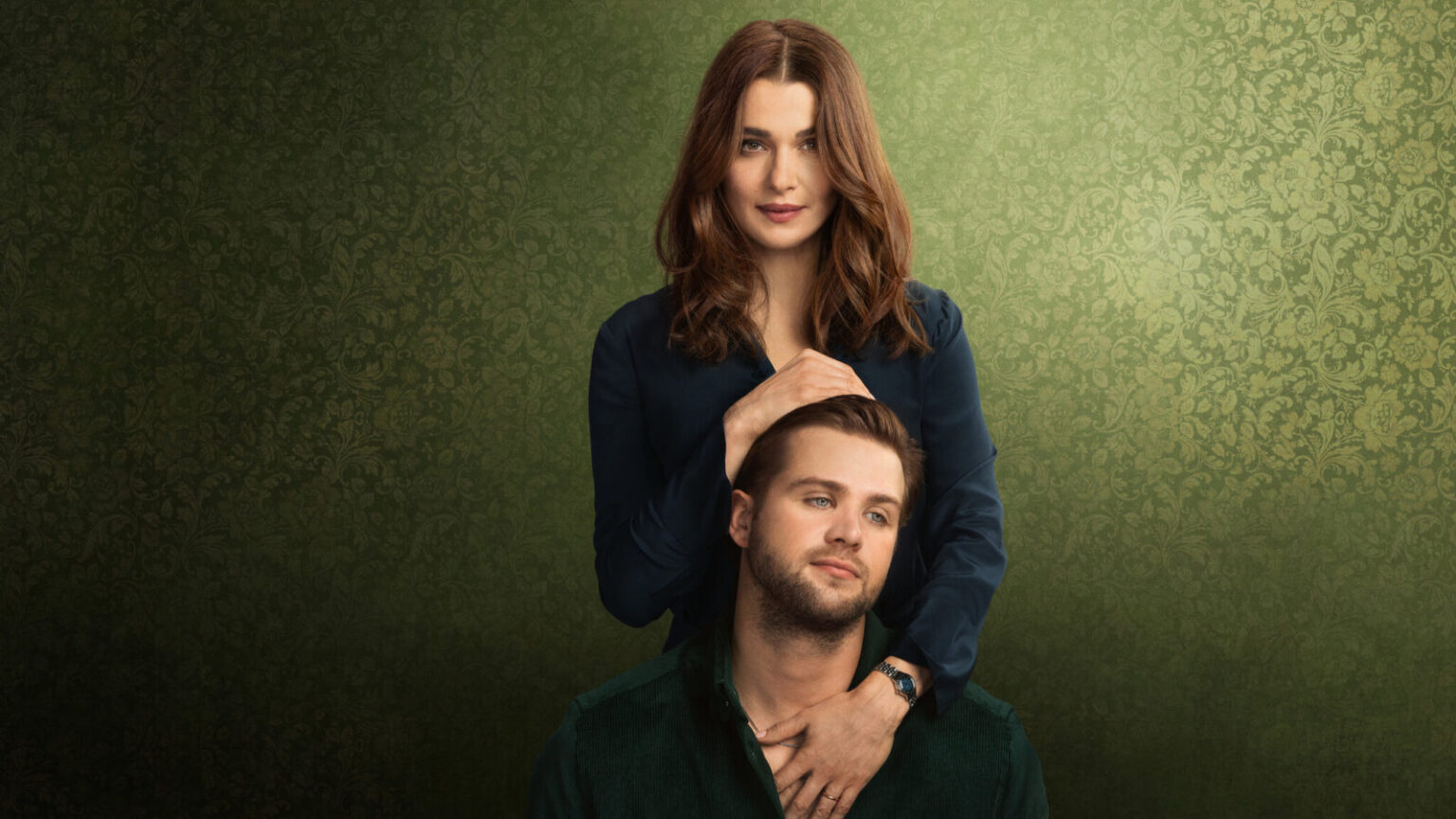
The narrative takes a fascinating turn when a new professor arrives at the university. Vladimir, played by Leo Woodall, quickly becomes the most talked-about figure on campus. He is charismatic, sharp, confident, and exactly the kind of young academic who seems destined for professional success. He is also married to Cynthia, another rising academic who is beginning to attract the attention of students who might once have filled the classes of Weisz’s character. Vladimir’s arrival introduces a new emotional current into the story as the professor becomes increasingly captivated by him. What begins as intellectual curiosity gradually transforms into something far more complicated, forcing her to confront the unsettling reality that the cultural and sexual power she once held may no longer belong to her.
The dynamic between the professor and Vladimir is never framed in simple terms. It is not presented as a straightforward romance or even a typical obsession narrative. Instead it becomes a mirror reflecting the character’s fears about aging, relevance, and the shifting cultural rules governing desire. Watching her navigate those emotions is deeply compelling because the show refuses to treat them as either ridiculous or noble. They simply exist, messy and contradictory in the way real human impulses often are.
One of the boldest storytelling choices in Vladimir is the use of direct addresses to the camera. The professor frequently breaks the fourth wall to explain her thoughts, theories, and frustrations directly to the audience. In many shows this device would feel distracting or overly theatrical, but here it becomes a window into her analytical mind. These monologues are where the series reveals its most provocative ideas about consent, power dynamics, and generational change. They often feel like miniature essays delivered in real time, blending sharp wit with uncomfortable honesty. Through them we see how the character constructs elaborate intellectual arguments to justify choices that are driven by far more emotional impulses.
The academic setting plays a crucial role in shaping the show’s atmosphere. Universities in Vladimir are not just places of learning but intricate ecosystems built on prestige, influence, and reputation. Faculty members compete for students, grants, and status in ways that resemble political maneuvering more than scholarly collaboration. When the scandal surrounding John begins to spread, those invisible structures start to tremble. Colleagues who once seemed supportive become cautious. Friendships shift under the weight of gossip and self-preservation. The show captures the quiet paranoia that can take hold when professional reputations are suddenly at risk.
What makes Vladimir especially compelling is its commitment to ambiguity. The series consistently resists the urge to simplify its characters or their motivations. Everyone operates with a mixture of sincerity and self-interest, and the story acknowledges that most people are not fully aware of the contradictions driving their actions. The professor may believe she is defending fairness or intellectual freedom, but there are moments when it becomes clear she might also be protecting her financial security, her marriage, or even her own pride. Those overlapping motives give the narrative a psychological richness that keeps each episode engaging.
From a technical standpoint the show embraces a restrained visual style that complements its themes. The camera often lingers in quiet spaces such as offices lined with books, lecture halls, and carefully arranged homes that reflect the characters’ intellectual identities. The pacing is deliberate, allowing conversations and silences to carry as much weight as plot developments. This slower rhythm reinforces the feeling that the story is less about what happens next and more about how people interpret what is happening around them.
Rachel Weisz ultimately becomes the gravitational center holding all of these elements together. Her performance carries a quiet confidence that makes every shift in emotion feel significant. She can deliver a line with cutting sarcasm one moment and reveal a flicker of vulnerability the next, often within the same scene. It is the kind of acting that feels invisible because it is so precise. Rather than announcing itself with dramatic flourishes, it gradually pulls the viewer into the character’s perspective until her internal conflicts begin to feel personal.
Vladimir stands out in the current television landscape because it treats its audience like adults capable of handling difficult ideas. The series explores questions about consent, power, aging, and morality without offering easy answers or tidy conclusions. Instead it invites viewers to sit with the discomfort of uncertainty and to recognize how cultural values shift over time. By the end of the eight episodes the story leaves you thinking less about who was right or wrong and more about how complicated human behavior can be when personal desire collides with social change.