
TL;DR: Gorgeous punk rhythm game with a great arcade mode, but the story campaign is bloated, awkwardly written, and often forgets to be a rhythm game at all.
Unbeatable
I’ve been thinking about Unbeatable the way you think about a band you really wanted to love. You know the kind: killer album art, a name that feels like it means something, a debut single that absolutely rips… and then you sit through the whole record wondering where that energy went. That’s Unbeatable in a nutshell. A rhythm game drenched in punk rock aesthetics and revolutionary slogans, set in a world where music is illegal, that somehow forgets to actually let you play music for most of its runtime. I wanted to adore it. I ended up admiring it from a distance, occasionally frustrated, occasionally moved, and constantly aware that something fundamental never quite clicked.
On paper, Unbeatable is catnip for my particular brand of nerd brain. Punk rock rebellion. A dystopian city ruled by cops with acronym names. Rhythm combat. Anime-inflected character art. It’s the kind of pitch you hear and immediately start mentally slotting it next to Jet Set Radio, The World Ends With You, and every rhythm game that ever convinced you that button presses could feel like self-expression. When I finally booted it up, though, it became clear pretty quickly that Unbeatable doesn’t know which version of itself it wants to be. Is it a narrative-driven adventure game? A rhythm action game? A visual novel with skateboards and headphones? The answer is “yes,” but never all at once, and rarely in a way that feels intentional.
You play as Beat, a vocalist in a world where music has been scrubbed from public memory and outlawed by a police force called HARM. Beat and her bandmates are rebels by default, not because the world pushes them there in any deeply explored way, but because the game says so and expects you to nod along. The story wants to be about reclaiming art, about how music gives people identity and connection, about found family and creative defiance. Sometimes it even gets there. There are moments late in the game where it lands an emotional beat cleanly enough that I felt a genuine ache in my chest. But getting to those moments is a slog through dialogue that often feels like it was lifted straight out of a chaotic Discord channel at three in the morning.
Characters talk constantly, but they don’t say much. Conversations loop. Jokes repeat. Scenes replay with barely any variation. The writing leans hard into random humor and self-aware quirkiness, but it doesn’t balance that tone with the sincerity it’s clearly reaching for. It’s exhausting in long stretches, especially when you realize how often Unbeatable confuses volume for depth. Everyone has something to say about music, about being in a band, about rebellion, but the game rarely slows down long enough to explore what any of that actually costs in this world. The villains, in particular, feel less like an oppressive force and more like annoying teens roleplaying as authority figures. There’s no real menace, no sense of danger, just noise.
That dissonance bleeds into the structure of the story itself. Unbeatable jumps from place to place with the confidence of a game that assumes you’ll fill in the blanks yourself. One second you’re talking to a guard, the next you’re in a cafeteria, then you’re asleep, then you’re working in a factory, then you’re suddenly skateboarding through armed officers on a pair of headphones. Transitions barely exist. Locations feel like disconnected vignettes stitched together by vibes rather than logic. It’s not dreamlike in an artistic way; it’s disorienting in a “wait, did I miss something?” way. More than once, I checked my settings to make sure I hadn’t accidentally skipped a cutscene.
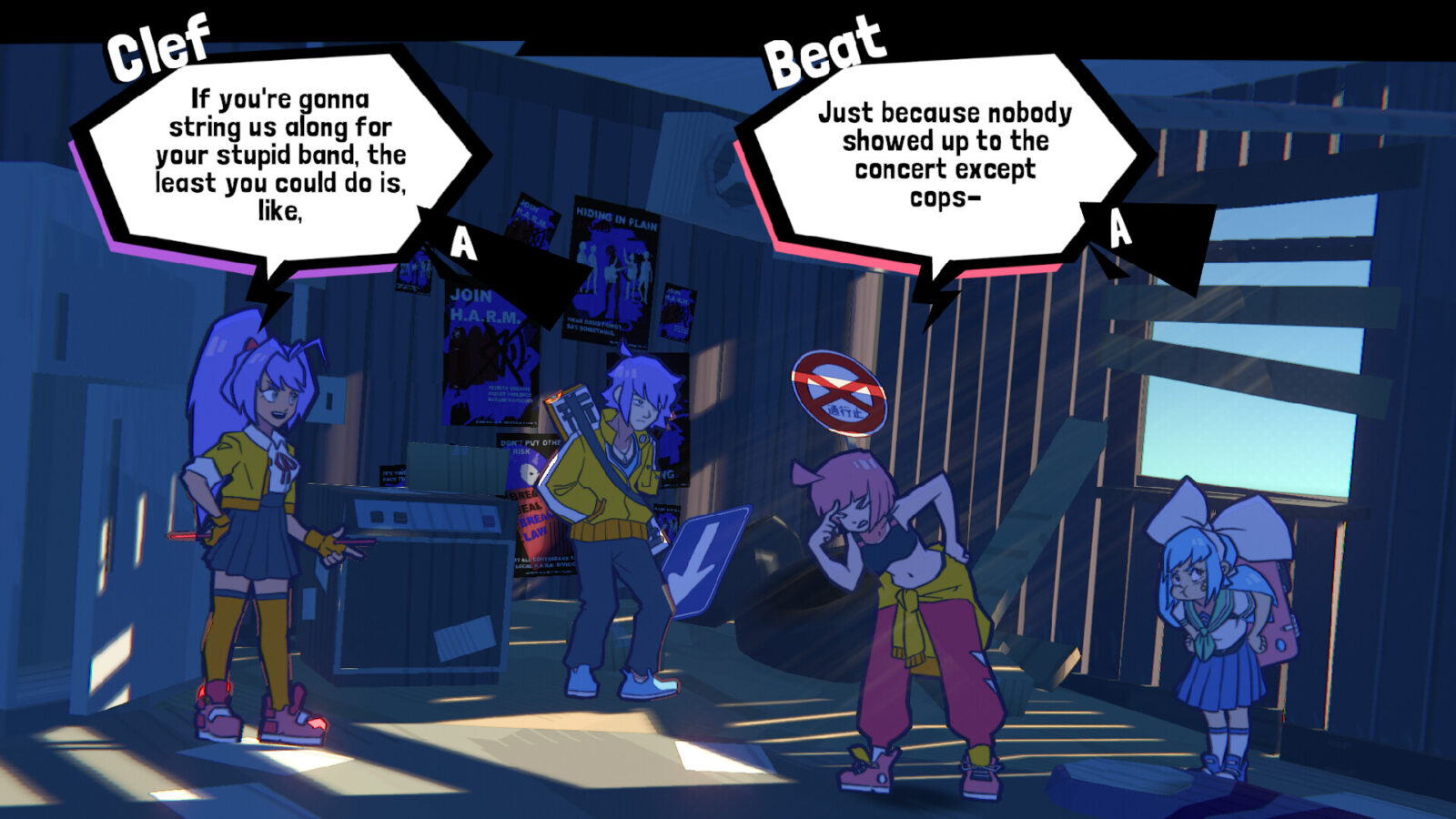
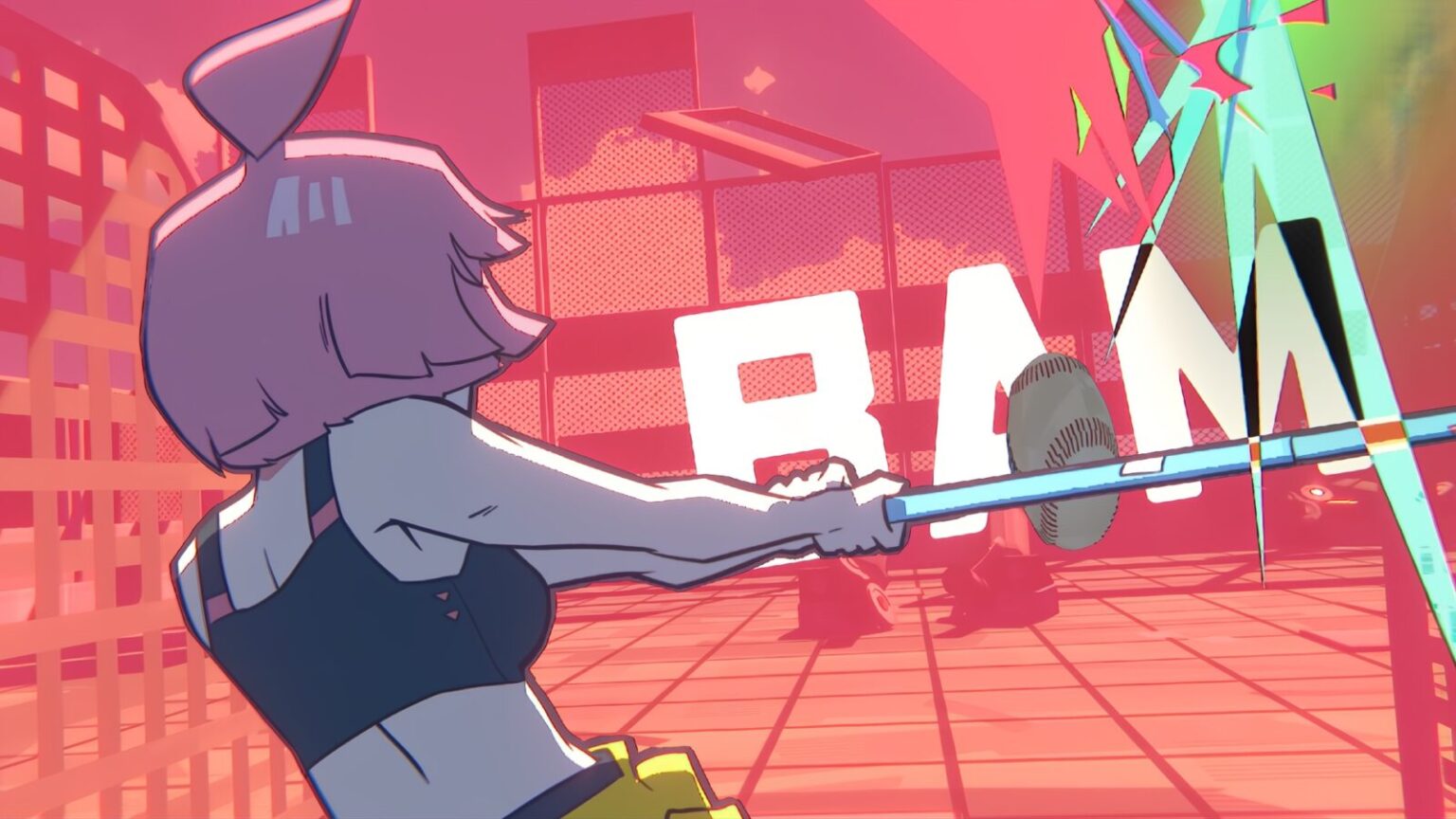
What makes this especially frustrating is how little rhythm gameplay there is for such a large chunk of the story mode. For hours, Unbeatable feels like a walking simulator interrupted by minigames that have nothing to do with its core identity. You’ll mix drinks to obnoxiously loud jazz, do quality control on bombs, mess around in a batting cage, or solve a “puzzle” that mostly involves running back and forth while your bandmates sabotage you as a joke. When rhythm combat does show up, it often drops in with zero narrative buildup and disappears just as quickly, like the game is apologizing for remembering what genre it belongs to.
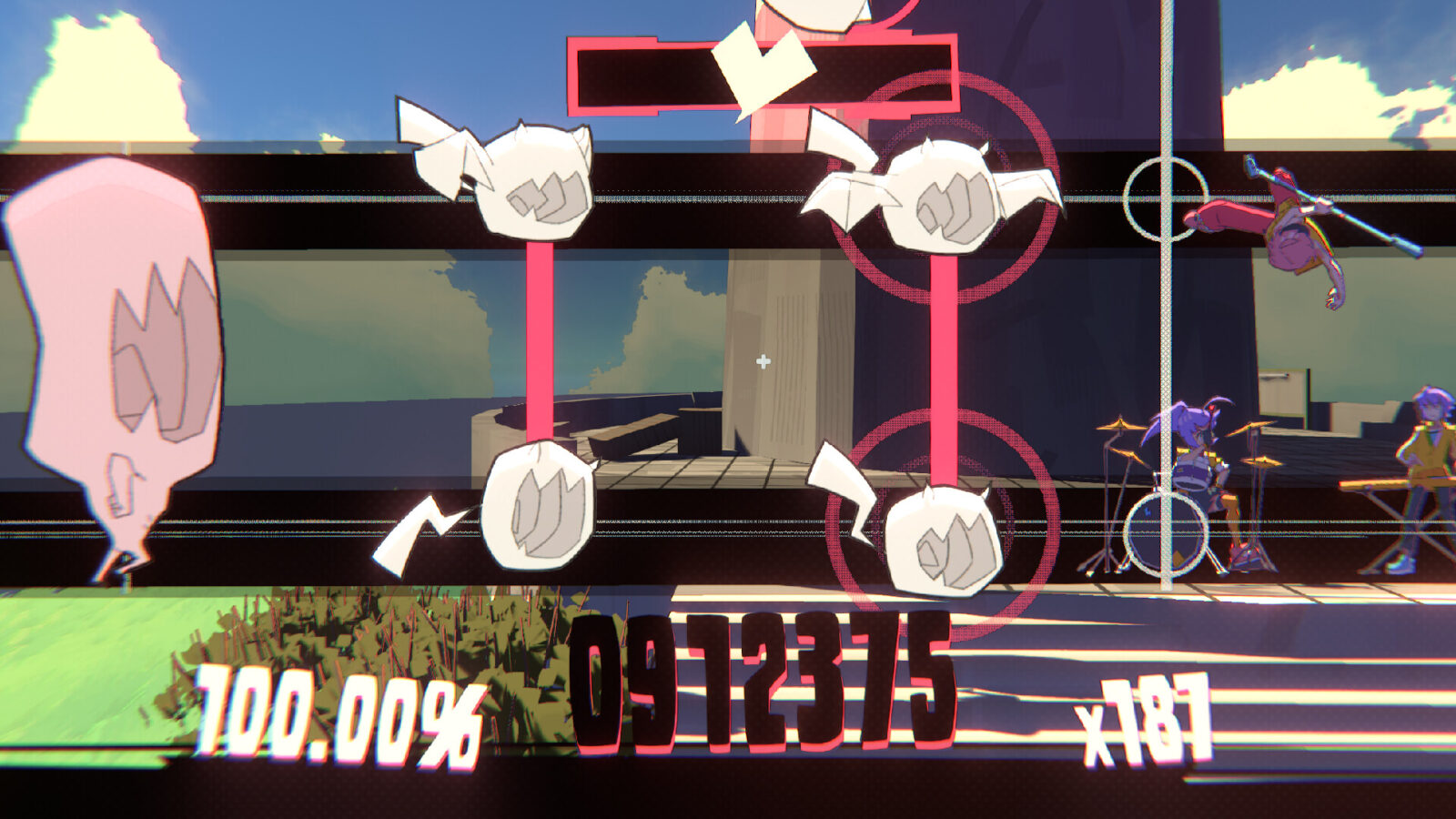
When Unbeatable finally lets you engage with its rhythm mechanics, they’re… fine. You’re working with two main inputs: one for grounded enemies, one for aerial hits, all synced to the beat. It’s clean, responsive, and technically solid. On my PC setup, the timing felt spot-on, and I never had issues with latency or desync. But with such a limited control scheme, difficulty has nowhere to go except density and speed. Normal mode is borderline trivial. Hard and Expert crank things up by flooding the screen with inputs while the camera shakes, zooms, and flails like it’s had too much caffeine. It becomes less about rhythm and more about surviving visual chaos. I was grateful for the accessibility options that let me tone down the camera motion and turn off the VHS filter, because without them some tracks felt actively hostile to my eyes.
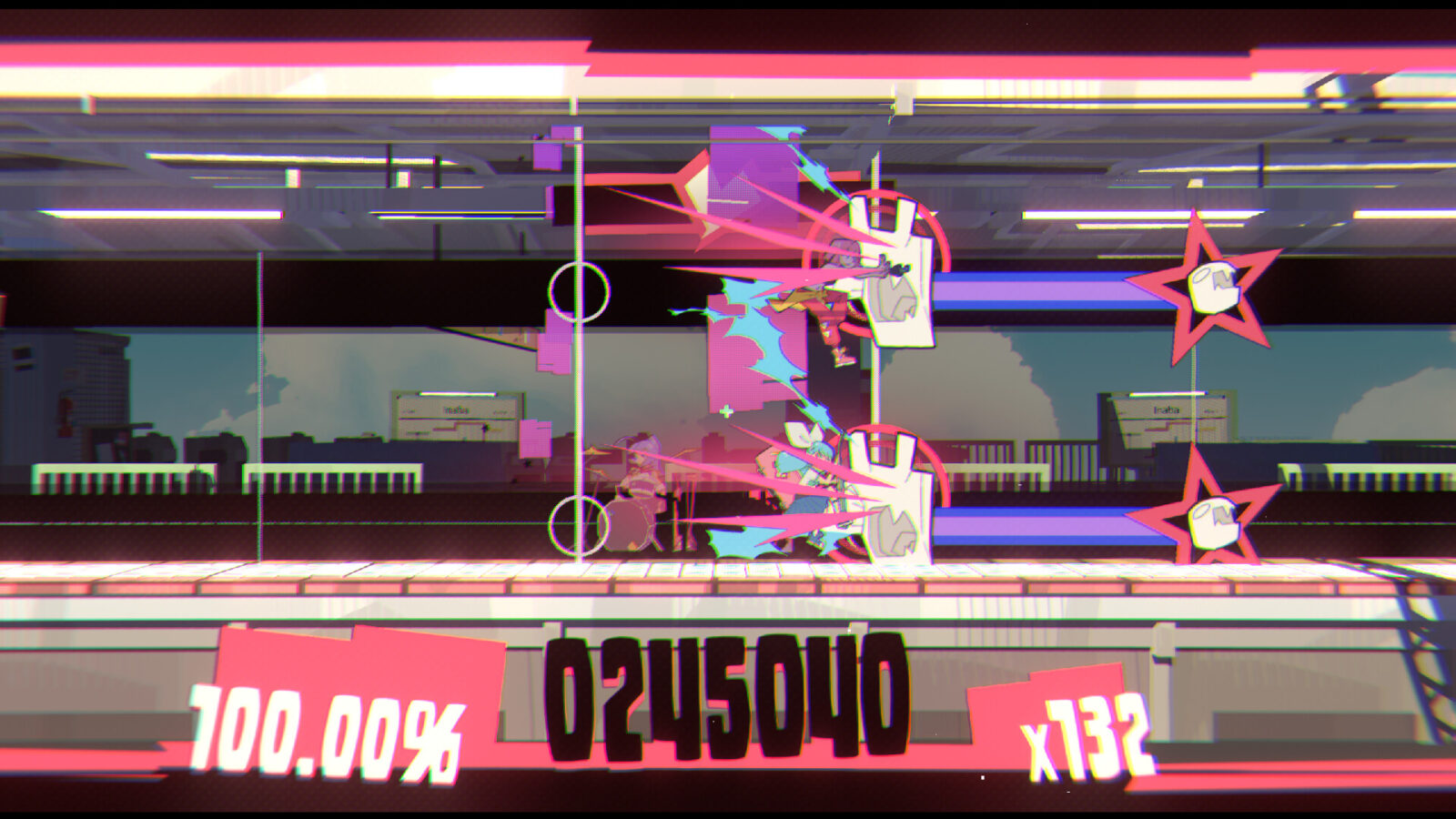
Ironically, the best version of Unbeatable lives outside its story entirely. The arcade mode strips away the awkward pacing, the filler, and the narrative clutter, leaving behind something that actually resembles a complete rhythm game. This is where the challenge board shines, where unlockable songs and difficulty tiers give you a reason to keep playing, and where chasing high scores feels satisfying instead of perfunctory. The music selection here is genuinely good, featuring tracks from artists like Alex Moukala and Peak Divide that absolutely slap. A few songs being locked behind day-one DLC leaves a bad taste in my mouth, but there’s enough strong material included that it doesn’t completely sour the experience. If Unbeatable had committed to this mode as its core, we’d be having a very different conversation.
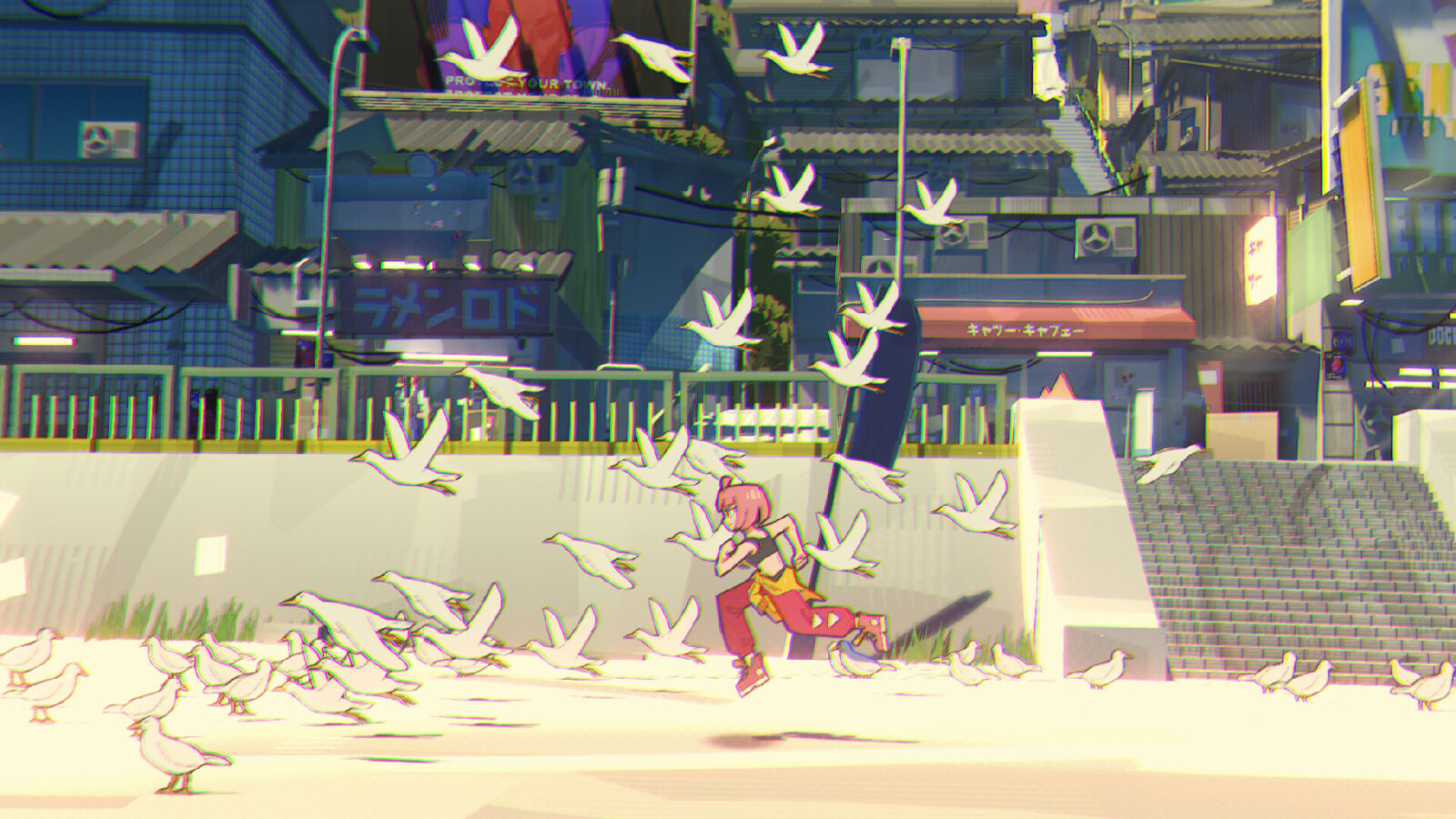
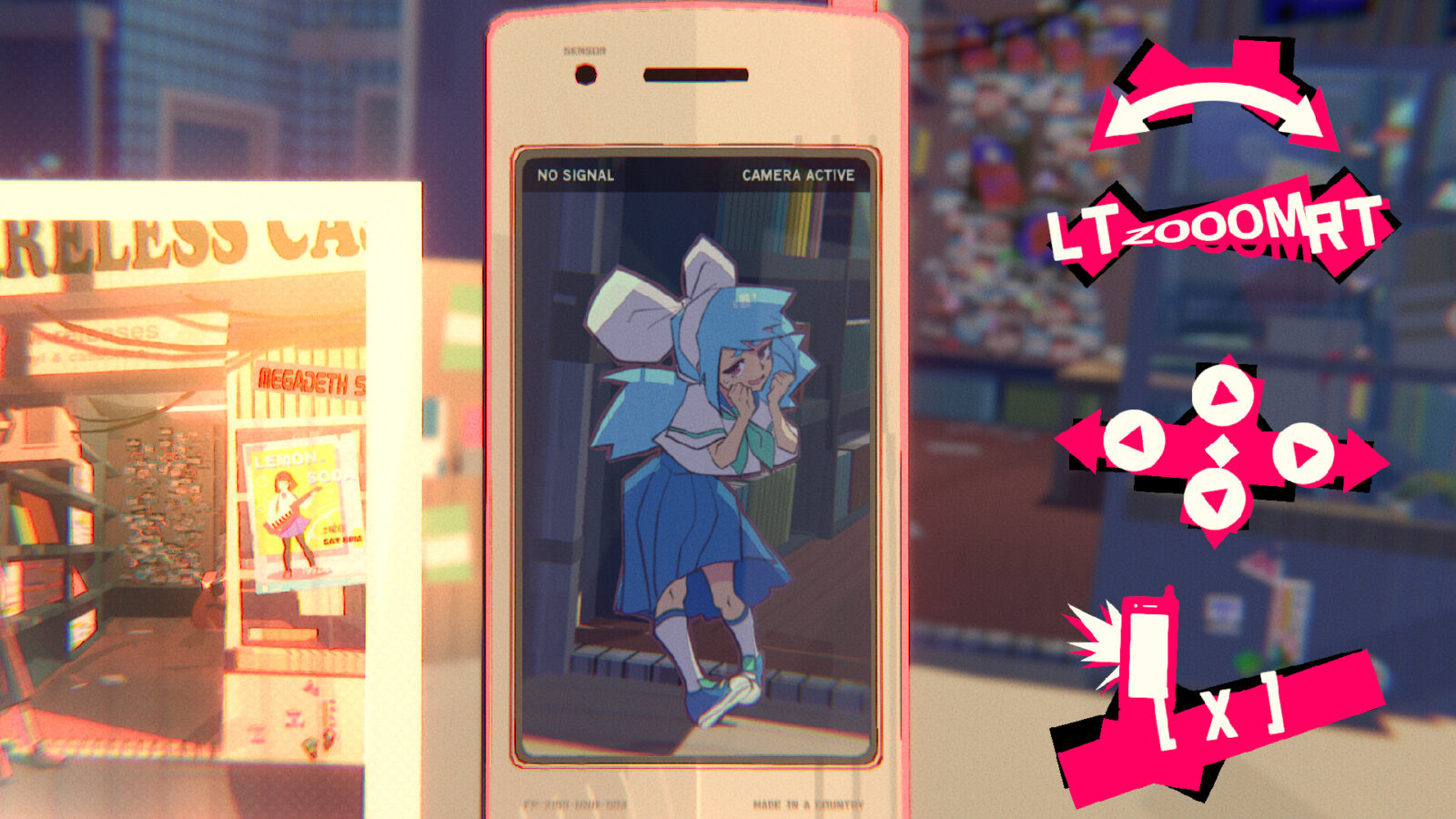
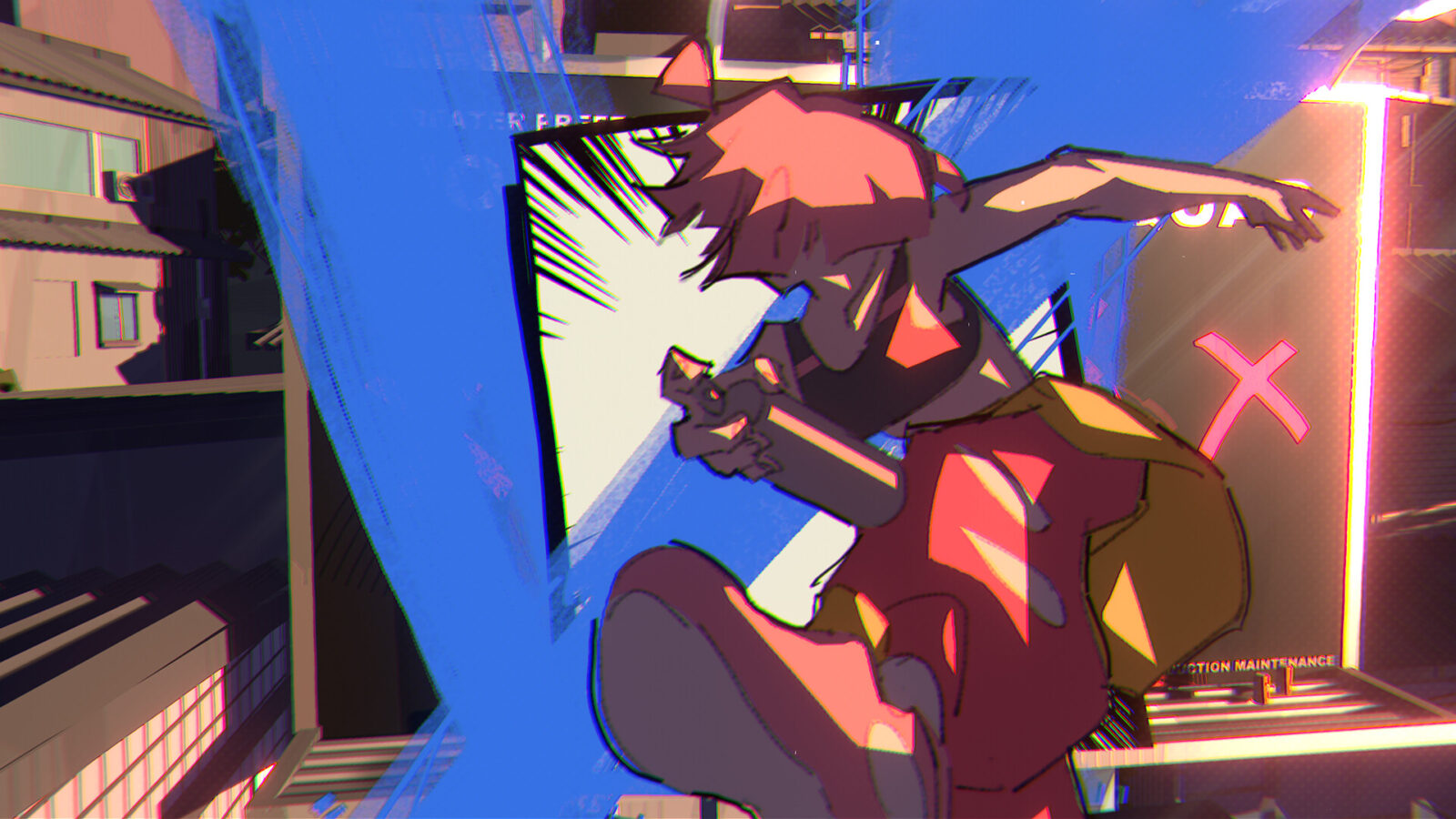
Visually, I can’t deny that Unbeatable has style for days. The punk rock anime fusion art direction is striking, and the 2D character cutouts layered over 3D environments often look fantastic. The beach scene, with late afternoon light reflecting off the water, is one of those moments where I just stopped and soaked it in. The menus, with their scratchy vinyl aesthetic and record-scratch pause effects, feel lovingly crafted. You can see the vision everywhere. Unfortunately, that vision is often undermined by basic design issues. The camera loves to hide paths behind walls, forcing you to awkwardly run into screen edges until it decides to pan. Environments feel empty, more like theatrical sets than places people actually live. UI elements pile up, overlap, or slide off-screen as NPCs wander directly into the camera. It’s messy in ways that break immersion instead of reinforcing it.
And that’s what hurts the most. Unbeatable is a game full of almosts. Almost profound. Almost exhilarating. Almost cohesive. There’s a train sequence late in the game where everything finally aligns: the music, the action, the stakes, the presentation. For a brief moment, I saw the game Unbeatable wanted to be. Then it moved on, padded itself out with more filler, and buried that spark under repetition. It feels like the developers built the entire project around the strongest parts of an early demo and then stretched those ideas thin instead of doubling down on what worked.
By the time the credits rolled, I wasn’t angry. I was tired, a little disappointed, and strangely fond of a game that never quite earned that affection. Unbeatable has heart, undeniable style, and a soundtrack that deserves better framing. But it also has an identity crisis it never resolves, asking you to wade through hours of unfocused storytelling to reach the parts that actually sing.
Verdict
Unbeatable is a visually striking rhythm game trapped inside a disjointed adventure it can’t fully support. Its story mode buries functional, sometimes enjoyable rhythm gameplay beneath repetitive dialogue, uneven pacing, and confusing transitions, even as it gestures toward genuinely heartfelt themes. The arcade mode, meanwhile, reveals a tighter, more confident game with solid music and replay value. If you’re here for rhythm gameplay, that’s where you should spend your time. If you’re here for the story, be prepared to sift through a lot of noise to find the melody.