


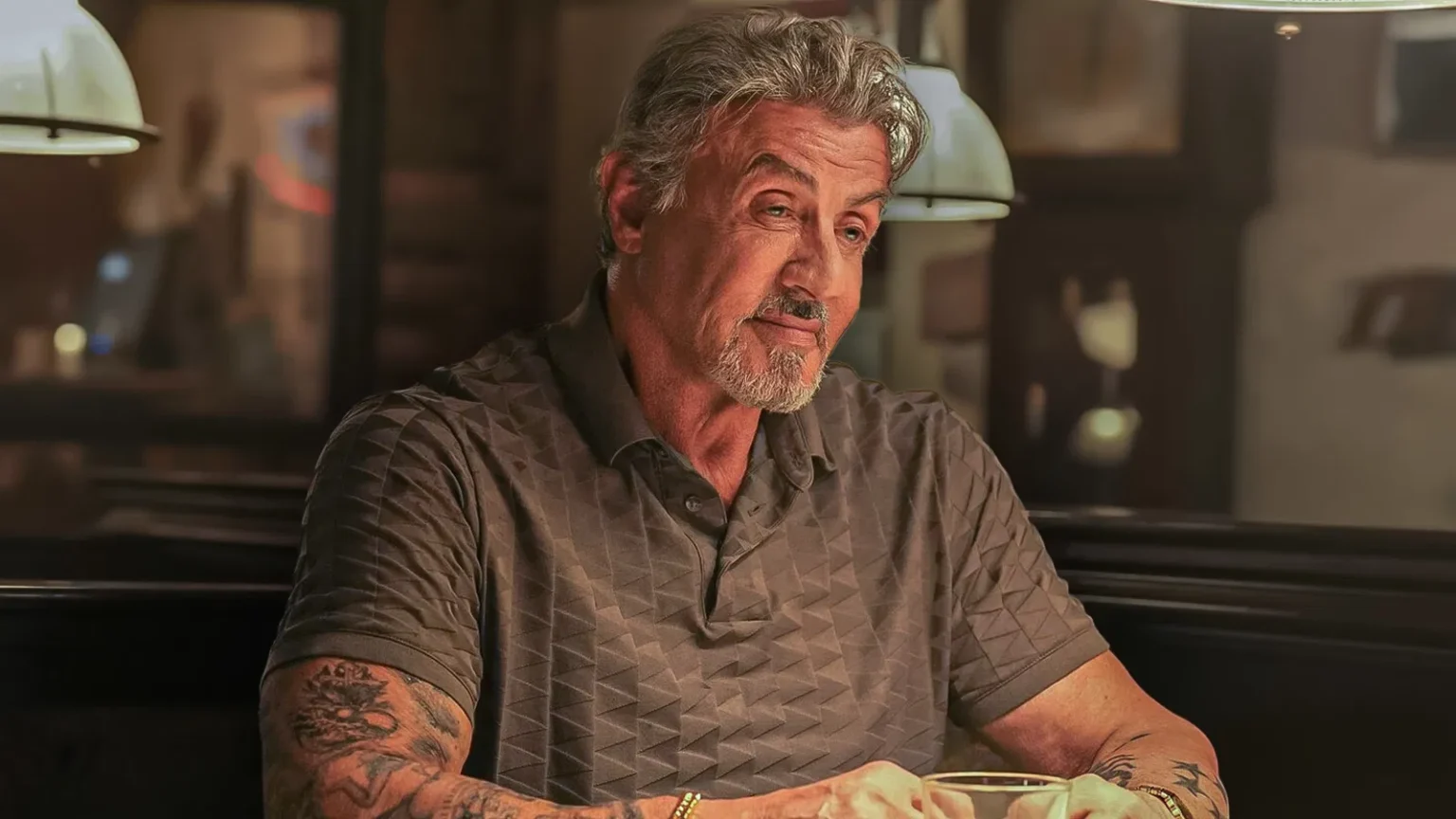
TL;DR: Dwight finally gets one over on his enemies, outsmarting both Jeremiah and the Attorney General with a long con worthy of The Godfather Part II. Smart, tense, and loaded with swagger, Episode 7 is a reminder that in Tulsa King, the real battles are fought not with guns, but with leverage.
Tulsa King Season 3
If there’s one thing Sylvester Stallone’s Tulsa King has taught us by now, it’s that mobsters age like fine whiskey and vengeance: stronger, meaner, and just a little smoother with time. After weeks of getting cornered, outflanked, and generally kicked around by Oklahoma’s most corrupt good ol’ boys, Dwight “The General” Manfredi finally lands a clean hit in Season 3 Episode 7 — and he does it not with fists, but with chess moves straight out of The Art of War.
This episode, titled “Build Your Enemy a Bridge,” (because of course it is) plays like a masterclass in slow-burn gangster strategy. It’s less “Rocky throwing punches in the street” and more “Michael Corleone shaking hands with his enemies before burning down their empires.” And for a show that’s been teetering between neo-noir grit and small-town absurdity, Episode 7 finds a sweet spot — somewhere between Boardwalk Empire and a red-state Succession.
When we last left our silver-haired capo, Dwight was knee-deep in chaos: an assassination attempt gone sideways, his uneasy alliance with Quiet Ray looking shakier than a Jenga tower in a windstorm, and Jeremiah Dunmire (Robert Patrick, chewing scenery like it owes him rent) circling like a shark that just smelled marinara sauce.
Episode 7 kicks off with a phone call — and not the “you up?” kind. Quiet Ray calls to confirm that yes, he’s still alive and no, he doesn’t trust Dwight any further than he can throw a bottle of whiskey. It’s the kind of terse mobster banter that could cut glass. Dwight plays it cool, offers to “finish the business we started,” and quietly accepts that Ray’s probably still planning to whack him.
You’ve got to hand it to Stallone: even when he’s just talking on the phone, he radiates that old-school mafioso energy — like a man who’s already planning the counterattack before the bullet even leaves the chamber.
The real meat of the episode lies in Dwight’s new plan: make a deal with the Attorney General to get his distillery license reinstated. This is Tulsa King at its most fascinating — when the show trades bullets for boardrooms. Dwight strolls into the AG’s office, cigar in hand, and drops one of those patented Stallone monologues that should honestly be carved into granite somewhere:
“You’re in power because of that crazy bastard Dunmire, and he’s in power because of who’s sitting in the governor’s mansion. But that won’t be for long.”
Translation: I know the food chain, and I’m about to climb it.
The AG isn’t impressed — yet. But Dwight knows what every great mob boss knows: power isn’t about threats. It’s about leverage. And what better leverage than a politician’s personal weakness? Cue Margaret (Dana Delany) — Dwight’s high-society secret weapon — who casually befriends the AG’s wife over overpriced salads and finds out the guy’s got more skeletons in his closet than a Spirit Halloween store.
While Dwight’s busy running political circles around the state government, Tyson and Goodie are off having their own Breaking Bad side quest. Goodie (Chris Caldovino, who’s basically the show’s comic relief now) decides the best way to make money fast is to play fake cop and rob frat boys who sell drugs.
It’s absurd. It’s reckless. It’s also exactly the kind of side plot that makes Tulsa King fun — a mix of street-level grit and “dumb criminal energy.” Tyson and Spencer (Dwight’s daughter, still somehow managing to date the son of the guy trying to kill her dad — yikes) pull off a hilariously clumsy heist that feels like a deleted scene from 21 Jump Street.
Say what you will, but this subplot gives the episode some much-needed levity between all the cigar smoke and backroom betrayals.
Back at the casino, Dwight orchestrates a setup so slick even Danny Ocean would slow clap. He invites the Attorney General to a “friendly night out” at his casino, where Neal McDonough’s Carl Thresher — the most delightfully punchable politician this side of House of Cards — just so happens to be campaigning.
Dwight’s entire crew watches the event unfold via security cameras like they’re live-streaming Survivor: Mob Edition.The AG starts gambling, wins a few rounds, gets cocky — and then Dwight “accidentally” switches the dice. Suddenly, the guy’s hemorrhaging cash faster than a crypto investor in 2022.
By the time he’s down $100,000, Dwight steps in with that shark-smile deal: I’ll wipe your debt if you’re on my team.
It’s cold. It’s brilliant. It’s vintage Stallone. And it’s the first time in a while that Dwight feels like the general he was meant to be — commanding, manipulative, five moves ahead.
If you thought Jeremiah Dunmire was going to take that lying down, you don’t know your Robert Patrick villains. The man stomps into Dwight’s casino with his goons, dripping with righteous fury. Dwight doesn’t blink. Instead, he starts quoting The Art of War — because nothing rattles a hothead like ancient Chinese philosophy delivered in a Brooklyn accent.
“Build your enemy a golden bridge,” Dwight says, “so they can escape and save face.”
It’s both a warning and a taunt. Jeremiah storms off, only to later receive a copy of the very same book with “YOU LOST” scribbled inside. Savage. It’s the gangster equivalent of a mic drop.
By the end of the episode, Jeremiah’s empire is crumbling, the Attorney General’s flipped, and Dwight finally has an actual win on the board. It’s taken seven episodes, a small war, and several cigars, but the General’s back on top.
Episode 7 isn’t just another entry in Tulsa King’s saga — it’s a declaration of intent. The show has been teetering between dark comedy and crime drama all season, but this episode proves it can balance both with style. Stallone finally gets to play the strategic mobster we’ve been promised since episode one, and watching him maneuver through corruption and chaos is pure TV gold.
There’s no major gunfight, no blood-soaked climax — and that’s exactly why it works. Instead of brute force, Dwight wins through intellect and manipulation. It’s a mob story for the streaming age: part gangster epic, part political satire, all charisma.