
TL;DR: Tulsa King Season 3 Episode 6 keeps its foot on the gas but forgets where it’s going. Stallone remains magnetic, but the endless road trips and predictable shootouts are starting to feel like déjà vu. It’s time for this show to trade the map for a mirror and remember what made it fun in the first place.
Tulsa King Season 3
If there’s one thing Tulsa King Season 3 loves almost as much as Sylvester Stallone’s gravelly one-liners, it’s a damn road trip. We’ve had bourbon runs, bootlegging missions, “don’t ask what’s in the trunk” convoys—and now, Episode 6 doubles down on that well-worn asphalt. The result? A mixed bag of mob melodrama that’s as predictable as it is entertaining, like watching Tony Soprano drive Route 66 with a GPS that only says “Recalculate.”
Dwight Manfredi: Still Punching, Still Losing
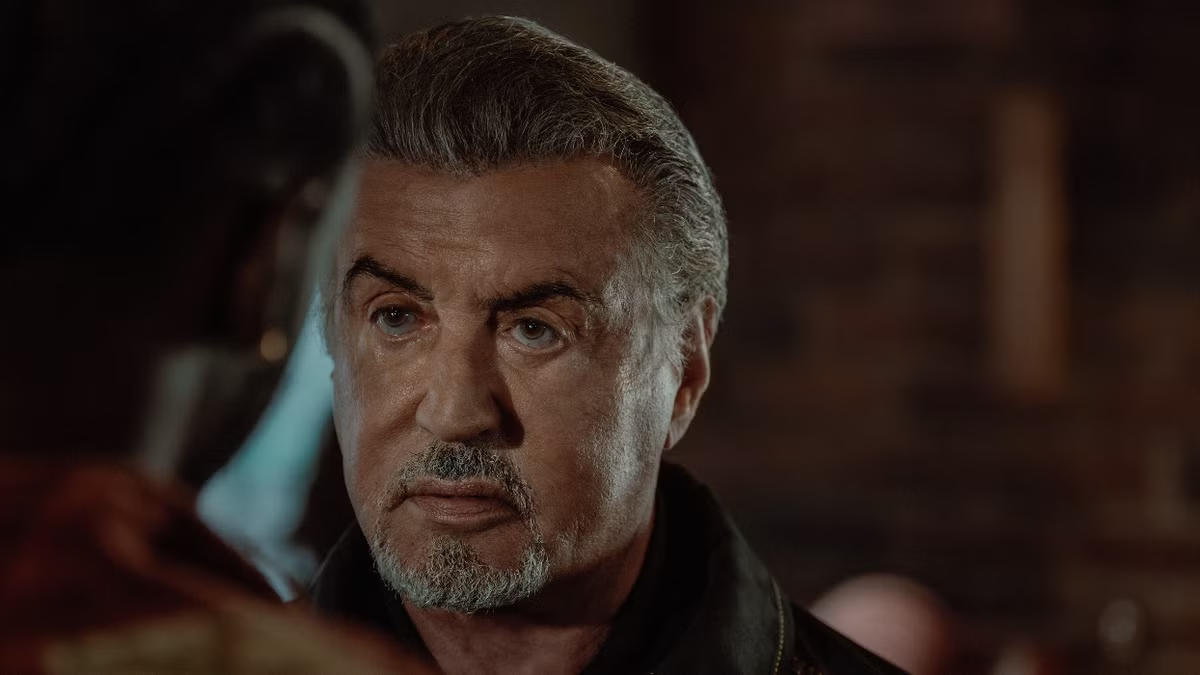
At this point, Dwight “The General” Manfredi (Sylvester Stallone) might be the most cursed mobster on television. Every time he builds something—whether it’s a bar, a casino, or a bourbon empire—someone burns it to the ground before he even finishes his espresso. This week, he’s juggling heat from the Feds, the Kansas City mob, and Jeremiah Dunmire (Robert Patrick, whose veins practically pop out of the screen with menace).
The episode opens with Dwight finally confiding in his sister Joanne (Annabella Sciorra), revealing that the Feds have him by the throat. It’s a rare moment of emotional vulnerability for Stallone’s hulking antihero, and for a split second, you think, “Maybe the guy deserves a break.” But then Tulsa King remembers it’s a Taylor Sheridan show, and mercy doesn’t exist here.
Bootlegging Is Back, Baby
After the distillery fiasco and the accidental death of an inspector, Dwight decides it’s time to go full Prohibition-era gangster again. Cue the return of Mitch (Garrett Hedlund), Cleo (Bella Heathcote), and Bodhi (Martin Starr) for a bootlegging operation so on-the-nose it might as well come with a sepia filter.
Their plan? Sell their prized “Fifty” bourbon off the books to “special clients who don’t care about paperwork.” Translation: gangsters who love artisanal whiskey and don’t own email. The group splits up like it’s Fast & Furious: Oklahoma Drift—Dwight and Tyson (Jay Will) head for Arkansas, Mitch and Cleo take a questionable detour through Shreveport, and Bodhi’s just trying not to die again.
By this point, the show’s road trip formula is starting to feel like a recurring side quest in a Rockstar game. You know there’ll be a tense car ride, a shady gas station, and at least one shootout where nobody lands a single bullet.
The Dunmires Are Officially Unhinged
Let’s talk about Jeremiah Dunmire for a second. Robert Patrick is clearly having a blast playing him, but the man’s dialogue has gone from “sinister politician” to “Shakespearean lunatic with anger management issues.” He calls the Attorney General “Sackrider” (because sure, why not) and barks orders like a Mafia Logan Roy.
When his son Cole (Beau Knapp) walks in wearing camouflage, Jeremiah delivers a monologue about war, pride, and vengeance that might have been touching if it weren’t so gloriously unhinged. “Tear him out like a root!” he screams about Dwight. Honestly, I half-expected him to morph into a supervillain mid-scene.
The Kansas City mob’s involvement gives the show a bigger scope this season, but their execution (pun intended) is clumsy. Cole’s goons are supposed to be assassins, yet they shoot like Stormtroopers. Every encounter ends with a barrage of bullets and zero casualties. It’s the A-Team of mob warfare.
Dwight and Quiet Ray: Mobster Tinder Gone Wrong
Meanwhile, Dwight tries to patch things up with Quiet Ray (James Russo), another aging gangster who communicates exclusively in metaphors about weather. (“It could get cloudy.” “The sun needs to stay out.” Guys, just say you’re mad.)
Their meeting goes south fast when Cole crashes the party, turning a tense sit-down into yet another shootout. And once again, nobody dies. The only thing hit is the audience’s suspension of disbelief.
By the end, Quiet Ray’s convinced Dwight set him up, Dwight’s crew is scattered across state lines, and Cole’s men are licking their wounds somewhere in the Ozarks. It’s chaos—but the kind that’s starting to feel mechanical.
Mitch and Cleo’s Southern Gothic Side Quest
The most grounded moments come from Mitch and Cleo’s unlikely partnership. Hedlund brings a quiet humanity to Mitch, a man haunted by bad decisions but still loyal to a fault. When he opens up about how Dwight turned his bar into a casino and gave him purpose, it’s genuinely touching. Cleo, meanwhile, is clearly questioning her life choices, delivering a line that might as well be the thesis of Tulsa King: “I might leave this life behind.”
Of course, before they can reflect too long, they’re pulled over by a corrupt cop working for the Dunmires. Because in this universe, every small-town officer is apparently on a mob payroll.
The Road to Nowhere
By the time the credits roll, we’ve got a lot of dead ends. Armand (Max Casella) is found dead in a flophouse. Bill Bevilaqua (Frank Grillo) is still missing, likely being held by the Feds. The casino’s shut down, the distillery’s toast, and Dwight’s empire is hanging by a thread made of bourbon-soaked bad luck.
But here’s the problem: Tulsa King keeps running in circles. Every episode sets up a promising new direction—only to end with another chase, another shootout, another double-cross that feels more like filler than forward motion. Stallone’s Dwight is endlessly watchable, but the show’s pacing is spinning its wheels faster than Tyson’s Dodge Charger.
Stallone Deserves a Bigger Sandbox
There’s no denying Stallone’s charisma. He’s still got that rare screen gravity—the kind that makes you believe this 70-something ex-con could walk into any bar and command silence. But the writing keeps boxing him in with recycled conflicts and side quests that add nothing to the bigger picture.
If Tulsa King wants to evolve, it needs to stop playing Grand Theft Auto: Tulsa Edition and start digging into its characters again. There’s real drama in Dwight’s loneliness, his moral compromises, and his attempts to keep a family—biological and criminal—intact. We just need less driving and more depth.
Episode 6 of Tulsa King Season 3 has flashes of greatness—strong performances, slick direction, and that ever-present Stallone swagger—but it’s trapped in a loop of mob clichés and recycled road trips. The bourbon may be smooth, but the storytelling’s getting watered down.