
TL;DR: Carol hates patriarchal pig races, Daryl kills dudes in the dark, and too many side characters threaten to hijack the story. Still worth watching—because Daryl and Carol together are Walking Dead royalty.
The Walking Dead: Daryl Dixon season 3
AMC has a bad habit of dangling shiny new characters in front of us just when all we really want is the old magic. The Walking Dead: Daryl Dixon Season 3, Episode 2 (“La Ofrenda”) is the perfect example of that problem: it’s a strong episode with some genuinely chilling imagery, a few gorgeous moments of character intimacy, and the kind of political world-building that makes this franchise feel bigger than the endless shuffling of walkers. But—and it’s a big but—this episode also spends so much time on Roberto, Justina, Fede, Paz, Guillermo, Elana, and an entire village full of people we may or may not care about, that Daryl and Carol, the literal lifeblood of the show, occasionally vanish into the background of their own story.
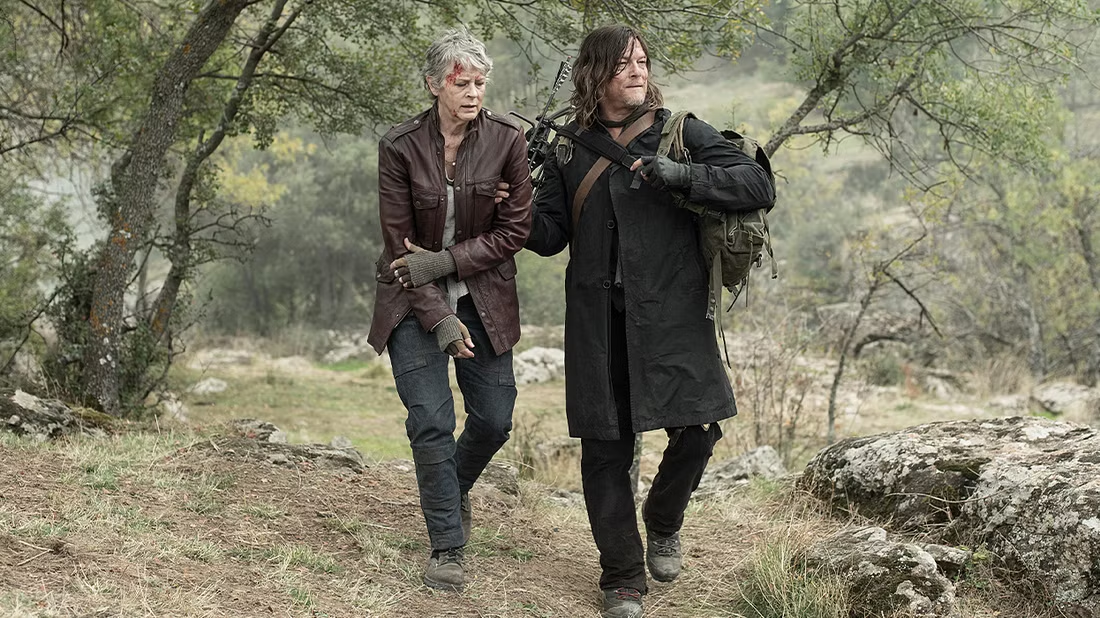
Don’t get me wrong. I’m still here for the ride. Norman Reedus and Melissa McBride could carry this franchise on their backs through every apocalypse on every continent. Their dynamic is a masterclass in quiet chemistry: unspoken affection, sharp banter, shared grief, and the occasional look that says more than entire monologues. And in Episode 2, that bond once again shines—especially when it’s tested by the ugliness of tradition and the question of how much you can look away when survival demands it.
But let’s not pretend: half the time, this episode feels like AMC is sneaking in a spinoff pilot about doomed Spanish lovers, feudal mayors, and monarchy cosplay. It’s compelling, sure. But it’s also a distraction.
A Walk by the River – Carol’s Fragile Peace
The episode opens with Carol, still concussed from the premiere, wandering away from their makeshift shelter to sit by a river. She watches a young couple laughing, kissing, living in that impossible bubble where the world isn’t collapsing under plague and tyranny. For a brief second, Carol smiles. And my god, Melissa McBride sells that smile. It’s a flicker of something we almost never get from her—serenity, maybe even nostalgia.
This is why I love Carol. She has lived through so much—abuse, loss, blood on her hands, the near-constant sacrifice of her own peace for others—that a single smile feels like an earned miracle. The series doesn’t linger on it, though, because Daryl finds her, and the plot barrels forward. But it’s one of those quiet details that says everything: Carol’s still looking for beauty, even in ruin.
Daryl’s Crossbow, Daryl’s Code
Meanwhile, Daryl notices that the couple has supplies. His instinct? To rob them. Classic Dixon logic: survival first, ethics later. But before he can act, bandidos roll up with guns, threatening the couple. And in that split second, Daryl makes the other choice—the choice that defines him as much as his gruff exterior and biker-vest silhouette. He puts the crossbow to work, bolts flying, taking out nearly all the attackers in one brutal, efficient swoop.
This is where Daryl Dixon shines as a character. He isn’t Rick Grimes with a sheriff’s badge, or Negan with a theatrical swagger, or even Maggie with a clear sense of justice. Daryl is practical chaos. He’ll rob you if he has to, but he’ll also save you if it feels right. He lives in the murky middle, and in this apocalypse, that middle is sometimes the only place to stand.
Solaz del Mar – A Town Frozen in Feudal Time
Daryl and Carol end up following the young couple, Roberto and Justina, to Solaz del Mar—a town that feels ripped out of medieval Spain but filtered through a zombie apocalypse lens. Picture stone walls, horseback patrols, villagers cheering for pageantry while walkers are herded into cages like cattle. It’s a fascinating setting, and I’ll give the writers credit: The Walking Dead has always excelled when it shows how different pockets of humanity rebuild, and Spain’s flavor of feudal survival feels unique.
Federico de Rivera (Fede), the mayor, welcomes Daryl and Carol reluctantly. He’s polished, powerful, and deeply tied to the traditions of “la Ofrenda,” a ritual where young women are essentially sacrificed through marriage to an outside power. It’s one of those classic Walking Dead moments where the writers remind us that the dead aren’t the scariest thing—it’s the living, and the institutions they cling to when fear curdles into power.
La Ofrenda – Pigs, Pageantry, and Patriarchy
Here’s where the episode goes full dystopian fable. La Ofrenda is a lottery where the names of young women are tied to pigs. Yes, pigs. The pig that wins the race decides which woman will be given away to El Alcazar, the so-called remnants of the Spanish monarchy who show up once a year with gifts, soldiers, and creepy vibes.
I’ll admit: when the pig race started, I laughed. It felt absurd, almost Monty Python–esque. But then the reality hit: the terror in Alba’s eyes when her name was drawn, her mother sobbing, the town clapping along because tradition demands it. And suddenly the absurdity twisted into horror. This is the genius of The Walking Dead at its best—it makes you laugh, then choke on it.
Carol, of course, can’t stomach this. She sees children being bartered away under the guise of protection, and her moral compass won’t let her stay silent. Daryl, ever pragmatic, argues they should just focus on getting home. But Carol pushes back. It’s the same old debate—pragmatism vs. compassion, survival vs. humanity—and it never gets old with these two because the tension is rooted in their shared love and stubbornness.
Side Characters Galore – Do We Need Them?
Here’s where I start to lose patience. Roberto and Justina’s romance, Fede’s polished politics, Paz’s hidden history with the future queen Elana—it’s all interesting. But is it Daryl Dixon interesting? The show is at its best when it uses side characters as mirrors for Daryl and Carol, not as protagonists in their own soap operas.
By the time Justina and Elana locked eyes in a not-so-subtle nod to a past romance, I found myself glancing at the clock. Not because I didn’t care—it’s actually refreshing to see queer subtext woven into the apocalypse—but because I wanted more of Daryl and Carol. More crossbow tension. More Carol petting stray cats while quietly judging patriarchal nonsense. More of the duo that makes this series tick.
Instead, too often, they feel like supporting characters in an episode that should belong to them.
Daryl’s Shadow War – A Quietly Brutal Ending
Thankfully, the episode closes on a pure Daryl Dixon note. He spots the surviving bandido skulking around, follows him into the night, and silently dispatches the men one by one. The staging is beautiful—dark alleys, the glint of blades, the growl of walkers in their cage below. And in classic Daryl fashion, he doesn’t save the last guy. He lets him fall into the pit of walkers, torn apart in the moonlight.
It’s ruthless. It’s practical. And it’s the perfect bookend to an episode that started with Daryl choosing compassion over theft. Because Daryl Dixon doesn’t operate on morality alone. He operates on necessity. And sometimes necessity means pulling the trigger—or, in this case, stepping aside and letting gravity do the dirty work.
Final Verdict:
A gripping but slightly overcrowded episode. The new Spanish setting and traditions give the apocalypse fresh flavor, and Carol’s moral outrage provides the heart. But let’s be real: we came for Daryl and Carol, not a pig lottery love triangle.