
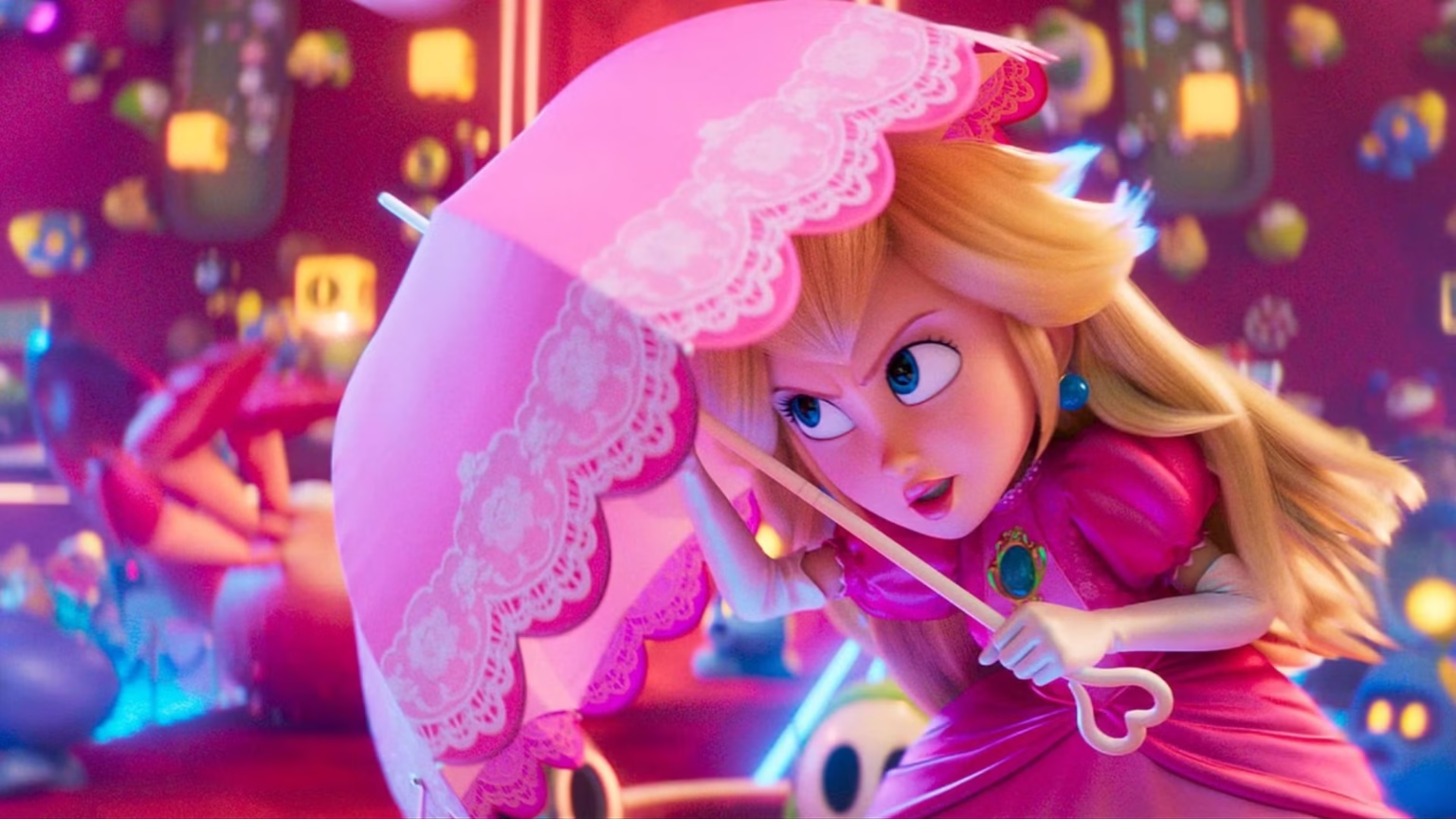
Nintendo’s ongoing effort to rethink Princess Peach continues in The Super Mario Galaxy Movie, where the character is given a more defined identity, broader narrative relevance, and a set of abilities that move her further away from her original depiction. Rather than functioning as a supporting figure tied primarily to Mario’s journey, Peach is positioned as a central character with her own history and motivations, reflecting a broader shift in how legacy characters are being handled in modern adaptations.
Super Mario Galaxy Movie Review
The most substantial change comes through the film’s decision to establish Peach and Rosalina as sisters. This connection introduces a shared origin story that places both characters on another planet prior to the events of the Mushroom Kingdom timeline. According to the film, they were separated during childhood due to a looming threat, with Rosalina sending Peach away to ensure her safety. This explanation reframes Peach’s unexplained arrival in the Mushroom Kingdom—previously a narrative gap—into a deliberate plot point tied to a larger cosmic storyline.
In the context of the games, this represents a notable reinterpretation. Since her introduction in 1985, Peach has largely existed without a clearly defined past, functioning more as a symbolic ruler than a character with a personal history. Rosalina, introduced much later in 2007, did receive a more detailed backstory through Super Mario Galaxy, but that narrative never suggested a missing sibling. By connecting the two in the film, Nintendo’s cinematic projects appear more willing to revise or expand established lore than the games themselves, which have traditionally favored consistency over reinvention.
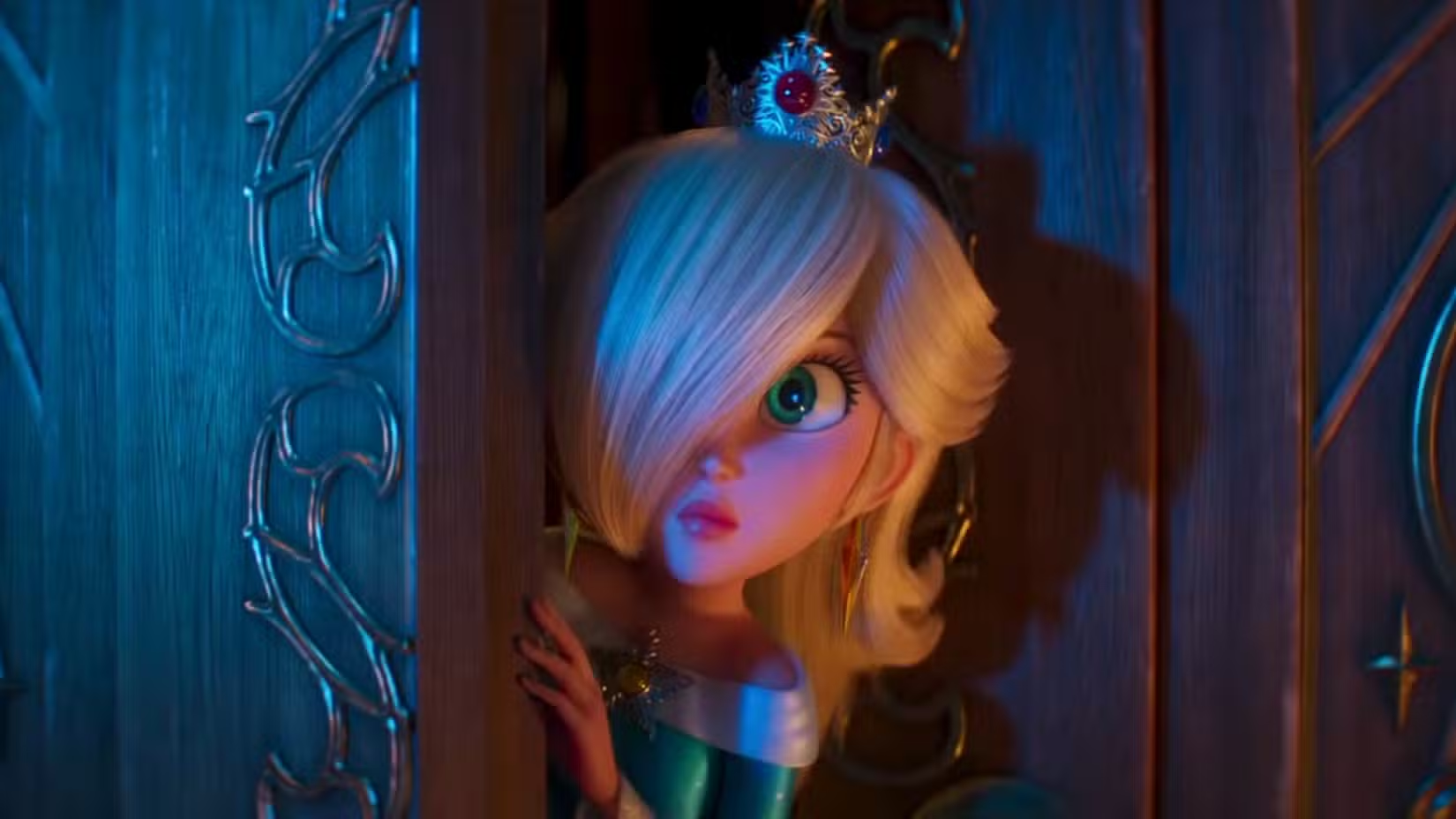
This change also aligns with a broader trend in animated adaptations, where secondary or historically underdeveloped characters are given additional depth to sustain long-form storytelling. Establishing Peach and Rosalina as sisters provides an emotional anchor for future narratives while also creating opportunities for character-driven conflict, mentorship, or collaboration. It shifts Peach’s role from isolated ruler to part of a larger, interconnected world.
The film also revises Peach’s abilities in a way that mirrors this expanded scope. Previously associated with what might be described as supportive or defensive powers—such as levitation or healing—she is now shown to possess a latent connection to cosmic energy. The explanation that she is composed of stardust, similar to Rosalina, positions her within the same power framework. While her control over these abilities is limited in the film, the implication is that she could eventually reach a comparable level of strength.
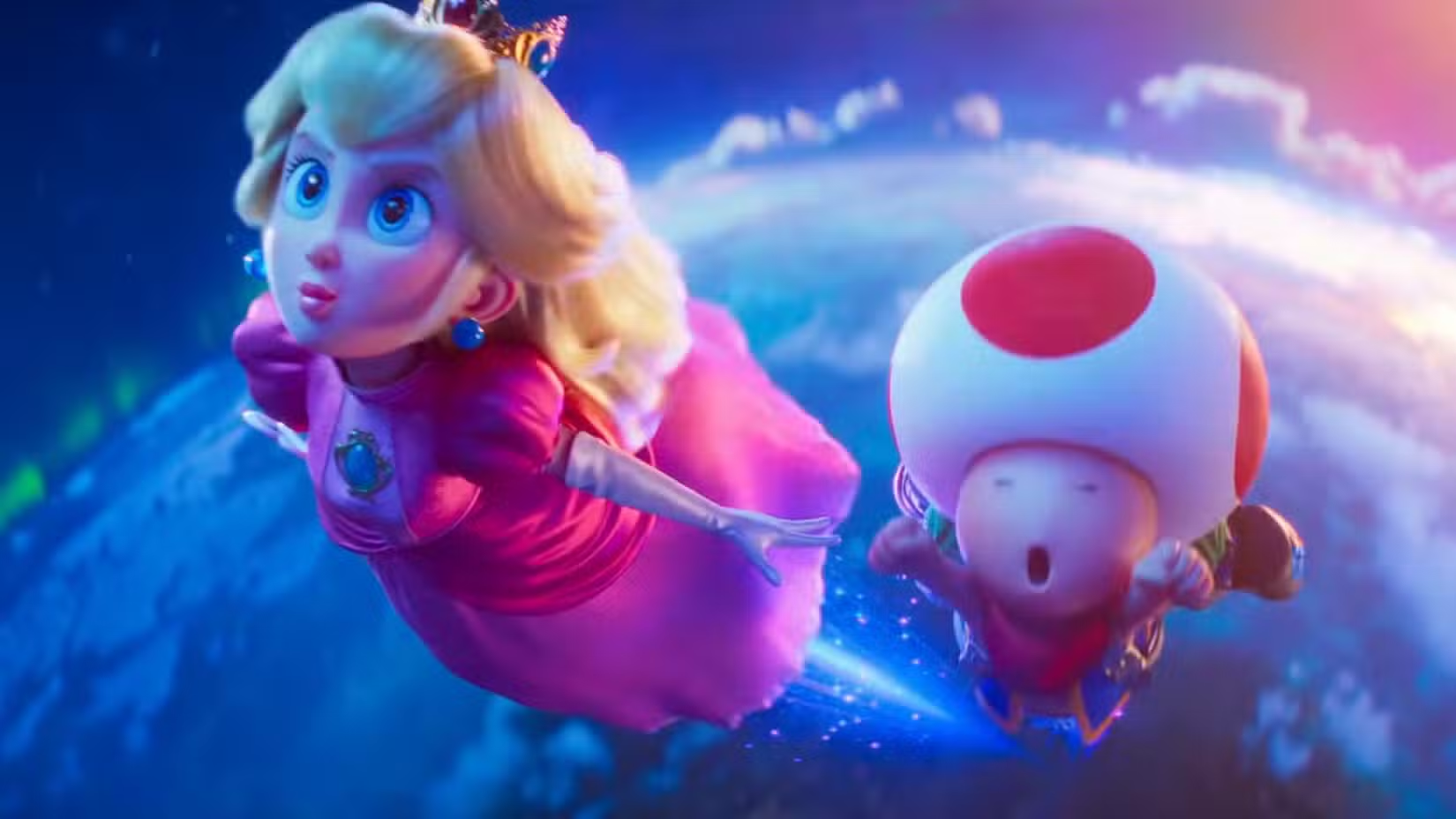
This is a significant departure from earlier portrayals, where Peach’s capabilities were often secondary to gameplay mechanics rather than narrative importance. By contrast, the film treats her powers as an extension of her identity and origin, integrating them directly into the story’s stakes. The brief demonstration of her abilities, particularly in collaboration with Rosalina, suggests a trajectory where her role could expand further in future installments.
Importantly, this development does not emerge without setup. The Super Mario Bros. Movie introduced subtle hints about Peach’s unknown origins, including her arrival in the Mushroom Kingdom as a child and her uncertainty about where she came from. These elements, while not fully explored at the time, now function as groundwork for the sequel’s revelations. This kind of delayed payoff indicates a more serialized approach to storytelling than is typical for adaptations of video game properties, which have often prioritized standalone narratives.
Looking ahead, the implications of these changes extend beyond a single film. The relationship between Peach and Rosalina provides a foundation for future stories that may not center exclusively on Mario. It opens the possibility of narratives focused on their shared past, their development as characters, or the broader cosmic setting introduced in the film. There is also potential for additional characters, such as Daisy, to be integrated into this evolving dynamic, further expanding the scope of the series.
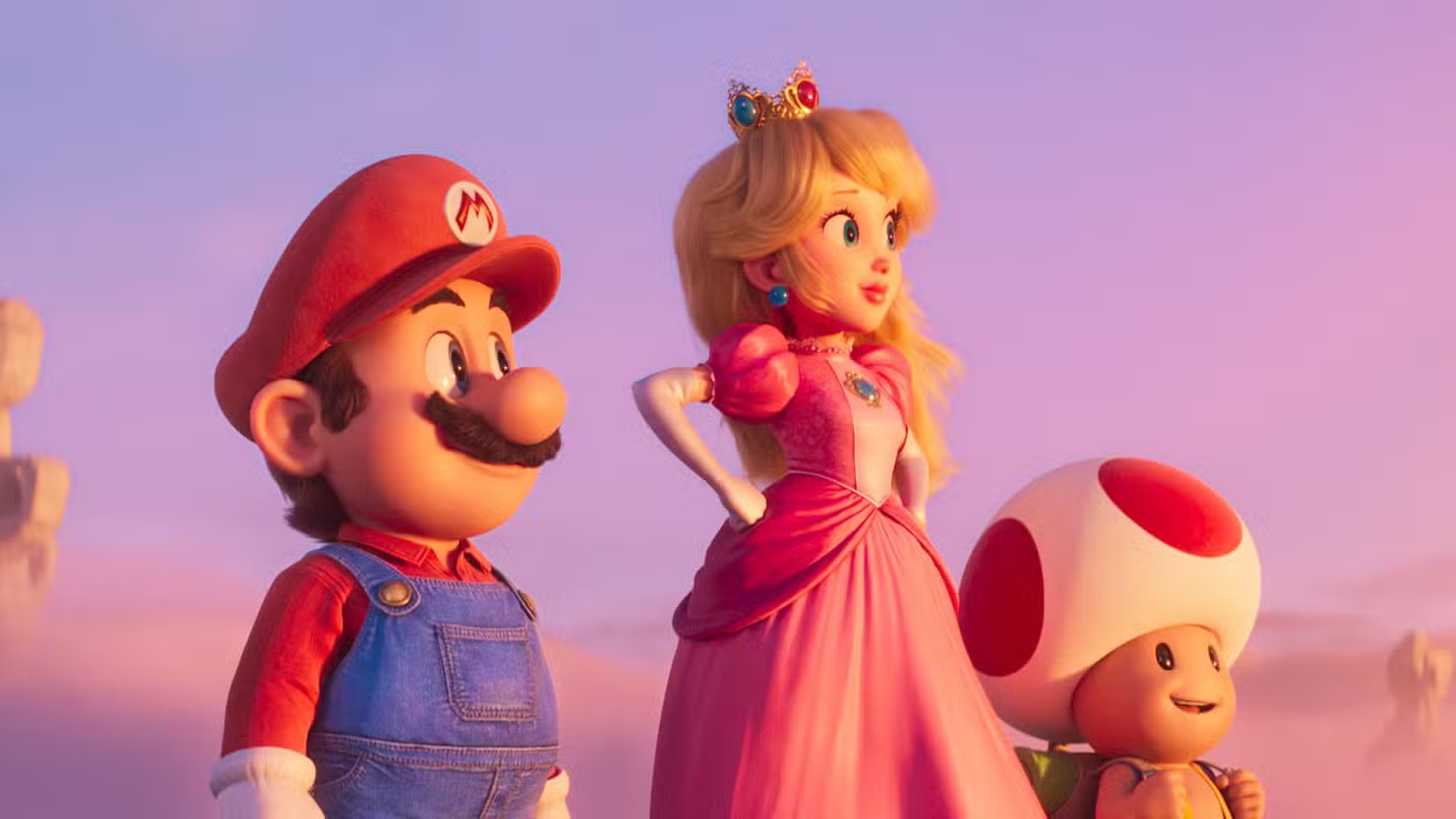
At the same time, these changes raise questions about how closely Nintendo will align its games with its film adaptations. While there has historically been some separation between the two, recent patterns suggest increasing coordination. Elements introduced in the films—whether character traits, relationships, or world-building details—could eventually influence how these characters are portrayed in future games, particularly if audience reception is strong.
What emerges from The Super Mario Galaxy Movie is a version of Princess Peach that is more defined, more capable, and more integrated into the broader narrative framework than before. Rather than relying on legacy expectations, the film treats her as a character still in development, with room to grow and change. Whether this interpretation becomes the standard across all Mario-related media remains to be seen, but it reflects a clear shift toward giving long-established characters a more active and complex role.