
TL;DR: Stylish, sexy, and morally murky, The Night Manager Season 2 is a thrilling comeback that trades nostalgia for tension and doesn’t let go.
The Night Manager
Watching The Night Manager return in 2026 feels strangely intimate, like opening an old notebook and discovering your past self was sharper, angrier, and maybe a little braver than you remembered. This is not a nostalgic revival content to coast on goodwill. The second season of The Night Manager comes back alert, seductive, and very aware of its own mythology, and it leans into that self-awareness with a confidence that’s frankly irresistible.
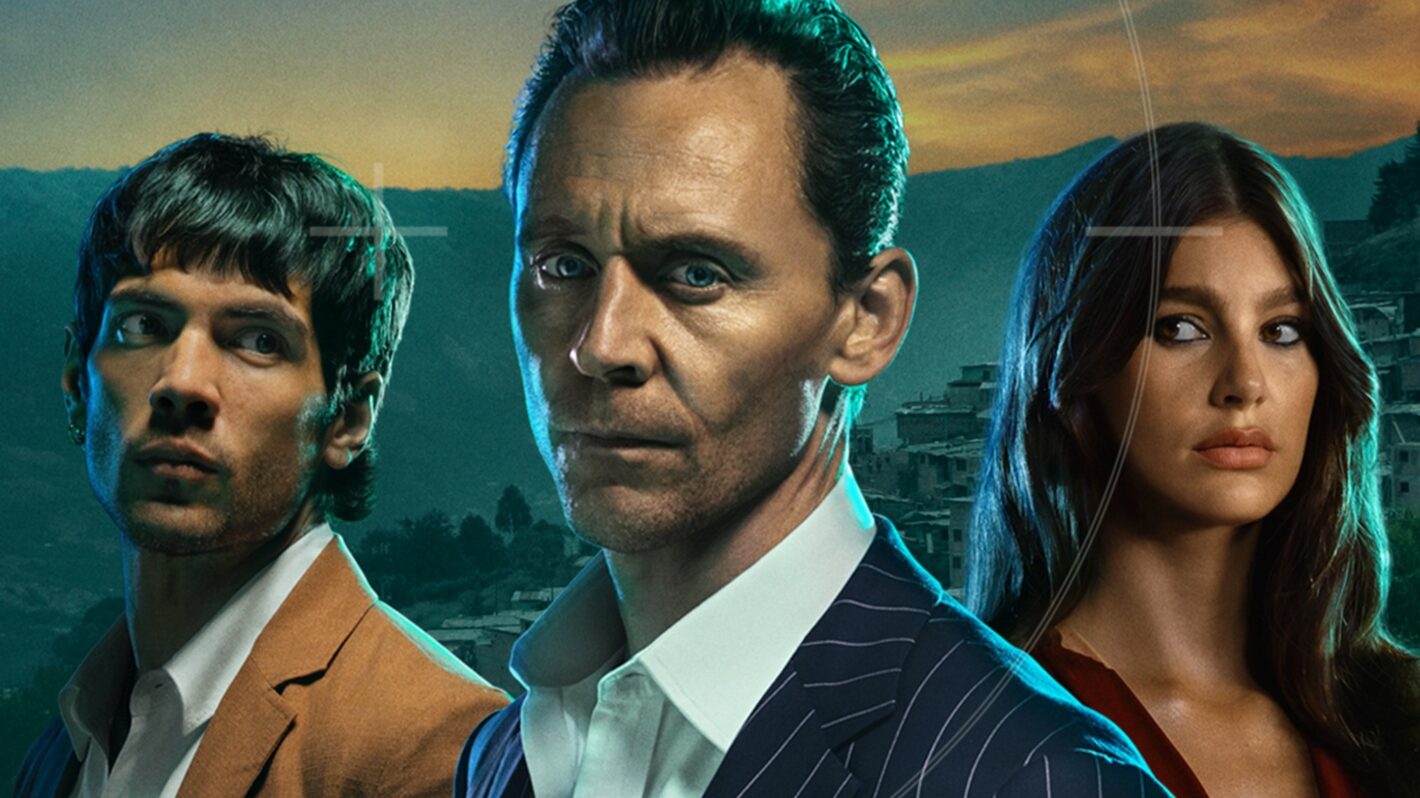
At the center of it all, once again, is Jonathan Pine, and by extension Tom Hiddleston, who slips back into the role with the ease of someone putting on a tailored jacket that never really left the wardrobe. Pine is still a man of impeccable posture and haunted eyes, a character defined by contradiction. He wants to do good, but he’s dangerously good at doing bad things to make that happen. Season 2 understands that this tension is the show’s beating heart. Every chase, every lie, every lingering stare exists to interrogate who Jonathan Pine really is beneath the aliases, the accents, and the beautifully pressed shirts.
Ten years after the events of the first season, Pine is embedded deep within MI6, operating under yet another assumed name and running a nocturnal surveillance unit whose job is to watch, record, and never intervene. The cruelty of that setup is delicious. Pine, a man wired for action, is reduced to a watcher, condemned to observe the world’s evils through grainy screens. Hiddleston plays this version of Pine as tighter, leaner, and more coiled than before. The charm is still there, but it’s edged with guilt and exhaustion. This is a man who remembers every line he crossed, every body he left behind, and has not forgiven himself for any of it.
The moment Pine spots a familiar ghost from his past, the series detonates into motion. What follows is a breathless, globe-trotting descent that takes him from London to Spain and then deep into Colombia, unfolding through bombings, betrayals, and the kind of luxury settings that make moral corruption look absurdly glamorous. This is no longer an adaptation of a novel by John le Carré. The safety net is gone. The story is entirely new, and that freedom gives the season a slightly wilder, more unpredictable energy. It occasionally overreaches, and there are moments where the plotting strains credibility, but the momentum is so relentless that I rarely cared.
The show’s greatest new asset is its villain. Diego Calva arrives as Teddy Dos Santos with a magnetic calm that makes every scene feel dangerous even when nothing is happening. Teddy is a gunrunner styled as a philanthropist, a disciple of the previous season’s monster who has learned all the right lessons from his mentor. He is soft-spoken, lavishly wealthy, and perpetually surrounded by armed men who barely need to move. Watching Teddy and Pine circle each other is pure pleasure. Their interactions crackle with suspicion, admiration, and something more unsettling that the show is smart enough not to define too clearly.
Pine’s latest cover identity, a decadent risk-loving millionaire, becomes a kind of mirror. Both men are performances layered over damaged cores, and the series keeps asking whether there is such a thing as a true self when deception becomes a way of life. The ambiguity extends beyond dialogue into body language, glances held for a beat too long, and scenes charged with a deliberate, disquieting intimacy. The show knows exactly what it’s doing here, and it lets the tension simmer without spelling it out.
Not every supporting thread lands as cleanly. Hayley Squires brings grit and warmth as a fellow operative who joins Pine in the field, injecting much-needed humanity into the procedural machinery. Olivia Colman briefly reappears as Angela Burr, and even in limited screen time she reminds you how much authority she brings to every room. On the other hand, Camila Morrone is introduced in a role that initially feels frustratingly familiar, a glamorous presence orbiting the villain whose true intentions are telegraphed a little too obviously. There’s time for that to deepen, but early impressions are not especially generous.
What surprised me most about The Night Manager Season 2 is how comfortable it is with imperfection. The dialogue occasionally stumbles into heavy-handed foreshadowing. Some plot turns announce themselves a little too loudly. But these flaws feel almost endearing in a series so committed to mood, character, and forward motion. It wants to entertain you, seduce you, and keep you slightly off balance, and it succeeds far more often than it falters.
Verdict
The Night Manager’s second season is a confident, seductive return that embraces moral ambiguity and character psychology as much as spectacle. Anchored by a quietly ferocious Tom Hiddleston and a hypnotic new antagonist, it proves that this world still has sharp edges worth exploring, even a decade later.