
TL;DR: The Monster of Florence is Netflix’s most haunting true crime series to date — a gorgeously shot, emotionally harrowing exploration of obsession and violence that refuses to give easy answers. Imagine Zodiac directed by Paolo Sorrentino after three sleepless nights, and you’re close.
The Monster of Florence
If you’ve ever fallen down a late-night Wikipedia rabbit hole about real-life serial killers (don’t lie, we’ve all been there), The Monster of Florence will hit you like an espresso shot of existential dread. Netflix’s new Italian miniseries, from creators Leonardo Fasoli and Stefano Sollima, isn’t your average true crime binge. It’s not here to shock you with gore or spoon-feed solutions — it’s here to crawl under your skin, pitch a tent, and whisper, “What if we never really knew?”
Based on Gianluca Monastra’s non-fiction book Il Mostro di Firenze, this four-episode psychological inferno reopens the wounds of Italy’s most infamous unsolved murder spree. Between 1968 and 1985, a killer (or killers) stalked the lovers’ lanes of Florence, executing young couples in parked cars and leaving behind scenes so brutal they still define Italian true crime half a century later. The case inspired books, documentaries, conspiracy theories — even a cameo in Douglas Preston’s The Monster of Florence — but never a satisfying answer. Netflix’s adaptation doesn’t try to solve it. Instead, it revels in the ambiguity, crafting a visually exquisite, narratively disorienting, and thematically rich meditation on obsession, voyeurism, and violence.
A Murder in Tuscany: Setting the Stage for Dread
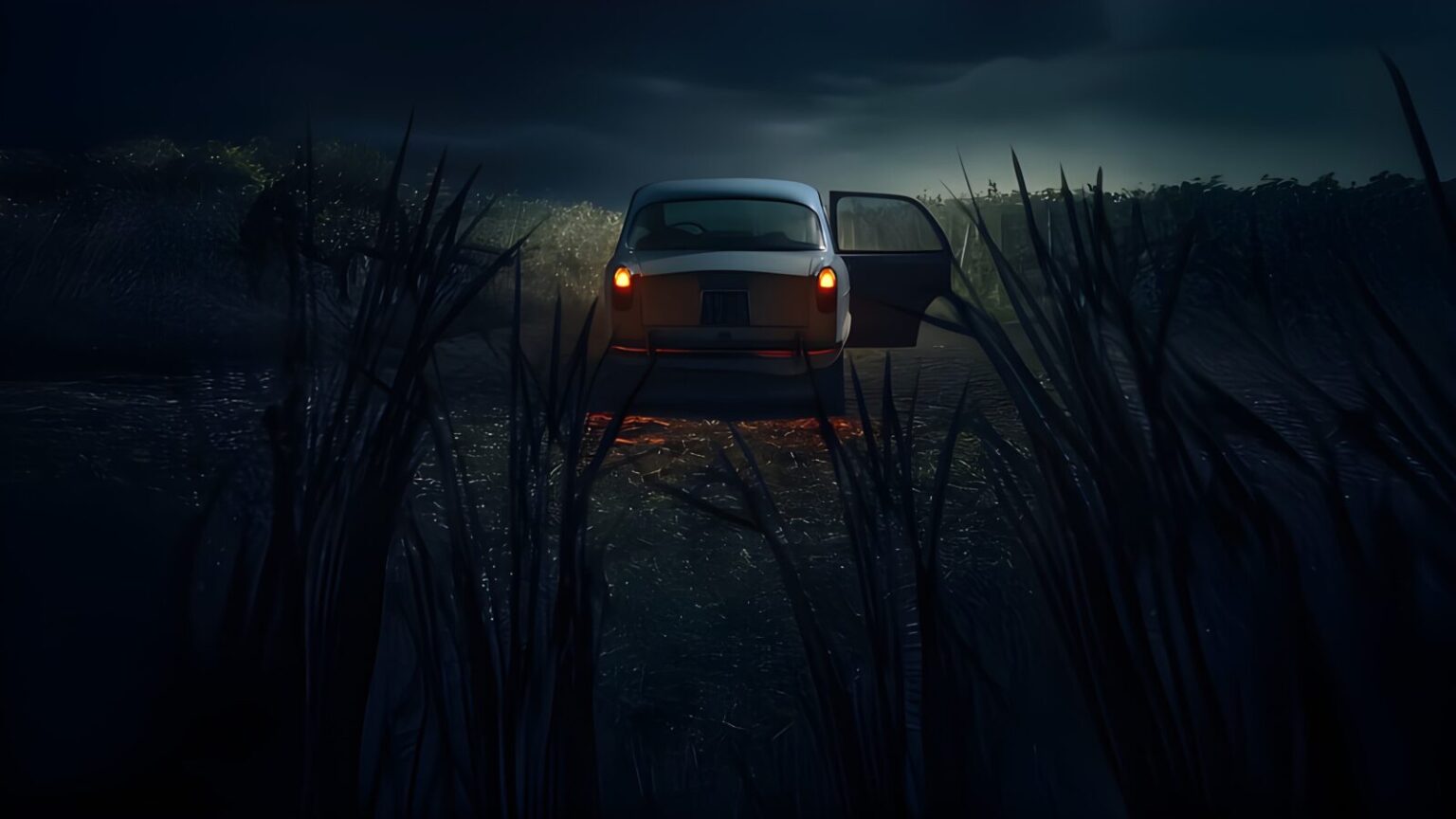
The first episode of The Monster of Florence opens with the kind of cinematic precision that screams “David Fincher went to Italy and fell in love with chiaroscuro.” We’re plunged into the Tuscan countryside of the early ’80s — all cigarette smoke, velvet night, and the low hum of anxiety. A young couple, mid-tryst in their car, is gunned down in the dark. The camera lingers, not on the violence itself, but on the stillness afterward. It’s beautiful. It’s grotesque. It’s the tone-setter for everything that follows.
From there, the story fractures into a non-linear fever dream. We jump between decades, perspectives, and possibilities — detectives, journalists, bystanders, and suspects all caught in a web of moral rot. At the center of the narrative vortex is a claustrophobic domestic drama involving married couple Stefano (Marco Bullitta) and Barbara (Francesca Olia), who take in a volatile roommate, Salvatore (Valentino Mannias). The three of them share the kind of tension that feels less like human interaction and more like an electrical current waiting to explode.
The show’s first half lives and dies in this triangle, channeling the unsettling intimacy of Henry: Portrait of a Serial Killer. Salvatore is the kind of person who makes your skin crawl even when he’s just sitting silently at the dinner table. Mannias plays him like a man permanently teetering on the edge of a nightmare, while Olia’s Barbara — fragile, haunted, suffocating under patriarchal pressure — might be the show’s secret weapon. Together, they embody the sickness and sadness at the heart of this story.
The Narrative Labyrinth: Frustrating and Brilliant in Equal Measure
By Episode 3, The Monster of Florence starts to pull apart its own threads, expanding its scope beyond the central trio and into the wider police investigation. And here’s where things get messy — deliberately so. The non-linear storytelling, multiple narrators, and unreliable points of view make it feel like you’re assembling a puzzle where half the pieces are from another box.
This isn’t a series for multitasking viewers or casual scrollers. It demands your full attention, and even then, it rewards you with unease rather than clarity. It’s less Law & Order: Florence and more Zodiac with a fever.
That ambiguity is both The Monster of Florence’s strength and its Achilles’ heel. On one hand, it captures the maddening chaos of an unsolved case — the misinformation, the paranoia, the way obsession consumes everyone who touches it. On the other hand, the finale doesn’t offer closure so much as a shrug wrapped in gorgeous cinematography. Some will call it haunting. Others will call it hollow. They’ll both be right.
Netflix’s Better “Monster”
Let’s address the bloody elephant in the room: yes, this is Netflix’s second “Monster” series in recent memory. And unlike the streamer’s much-criticized Monster: The Ed Gein Story — which mistook voyeurism for insight — The Monster of Florence is the grown-up in the room. It’s artful, empathetic, and refuses to exploit its subject matter.
Fasoli and Sollima treat the real-life horror with a restraint that’s rare in the true crime genre. There are no cheap shock cuts or fetishized corpses here. Instead, they focus on atmosphere, dread, and the psychological rot of those who orbit evil. It’s a series that dares to ask why we look, rather than simply showing us what to see.
Technical Craft: Gorgeous, Grotesque, and Uncomfortably Real
Visually, this show is a knockout. The cinematography by Paolo Carnera (Gomorrah) is pure Italian noir — all deep blacks and blood-red hues, where even a flickering streetlight feels like a threat. The period detail is meticulous, from the creased trench coats to the boxy Fiats, and the production design oozes authenticity. You can practically smell the espresso and cigarette smoke in every frame.
Sure, there’s one anachronistic hiccup (a 1983 Blade Runner reference that assumes the movie was already iconic when it was still a box-office dud), but that’s a forgivable sin in an otherwise flawless recreation of early ’80s Florence.
The score — a blend of ambient synths and unnerving strings — feels like the sonic equivalent of anxiety. It’s what would play in your head if you knew someone was watching you from the dark, but you couldn’t prove it.
Fear, Guilt, and the Male Gaze
What really sets The Monster of Florence apart from other true crime entries is its thematic depth. Beneath the gore and mystery, this is a story about systemic misogyny, about how a society’s failure to value women makes monsters possible in the first place.
Barbara’s arc becomes a microcosm of Italy’s postwar patriarchy — a woman trapped in a world that treats her body as both weapon and wound. By the end, the real horror isn’t just the killer’s violence; it’s the everyday cruelty that lets such violence thrive unchecked.
Verdict: The Devil Is in the Details
The Monster of Florence isn’t an easy watch, and it doesn’t want to be. It’s not a Friday-night popcorn binge — it’s the kind of show that lingers, like smoke in your lungs. It’s exquisitely made, thematically rich, and yes, sometimes frustratingly opaque. But that’s the point. Evil, in real life, rarely ties itself up neatly.
Netflix may have found its best “Monster” yet — one that doesn’t glorify brutality, but instead turns the camera back on us and asks, Why do we keep looking?