
TL;DR: The Hunt on Apple TV is a tense six-episode thriller about guilt, retaliation, and the devastating consequences of a single bad decision. Anchored by a powerful performance from Benoît Magimel, the series builds suspense through psychological tension rather than explosive action. While some family subplots lean on familiar crime-drama tropes, the show’s tight pacing and creeping atmosphere make it a gripping watch from start to finish.
The Hunt
There’s a very particular kind of thriller that doesn’t rely on explosive twists or relentless action, but instead builds tension like a tightening knot. The Hunt on Apple TV+ falls squarely into that category. It’s the kind of series that begins with a deceptively simple premise and slowly reveals the devastating consequences of one terrible decision. Adapted from Douglas Fairbairn’s novel Shoot and relocated from its American roots to rural France, the six-episode series transforms what might have been a straightforward revenge story into something far more psychological and morally complicated. Watching it unfold felt less like consuming a typical crime drama and more like observing a chain reaction that can’t be stopped once it begins.
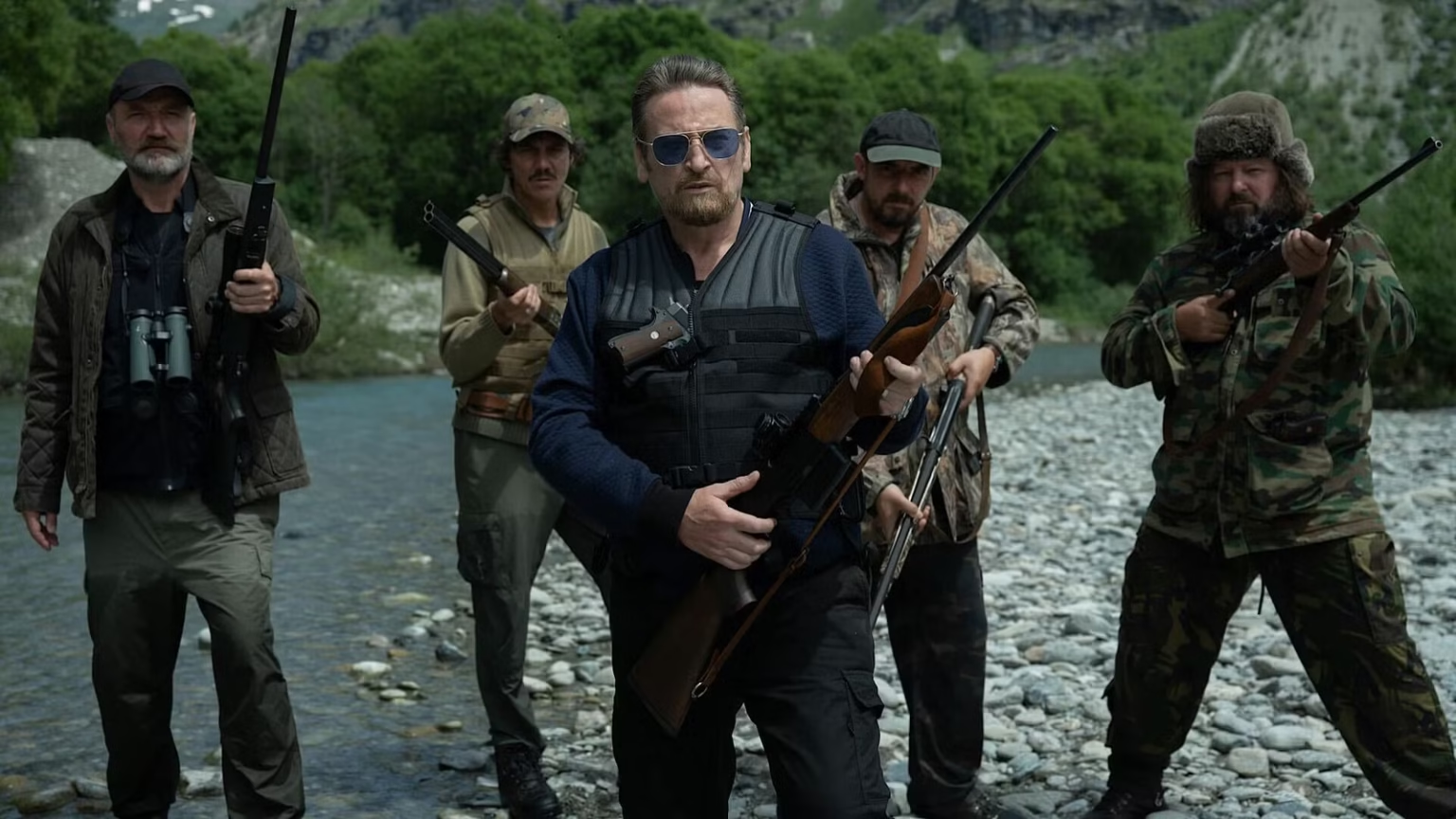
The series opens with a hunting trip that spirals out of control. A group of longtime friends head into the forest outside their small town, rifles in hand, expecting a routine day of hunting deer. What they encounter instead is a violent ambush. Gunfire erupts from somewhere deep in the woods, and suddenly the men are no longer hunters but targets. Panic takes over. They return fire blindly toward unseen attackers. When the shooting stops, one of those attackers is dead. Rather than reporting what happened, the group decides to leave the scene and keep quiet about the entire incident. That choice becomes the central fracture point of the story. The moment they drive away from the forest, their lives begin to unravel in ways none of them anticipated.
From that point forward, the narrative shifts into a slow burn of paranoia and consequences. News eventually breaks that someone died in the woods that day, forcing the group to confront the terrifying possibility that their secret may not stay buried. As they begin investigating who the dead man might have been, the story expands into something larger than a simple accident. The victim appears to have connections, and those connections may not take kindly to the idea that one of their own was killed and left behind in a forest. The threat of retaliation begins as a quiet suspicion but quickly becomes undeniable. A bullet appears in Franck’s mailbox. A severed animal head is placed outside his home. Someone plants a tracking device on his car. These are not subtle warnings. Whoever is behind them wants the message to be clear: someone is coming for them.
At the center of all this is Franck, played by Benoît Magimel, who delivers the kind of performance that anchors the entire series. Magimel has entered a fascinating phase of his career where he excels at portraying men who carry the weight of their past in every expression. Franck isn’t written as a traditional thriller protagonist. He’s not a clever detective or an unstoppable action hero. He’s a man who made a terrible decision in a moment of fear and now has to live inside the fallout. Magimel plays him with a quiet intensity that makes the character feel painfully real. His paranoia never feels exaggerated because the series constantly places him in situations where that paranoia might actually be justified. Every strange encounter, every passing glance from a stranger, every unexpected noise outside his home becomes a potential threat.
What makes the story more compelling is how the series refuses to limit its focus to the men involved in the shooting. The fallout spreads into their families, turning what initially feels like a revenge thriller into something closer to a domestic psychological drama. Franck’s wife Krystel, played by Mélanie Laurent, becomes an emotional counterweight to the escalating tension. Laurent gives the character a grounded presence that contrasts with Franck’s unraveling mental state. She senses that something is wrong long before the truth is revealed, and the strain this puts on their relationship adds another layer of complexity to the narrative.
Their children also become part of the unfolding chaos, although this aspect of the story is where the series occasionally feels less original. Their teenage daughter begins dating a volatile biker whose presence introduces another unpredictable element into the family dynamic. Meanwhile, their younger son overhears fragments of conversations that he was never meant to hear, and the knowledge begins shaping his behavior in troubling ways. Crime dramas often rely on children or teenagers as accidental catalysts for tension, and The Hunt occasionally leans on this familiar trope. While these subplots do add emotional stakes, they sometimes feel like narrative shortcuts designed to complicate the central conflict rather than deepen it organically.
The show’s structure benefits enormously from its limited six-episode format. Modern streaming dramas often stretch their stories across eight or ten episodes even when the material doesn’t justify it, but The Hunt avoids that trap. The pacing feels deliberate and controlled. Each episode gradually expands the circle of suspects and potential enemies, allowing the mystery surrounding the dead man to grow more complicated. The audience learns just enough information to remain engaged without ever fully understanding who is orchestrating the retaliation or how far they are willing to go.
One of the most intriguing aspects of the series is the way it navigates its cultural relocation. The original story is rooted deeply in American gun culture, where firearms often function as symbols of identity, independence, and power. Transplanting that narrative into a French setting creates a slightly unusual dynamic. The visual language of the series sometimes resembles that of an American rural thriller. The hunters gather in bars, drink beer, play pool, and keep weapons at home in a way that feels more reminiscent of American storytelling traditions than French ones. This cultural translation doesn’t completely break the immersion, but it does occasionally create a subtle sense that the narrative’s DNA belongs somewhere else.
Despite that slight dissonance, the show maintains its grip on the audience through atmosphere and character tension. Rather than relying on explosive action sequences, the series thrives on a sense of creeping dread. The danger always feels close but rarely fully visible. This approach allows the story to maintain a constant undercurrent of suspense. Even scenes that appear mundane are infused with tension because the characters are constantly anticipating the next threat.
The Hunt ultimately works best as a meditation on the destructive nature of silence and the ripple effects of violence. The shooting in the forest is only the starting point. What follows is a chain reaction that spreads through friendships, marriages, and families. Each attempt to control the situation only seems to make it worse. The characters find themselves trapped in a cycle where every decision creates new consequences, and the possibility of escape becomes increasingly distant.
By the time the series reaches its final episodes, the emotional toll of that cycle becomes the story’s driving force. Revenge narratives often focus on the mechanics of retaliation, but The Hunt is more interested in the psychological damage inflicted along the way. Watching these characters attempt to maintain normal lives while living under constant threat becomes the show’s most compelling element.
Benoît Magimel’s performance remains the glue holding everything together. His portrayal of Franck captures the slow disintegration of a man who understands that his life may never return to what it was before that day in the forest. The character spends much of the series trying to maintain control over a situation that is clearly spiraling beyond his reach, and Magimel conveys that helplessness with remarkable subtlety.
The Hunt may not reinvent the crime thriller genre, but it executes its core ideas with enough confidence and emotional weight to stand out. The series succeeds because it understands that the most frightening aspect of revenge is not the violence itself but the anticipation of it. The constant uncertainty about when and how retaliation will arrive creates a level of suspense that keeps the story gripping even during its quieter moments.