
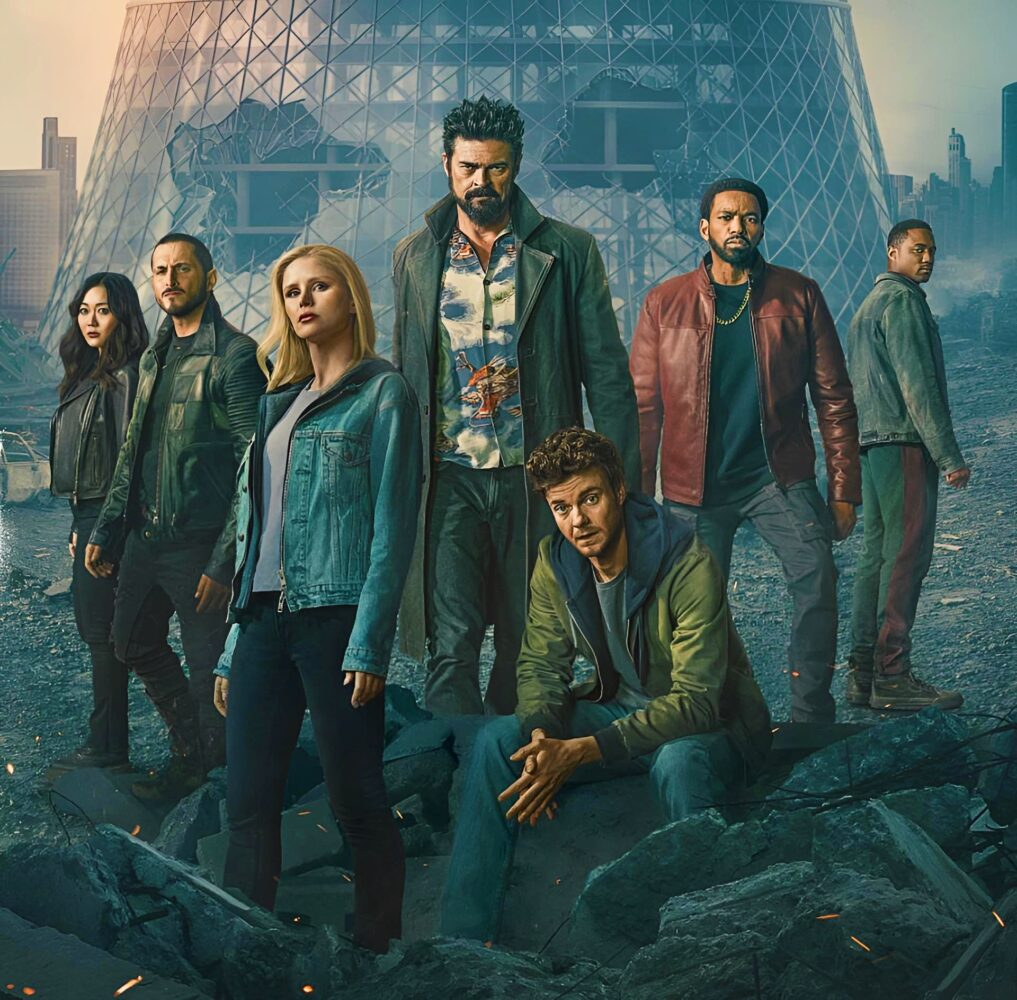
TL;DR: The Boys Season 5 doesn’t reinvent the formula, but it refines it just enough to deliver a satisfying, character-driven finale. It stumbles with pacing and occasionally revisits old ground, but its emotional payoffs, sharper satire, and more nuanced storytelling make it a strong send-off for one of the most chaotic shows of the streaming era.
The Boys Season 5
There’s a very specific kind of chaos that The Boys has always thrived on — the kind that makes you laugh, wince, and question your own moral compass within the span of a single scene. Walking into Season 5, I wasn’t just expecting blood, satire, and supes behaving badly. I was expecting a show staring down its own legacy, trying to land the kind of ending that doesn’t just stick — it lingers.
And somehow, against the odds, The Boys Season 5 mostly pulls it off. Not perfectly. Not cleanly. But in a way that feels brutally on-brand.
This is not a victory lap season. It’s a reckoning.
The beginning of the end feels weirdly self-aware
From the very first episode, there’s this almost cheeky meta-awareness baked into the DNA of the season. The show knows finales are messy. It knows fans want closure but also chaos. It knows you can’t please everyone — and instead of pretending otherwise, it leans into that tension like Homelander leaning into a camera shot he definitely shouldn’t be smiling in.
I actually appreciated that honesty. It lowers your expectations in a clever way, only to quietly exceed them later. Because instead of trying to tie every loose thread with a neat little bow, Season 5 focuses on something far more important: people.
And yeah, I mean deeply broken, morally compromised, occasionally unhinged people.
Character endings take center stage — and that’s the right call
What struck me most this season is how committed it is to giving each major character their due. Not in a fan-service way, but in a “this is who they’ve always been, for better or worse” kind of way.
Hughie isn’t the same nervous guy from Season 1, but he hasn’t magically become a superhero either. There’s still that vulnerability there, that sense that he’s always slightly out of his depth. And honestly, that’s what makes his arc land.
Starlight’s journey is even more fascinating. She’s no longer the moral compass standing untouched in a world of corruption. Season 5 digs into her contradictions — the compromises, the anger, the moments where she’s not entirely sure she’s on the right side anymore. It’s messy, but it feels earned.
Then there’s Butcher, who continues to be the human equivalent of a ticking time bomb strapped to a flamethrower. Watching him spiral while still somehow holding onto fragments of purpose is one of the most compelling threads in the entire season.
And Homelander? He’s still one of the most terrifying characters on television, but what makes Season 5 interesting is how it humanizes the ecosystem around him. The people who follow him aren’t just cartoon villains. They’re conflicted, inconsistent, and sometimes disturbingly relatable.
That nuance hits harder than any laser beam ever could.
Yes, the show still goes full chaos mode — but it’s more restrained
Let’s address the elephant in the room: the gross-out factor.
If you’ve been watching The Boys since the beginning, you know the show has a habit of trying to outdo itself with increasingly absurd and stomach-turning moments. Season 3 had Herogasm. Season 4… well, let’s just say it got weird in ways I’m still processing.
Season 5 dials that back — slightly.
Don’t get me wrong, there are still scenes that made me physically recoil. The show hasn’t suddenly become polite. But it’s no longer trying to shock you every five minutes just for the sake of it.
And honestly? That restraint makes the impact stronger.
When something truly messed up happens, it feels like it matters again. It’s not just another entry in the “how far can we push this” playbook. It’s part of the story.
The satire evolves — and gets a little more uncomfortable
The Boys has always been political. Not subtly political. Not “read between the lines” political. It’s the kind of show that grabs you by the shoulders and says, “Hey, maybe pay attention to this.”
Season 5 keeps that energy but adds something new: nuance.
Instead of painting everything in black and white, it starts exploring the gray areas. Homelander’s supporters aren’t just blindly evil. They’re complicated. Contradictory. Sometimes disturbingly understandable.
And on the flip side, the so-called “good guys” aren’t exactly shining beacons of righteousness anymore. There’s a creeping sense that everyone is capable of crossing lines — and sometimes they do.
That shift makes the show feel more mature. Less like a sledgehammer, more like a scalpel.
It’s still sharp. Just more precise.
Pacing is where things wobble a bit
If there’s one thing holding Season 5 back from greatness, it’s pacing.
You can feel the weight of Season 4 lingering here. The story occasionally drags its feet, revisiting ideas and plot beats that feel a little too familiar. There are moments where I found myself thinking, “Okay, we’ve done this before — can we move forward now?”
It’s not a dealbreaker, but it’s noticeable.
Some episodes feel like they’re stretching material that could’ve been tighter. And when you’re in the final season of a show like this, every minute counts.
That said, when the show does hit its stride, it really hits. The emotional beats land. The confrontations feel earned. And when things finally start accelerating toward the endgame, it’s hard not to get swept up in it.
It feels like a conclusion — even if it’s not perfect
Here’s the thing about finales: they’re almost impossible to nail.
You’re balancing years of storytelling, fan expectations, character arcs, and thematic payoffs. One wrong move and the whole thing can collapse like a Jenga tower kicked by A-Train.
Season 5 doesn’t completely avoid those pitfalls, but it navigates them better than most.
It understands that The Boys was never just about superheroes. It was about power, corruption, identity, and the messy, often uncomfortable reality of being human in a world that rewards the worst impulses.
And by the time you reach the final stretch, you can feel the show trying to say something meaningful about all of that.
Does it succeed entirely? Not quite.
But it gets close enough that I walked away satisfied — and maybe a little emotionally wrecked.