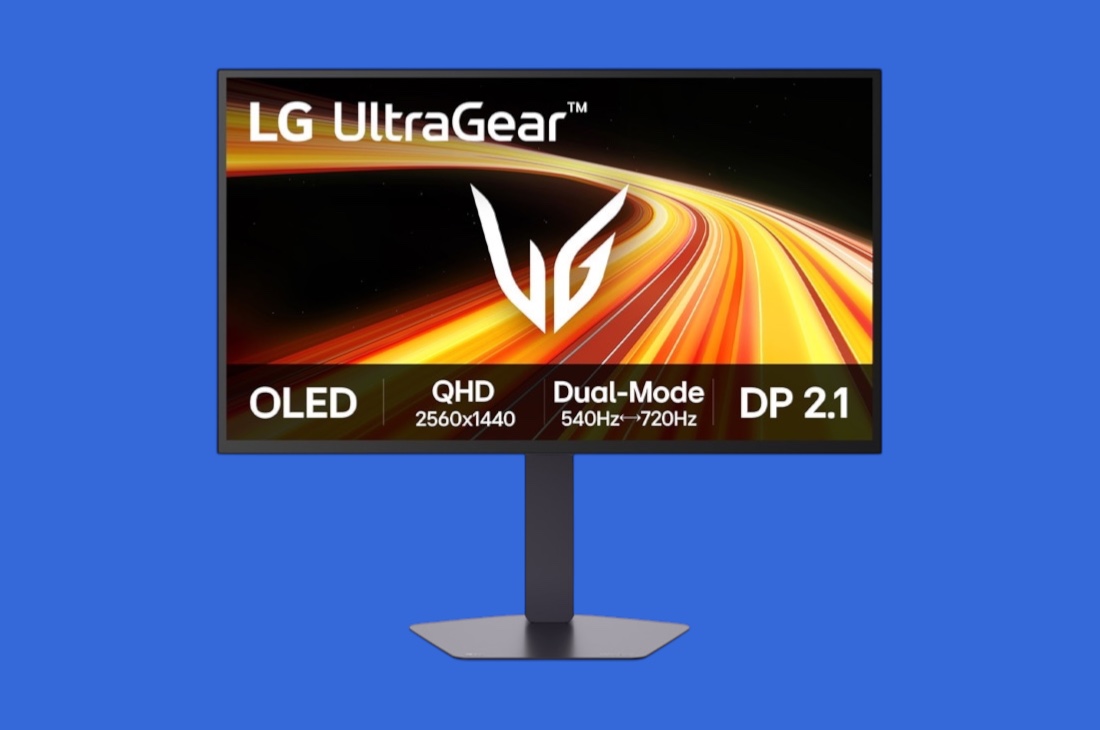

Samsung’s (not so) new U28D590 was one of the company’s first forays into 4K LED desktop monitors, coming in at 28”, 1 billion color support and a super-fast response time of 1ms, clearly aimed at the gaming community out there.
Native resolution is 3840×2160 @ 30 Hertz (HDMI) or is 3840×2160 @ 60 Hertz (Display Port), which in the grand scheme of things is immense. For comparison’s sake, a 1080p screen takes up just a quarter of the 4K display, but is able to run at 60 Hertz.
At a current price tag (RRP) of AED 2,600, this is one of the cheaper 4K displays out there, largely due to the fact that it uses a TN (Twisted Nematic) display. At the moment, every U28D590 comes with a gift voucher of AED 600 across retailers, including the Abu Dhabi Electronics Shopper 2015 which runs from 18-21 March at ADNEC.
Performance:
Generally speaking, performance is stellar. For the price, this monitor is really hard to beat. Sure, the viewing angle is a tad narrow at 170 degrees, but you’re also paying about a third of the price of competitor offerings.
Running Passmark’s Monitor Test application, I tested the following display settings –
- Master Screen
- Zooming
- Gamma
- Contrast
- Moiré patterns
- Color scales
- Solid color
- Fonts
- Convergence
- LCD persistence
- Printer color calibration
- Crosshatch
- Mask

The U28D590 passes with flying colors. The only issue I had was with Gamma 1.58 and Gamma 1.72, where I found color reproduction to be slightly lacking. Otherwise, it’s genuinely near perfect.
Note: this was run on HDMI @ 30 Hertz, which I believe is what most consumers will use, rather than the better performing DP.
Image quality:
As I mentioned earlier, native resolution is 3840×2160 @ 30 Hertz if you’re using HDMI.
At this resolution, there is a noticeable lag in mouse movement and keyboard typing on desktop and word processing applications, likely because of the refresh rate which is limited to 30 Hertz. Drop this down to 1080p and the problems disappear. Alternatively, use the Display Port exclusively and this helps as well.
Picture quality for a 1080p movie running at 4K resolution is very crisp, however there is noticeable screen tearing. Several videos reproduced the same issues. Again, using the DP or switching to 1080p resolution makes these problems disappear, but where this monitor truly shines is 4K.
4K video quality is disturbingly good, almost lifelike. But I think it’s important to bear in mind that there is very little 4K content available out there. At 1.3GB for a 3 minute video, size may be an issue for anyone trying to stream 4K content. Only time will tell how readily available and easily accessible 4K content will be.

Gaming performance:
With game mode turned on, gaming at 1080p is fantastic, and once in 4K the experience is absolutely incredible. If your system can support ultra-graphics, this monitor makes it completely worthwhile.
[See attached screenshot]
At 1ms response time, gaming is really enjoyable, although I have to note that color calibration will be required as the screen is extremely bright out of the box. Tinkering with it will fix that, but it may take some time.
Controls and features:
Controls are intuitive and easy for anyone who’s used a Samsung TV before and rely on a joystick on the back of the monitor at the right side. This controls power as well as the OSD menu, allowing you to control brightness, sharpness and contrast, as well as accessing response time settings, PIP and Game Mode.
PIP feature makes this really handy for anyone using two PC’s (think split screen on one monitor). This can be achieved by using either one of the two HDMI ports or the available Display Port.
At 45 degrees, the viewing angle leaves a bit to be desired, and there is excessive glare, but head-on this won’t be an issue.
The stand height is not adjustable and there is no swivel on the base, but the tilt angles should be OK for most users, coming in at -1°(±2.0°) to +15°(±2.0°).
Design:
In one word: clean.
This is a straight-forward monitor, all about the low price point and performance with no glitzy looks. Personally, that’s my preference, and I think it looks great on any desktop, especially the cleverly designed T-stand.
Final thoughts:
If you’re in the market for a 4K display, you owe it to yourself to check the U28D590 out.
At its price point, there really is no competitor. With the added cash back incentive, it’s a extraordinary deal.
In terms of price to performance, nothing else on the market comes close. Sure, you can pay the same amount and get a nice 3D LED monitor (like I have), but to see the 4K performance really makes you wonder, why haven’t we had this all along?
Specifications:
- Display
- Screen Size: 28″
- Aspect Ratio: 16:9
- Panel Type: TN
- BLU Type: LED
- Brightness (Typical): 370 cd/m2
- Peak Luminance Ratio: 98 %
- Contrast Ratio: 1000:1 (Typ)
- Dynamic Contrast Ratio: Mega ∞ DCR
- Resolution: 3840 x 2160
- Response Time: 1 (GTG)
- Viewing Angle (H/V): 170º/160º
- Colour Support: 1B
- General Feature
- Embedded Function: Eco Saving, Samsung MagicAngle, Samsung MagicBright3, Off Timer, Image Size, UHD Upscale, PIP 2.0, PBP
- Interface
- D-Sub: No
- DVI: No
- Dual Link DVI: No
- Display Port: 1
- HDMI: 2 EA
- USB: No
- Audio In: No
- Headphone: 1 EA
- USB Hub: No

Test system:
- ASUS Maximus VII Hero
- Intel Core i7-4790k
- 16GB Kingston Hyper-X Beast DDR3 (2x8GB) 2400MHz
- Samsung SSD EVO 840 – 120GB (OS)
- Seagate Barracuda 1TB SATA 7200rpm
- ASUS STRIX-GTX970-DC2OC-4GD5
- Corsair CS750M Power Supply
- Corsair Carbide Spec-03 Case
- Windows 8.1 Pro
The unit was provided to us for review by Samsung Gulf.