


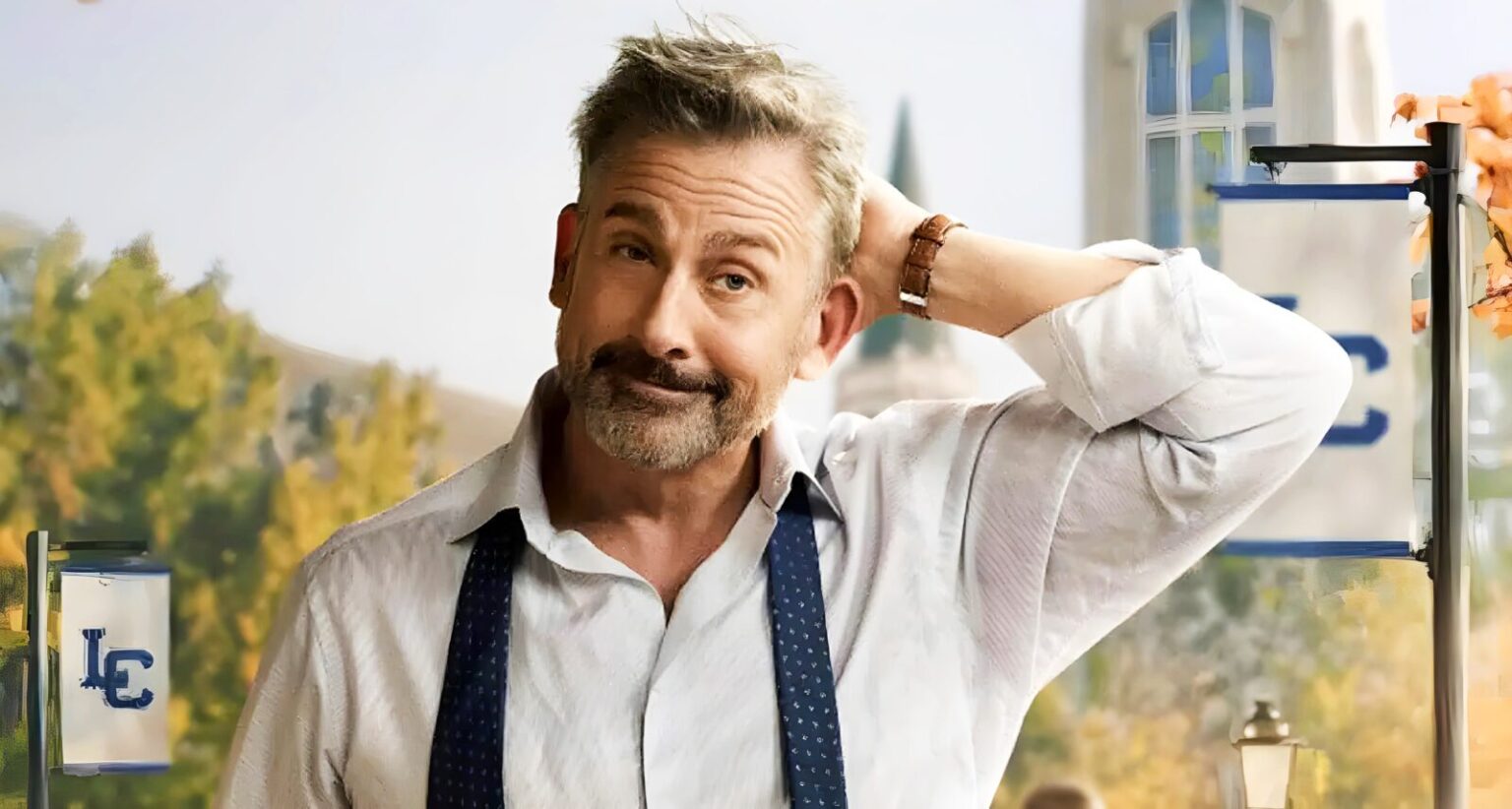
TL;DR: Rooster is a smart, emotionally layered HBO comedy that blends sharp humor with genuine character depth. Steve Carell anchors the series with a nuanced performance as a struggling author trying to reconnect with his daughter while navigating a chaotic college environment. With strong writing, a talented ensemble cast, and Bill Lawrence’s signature balance of comedy and heartfelt storytelling, Rooster quickly proves itself to be one of the year’s most engaging new shows.
Rooster
There’s a particular storytelling rhythm that I’ve come to associate with a Bill Lawrence show over the years. If you’ve spent any time with Scrubs, Ted Lasso, or Shrinking, you already know the pattern. First comes the joke, usually something disarming and slightly awkward that makes you laugh before you even realize why. Then, just when you’ve settled into the comedy, the show pivots and hits you with a moment that feels emotionally honest in a way most sitcoms don’t even attempt. That emotional whiplash has basically become Lawrence’s signature move, and with HBO’s Rooster, he refines that formula into something that feels both deeply personal and consistently hilarious.
After watching the first batch of episodes, Rooster already feels like one of the strongest new comedies of the year. It’s the kind of show that initially presents itself as a breezy campus comedy but slowly reveals a much richer emotional core underneath. At the center of it all is Steve Carell, delivering a performance that reminds you just how good he is when he’s allowed to balance comedy with vulnerability.
The show revolves around Greg Russo, a bestselling author who made his career writing a wildly popular series of pulpy adventure novels starring a hyper-confident fictional hero known as Rooster. These books are the literary equivalent of a summer blockbuster—fast, macho, a little ridiculous, and wildly successful. Greg, unsurprisingly, has built much of his identity around the success of those novels, and he walks through life with the kind of confidence that comes from years of public admiration.
That confidence takes a pretty immediate hit when he arrives at Ludlow College for what he assumes will be a quick and celebratory guest lecture. Instead of admiration, he’s met with skepticism. The students challenge the way he writes female characters. They poke holes in the themes of his books. Suddenly, Greg finds himself sitting in a classroom where his usual charm and storytelling bravado aren’t landing the way they used to.
It’s a deceptively small moment, but it establishes one of the show’s central ideas: Greg has spent most of his life writing a hero he secretly wishes he could be, and now he’s starting to realize the gap between that fictional persona and his actual life.
But Rooster isn’t really about an author battling a new generation of students. The campus setting is more of a playground for the show’s real emotional story, which revolves around Greg’s relationship with his daughter Katie.
Katie works at Ludlow College, and she’s currently dealing with a deeply messy breakup. Her marriage to fellow professor Archie has collapsed in spectacular fashion after he started a relationship with a graduate student named Sunny. Because Ludlow is the academic equivalent of a small town where everyone knows everyone else’s business, Katie’s personal life has effectively become public entertainment for the entire campus.
Greg initially arrives to support her during the fallout, but what starts as a short visit slowly turns into something more permanent. Suddenly he’s living in the same environment as his daughter, surrounded by the emotional wreckage of her marriage and the lingering complications of his own past.
The show wisely avoids turning their relationship into a standard sitcom dynamic. Greg isn’t a bumbling dad constantly embarrassing his daughter for easy laughs. Instead, their interactions feel grounded in the awkward reality of adult family relationships. They care about each other deeply, but they also carry years of unresolved tension and emotional distance.
That tension becomes one of the most compelling aspects of the series. Greg is still dealing with the fallout from his divorce from Katie’s mother, Beth, and his attempts to reconnect with Katie often come out sideways. Sometimes he tries too hard to be funny. Sometimes he retreats into sarcasm instead of addressing what’s really bothering him. Carell plays these moments with remarkable restraint, allowing Greg’s insecurities to surface in subtle ways rather than through big dramatic speeches.
It’s one of the reasons the character feels so authentic. Greg Russo isn’t a sitcom archetype. He’s a man who has built his identity around success and charisma, only to discover that those traits don’t necessarily translate into emotional maturity.
Carell’s performance is the backbone of the show, and it’s refreshingly different from the character that made him a household name. Anyone expecting shades of Michael Scott will quickly realize that Rooster is operating in a completely different space. Greg can be charming, sure, but there’s a quiet loneliness underneath his humor. He’s the kind of person who tries to win every conversation with a joke because it’s easier than admitting he’s struggling.
What makes the performance so effective is how often Carell lets that vulnerability sit in the background. Greg doesn’t openly discuss his insecurities very often, but you can see them in his reactions. A pause before responding to his ex-wife. A flicker of discomfort when students challenge him. A moment of hesitation when he realizes he might actually be connecting with people at the college.
The rest of the cast does an excellent job building out the world around him. Charly Clive brings a quiet intensity to Katie that makes her scenes feel emotionally grounded even when the situations around her become chaotic. Her portrayal captures the complicated mix of frustration, sadness, and lingering affection that often accompanies the end of a long relationship.
Phil Dunster’s Archie is particularly interesting because the show refuses to turn him into a simple antagonist. It would have been easy to make him the villain of Katie’s story, but Dunster plays the character with enough nuance that you understand his perspective even when his choices hurt the people around him. That complexity makes the show’s central relationship drama feel much more believable.
Danielle Deadwyler provides another standout performance as Dylan, a professor who quickly sees through Greg’s carefully constructed persona. Her interactions with Carell have a subtle tension that adds another layer to the show’s emotional landscape. Dylan challenges Greg in ways that other characters don’t, often calling him out with a level of blunt honesty that’s both refreshing and hilarious.
John C. McGinley also brings a delightful oddball energy to the series as Ludlow College’s president, Walt. His character oversees a series of bizarre faculty therapy sessions known as “hot house” meetings, where professors are encouraged to openly share their frustrations and insecurities in front of their colleagues. These scenes often veer into wonderfully uncomfortable territory, creating some of the show’s funniest moments.
One of the most impressive aspects of Rooster is how naturally the humor emerges from these character interactions. The writing doesn’t rely on rapid-fire punchlines or exaggerated comedic setups. Instead, it finds humor in awkward silences, uncomfortable realizations, and the unpredictable ways people react to emotionally charged situations.
Greg walking into a classroom expecting admiration and leaving with his ego bruised. Katie attempting to maintain composure while her personal life becomes campus gossip. Faculty members reluctantly revealing their insecurities during Walt’s therapy sessions. Each of these moments feels funny because they grow organically out of the characters rather than being constructed purely for laughs.
At the same time, the show never loses sight of the emotional stakes beneath the comedy. Relationships remain complicated. Breakups leave lingering wounds. Conversations between family members often feel incomplete because people struggle to articulate what they actually feel.
This blend of humor and emotional honesty has always been Bill Lawrence’s greatest strength as a creator, and Rooster showcases that talent beautifully. The series understands that comedy works best when it’s rooted in recognizable human experiences. By allowing its characters to be messy, flawed, and occasionally uncomfortable, the show creates a world that feels both entertaining and relatable.
By the time the early episodes reach their closing moments, Rooster has already established itself as more than just another workplace comedy. It’s a thoughtful exploration of family dynamics, personal reinvention, and the strange ways people try to reconnect with the versions of themselves they thought they had lost.