
TL;DR: Alias remains one of television’s most entertaining spy dramas. Jennifer Garner delivers a standout performance as Sydney Bristow, a double agent navigating a world of conspiracies, disguises, and emotional fallout. The Rambaldi mythology gives the series a unique sci-fi twist, while the action and character drama keep the story grounded. Streaming on Disney+ makes the show even more enjoyable today, allowing viewers to binge through its twisty storylines and rediscover why it became a cult classic.
Alias
Every once in a while, while scrolling through a streaming library at 1 AM — the sacred hour when questionable viewing decisions are made — you stumble across something that instantly triggers a nostalgic brain explosion. For me, that moment happened when I saw Alias quietly sitting inside the Disney+ catalog.
No flashy promotion. No giant homepage takeover. Just five seasons of early-2000s spy madness waiting patiently like a sleeper agent who never got the message that the Cold War ended.
Naturally, I pressed play.
What followed was less of a casual rewatch and more of a full-blown nostalgia trip into one of the most stylish, bizarre, and addictive spy shows television has ever produced. Alias originally premiered in 2001, which in TV history might as well be the Jurassic period. Back then we were still watching shows week-to-week on broadcast television, DVRs were a luxury gadget, and the idea of binge-watching an entire season over a weekend felt like science fiction.
Now, of course, everything lives inside streaming platforms, waiting to be devoured like a buffet of content.
Watching Alias in the streaming era feels a bit like reopening an old classified CIA file that’s been sitting in a dusty archive for twenty years. You remember the broad strokes — the disguises, the gadgets, Jennifer Garner kicking people through glass walls — but the details hit differently now.
And surprisingly, the show still holds up in ways that feel almost shocking.
This is the first entry in what I like to think of as a flashback review — revisiting classic shows that deserve another look now that streaming has completely changed how we watch television.
And Alias is the perfect place to start.
The Premise: A Spy Story Built on Lies
At its core, Alias has one of the most instantly compelling premises ever created for television.
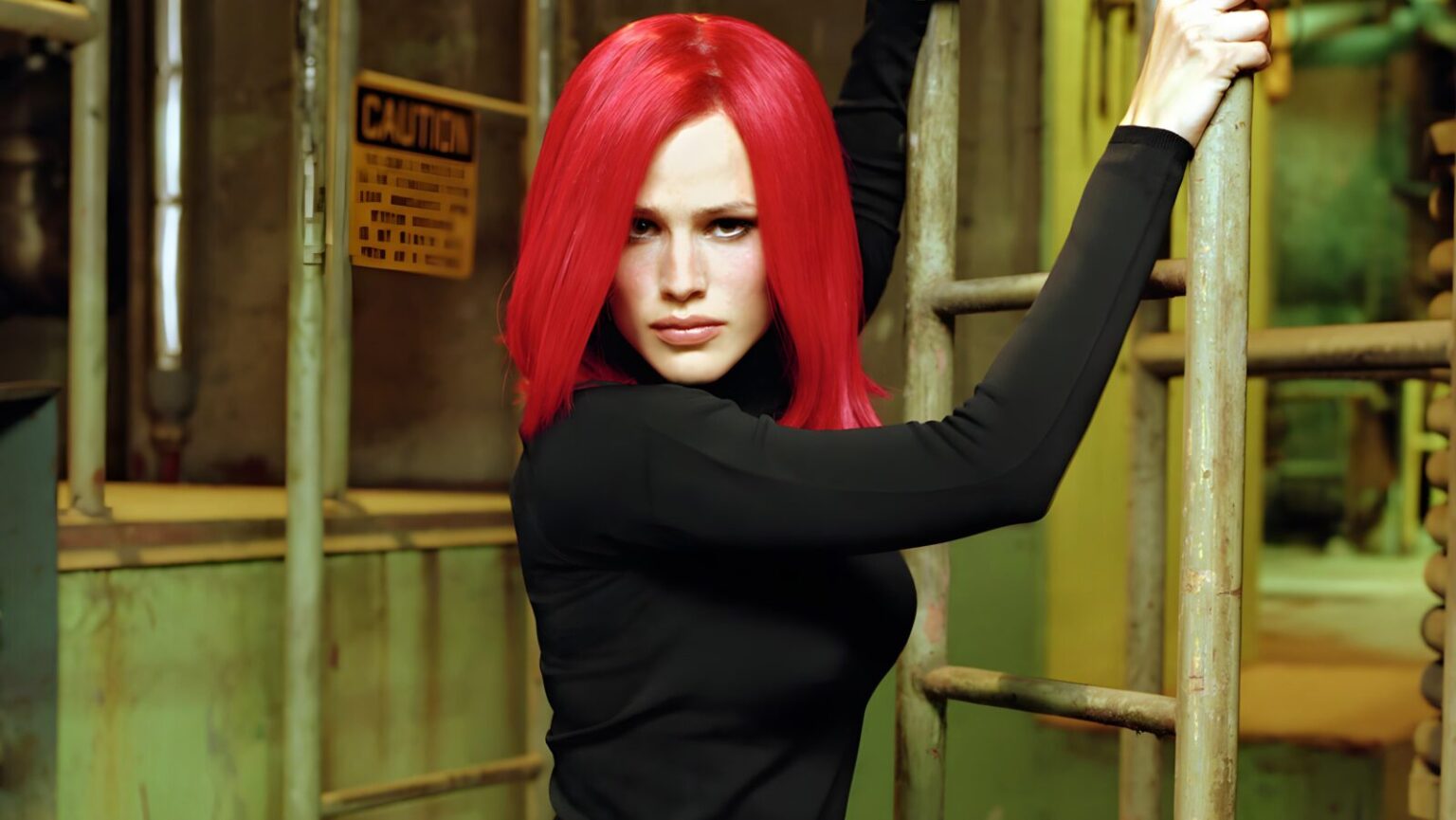
Sydney Bristow, played by Jennifer Garner, believes she works for a secret black-ops branch of the CIA known as SD-6. She’s a graduate student by day, a globe-trotting spy by night, and everything in her life revolves around keeping that identity secret.
Then the pilot episode pulls the rug out from under both Sydney and the audience.
SD-6 isn’t part of the CIA.
It’s actually a rogue criminal organization pretending to be CIA.
Suddenly Sydney’s life becomes exponentially more complicated. After discovering the truth, she’s recruited by the real CIA and tasked with continuing her work at SD-6 — except now she’s secretly a double agent feeding information back to the government.
So Sydney’s job description essentially becomes this: pretend to work for a fake CIA group while secretly working for the real CIA while also pretending to still believe the fake CIA is real.
Simple, right?
The genius of this setup is that it creates tension in almost every scene. Sydney is constantly balancing multiple identities, multiple loyalties, and multiple lies. Every mission she goes on carries the risk that someone might uncover the truth.
And in the world of Alias, getting exposed doesn’t mean a stern HR conversation. It usually means interrogation, imprisonment, or death.
It’s an incredibly effective narrative engine that fuels the show for years.
Jennifer Garner: The Spy Who Made It All Work
Rewatching Alias today, the biggest revelation isn’t the plot twists or the Rambaldi mythology or even the gadgets.
It’s Jennifer Garner.
Garner’s performance as Sydney Bristow is the beating heart of the show, and it’s impossible to imagine anyone else in the role. She manages to make Sydney both incredibly capable and deeply human at the same time, which is a tricky balance that many action shows struggle to pull off.
Sydney isn’t a superhuman assassin who glides through every mission without breaking a sweat. She gets hurt. She gets captured. She improvises when things fall apart. Sometimes her plans collapse in spectacular fashion.
And that vulnerability makes her victories feel earned.
Physically, Garner commits fully to the role. The fight scenes feel raw and scrappy in a way that modern CGI-heavy action sequences often don’t. When Sydney throws a punch or dives through a window to escape a facility seconds before an alarm goes off, you feel the adrenaline behind it.
But what really elevates the character is the emotional dimension Garner brings to the role.
Sydney isn’t just fighting villains. She’s trying to maintain friendships, navigate family trauma, and deal with the psychological toll of living multiple lives at once.
It’s spy fiction, sure, but there’s a strong emotional core underneath all the gadgets and wigs.
And speaking of wigs…
The Disguises: Spycraft Meets Fashion Week
One of the most iconic elements of Alias — and one of the most fun to revisit — is Sydney’s endless parade of disguises.
Every mission requires a new identity, which means the show becomes a weekly fashion show of espionage costumes. Sydney infiltrates nightclubs in neon wigs, poses as diplomats in sleek gowns, and occasionally disguises herself as a completely different person with elaborate prosthetics.
It’s gloriously ridiculous.
But it’s also part of the show’s charm.
These sequences give Alias a playful energy that separates it from darker spy dramas. There’s a sense that the show knows how absurd some of these disguises are, and it leans into that absurdity with confidence.
Watching these scenes now feels like revisiting an early 2000s time capsule of fashion and spy fantasy. Some outfits look hilariously dated, while others still look surprisingly cool.
Either way, they’re always entertaining.
The Supporting Cast: A Secret Weapon
Great spy stories live or die by their supporting characters, and Alias assembled an incredible ensemble cast that gave the show depth beyond its action scenes.
Victor Garber plays Jack Bristow, Sydney’s father and a legendary CIA operative whose emotional range is roughly equivalent to a block of ice. At least at first. Over time, Jack becomes one of the most complex characters in the series, revealing layers of loyalty, guilt, and love that add tremendous weight to the story.
Garber’s performance is subtle but powerful. Jack isn’t the kind of character who delivers long emotional speeches. His feelings are buried under decades of intelligence work and emotional repression, which makes the moments when those feelings finally surface incredibly impactful.
Then there’s Michael Vartan as Michael Vaughn, Sydney’s CIA handler and eventual love interest. Vaughn provides a stabilizing presence amid the chaos, offering support and trust in a world where betrayal is practically a job requirement.
And of course we have Ron Rifkin as Arvin Sloane, the show’s primary antagonist.
Sloane is the kind of villain who doesn’t need to shout or threaten people to be intimidating. He’s calm, polite, and completely obsessed with the mysterious prophecy of Milo Rambaldi. His quiet intensity makes him far more unsettling than the average TV bad guy.
Also worth noting: Alias quietly featured a young Bradley Cooper long before he became a Hollywood superstar. Seeing him pop up as journalist Will Tippin is like spotting a celebrity cameo in a retro movie marathon.
The Rambaldi Mystery: Where Things Get Weird
If Alias were just a spy thriller, it would still be entertaining.
But what makes the show truly unique is the strange mythology woven into its narrative.
At the center of this mythology is Milo Rambaldi, a fictional Renaissance-era scientist and prophet whose inventions supposedly predicted future events. Throughout the series, characters hunt down Rambaldi artifacts — mysterious devices hidden across the world that hold incredible power.
Some artifacts resemble ancient weapons. Others feel more like science fiction relics that shouldn’t exist.
This storyline gradually expands into a sprawling conspiracy that touches nearly every character in the show.
Sometimes it’s brilliant.
Sometimes it’s completely bonkers.
But it’s never boring.
Watching these episodes today, you can clearly see J.J. Abrams experimenting with the mystery-box storytelling style that would later define Lost. Every answer opens the door to more questions, and every discovery suggests a deeper conspiracy.
It’s messy at times, but it gives Alias an identity that few spy shows can match.
Action and Style: Spycraft the Old-School Way
Another thing that stands out when revisiting Alias is how tactile the action feels.
This was a show made before television relied heavily on digital effects, which means most of the stunts were performed practically. Fight scenes happen in cramped rooms. Car chases feel chaotic and dangerous. Explosions actually look like explosions instead of computer-generated fireballs.
The result is action that feels grounded and immediate.
There’s also a sense of style running through the show that reflects the early 2000s era. Dramatic lighting, pulsing electronic music, and rapid-cut editing give many sequences a kinetic energy that still feels exciting today.
Alias may not have had the massive budgets of modern streaming productions, but it made up for that with creativity and momentum.
Streaming Changes Everything
Here’s something fascinating about watching Alias in 2026.
The show actually benefits enormously from the streaming format.
When Alias originally aired, viewers had to wait a week between episodes. Sometimes longer if there were mid-season breaks. That made following the complex Rambaldi mythology more challenging, especially when storylines stretched across multiple seasons.
Now you can binge through entire arcs in a single sitting.
Plot threads feel more coherent. Character relationships evolve more smoothly. Cliffhangers become invitations to immediately hit the “next episode” button.
The pacing suddenly feels modern.
It’s almost as if Alias was accidentally designed for binge-watching years before streaming existed.
Does It Still Hold Up?
Mostly, yes.
Certain elements reveal the show’s age. The technology looks quaint compared to modern spy dramas, and some episodic plots follow the formula of early-2000s television.
But the core ingredients still work incredibly well.
The characters are compelling. The action is exciting. And the mythology remains intriguing enough to keep you watching episode after episode.
Most importantly, the show still feels fun.
And that’s something many modern prestige dramas sometimes forget to be.
Verdict
Revisiting Alias on Disney+ feels like rediscovering a hidden cornerstone of modern television. The show blends espionage thrills, emotional storytelling, and strange mythology into a package that still feels distinctive more than two decades later.
Jennifer Garner’s performance remains iconic, the action sequences are endlessly entertaining, and the Rambaldi conspiracy gives the show a weird edge that keeps it from becoming just another spy procedural.
In the era of streaming, Alias finally gets the viewing format it always deserved.