
TL;DR: Episode 7 of Percy Jackson and the Olympians season 2 delivers confident action, sharp character work, and morally complex storytelling that elevates the series beyond its source material. With stronger choreography, deeper thematic exploration, and a perfectly paced setup for the finale, this is the episode that proves the show knows exactly what it’s doing.
Percy Jackson and the Olympians season 2
Watching episode 7 of Percy Jackson and the Olympians season 2, I had that rare, dangerous thought: this show might actually be peaking at exactly the right moment. Not peaking in the “oh no it can only go downhill from here” way, but in the “this is what the writers have been building toward all season” sense. Strong action, confident pacing, and some genuinely chewy moral complexity collide here in a way that makes the finale feel less like an obligation and more like an event.
Season 2 has already proven itself to be more self-assured than season 1, but episode 7 is where that confidence really locks in. This is the episode that stops apologizing for deviating from the book and instead says, yeah, we know what we’re doing. The result is a chapter that feels intimate without being small, dramatic without being melodramatic, and surprisingly thoughtful for a show that still finds time to swing swords and summon ancient evils before dinner.
I went into this episode expecting connective tissue. What I got instead was an episode that actively reframes the endgame of the season, pushes its characters into morally uncomfortable corners, and quietly reminds us that Percy Jackson has always been a story about kids inheriting the broken systems of gods who refuse to change.
The action finally trusts its actors
Let’s talk action first, because for once I don’t have to hedge my praise. Episode 7 delivers the most confident physical storytelling the show has managed so far. Where season 1 often leaned on frantic cutting and suggestion over execution, season 2, and this episode in particular, actually lets fights breathe. The camera stays put long enough for us to understand geography, momentum, and intent, which sounds basic until you realize how many modern genre shows forget this entirely.
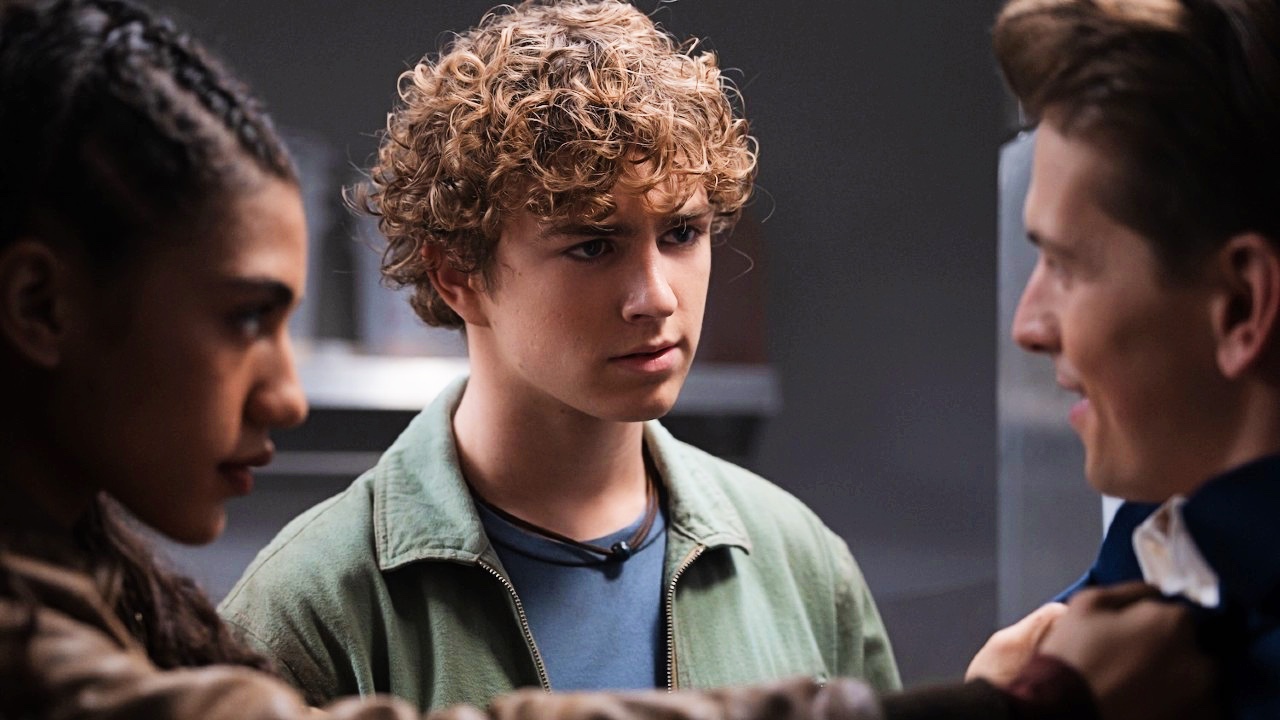
Percy’s confrontation with Luke isn’t flashy in a Marvel third-act way, but that’s exactly why it works. There’s weight in every movement, not just because of improved choreography, but because the actors finally seem comfortable inhabiting these bodies in motion. Walker Scobell, in particular, looks like he’s stopped “acting like Percy” and started being Percy. His fighting style feels impulsive, emotionally driven, and occasionally reckless, which is exactly how a teenage demigod with a savior complex should move.
Clarisse’s scenes deserve their own paragraph. The show has steadily upgraded her from one-note bully to emotionally volatile pressure cooker, and episode 7 lets that tension explode physically. Her combat moments aren’t elegant; they’re angry. Every swing feels like it’s carrying unresolved resentment toward the gods, toward prophecy, and toward the idea that her entire life might just be a cosmic setup for disappointment. It’s raw, messy, and extremely satisfying to watch.
What really excites me, though, is how this episode positions action as a promise rather than a payoff. You can feel the show deliberately holding back, setting the chessboard for something bigger. Episode 7 understands that spectacle means nothing without anticipation, and it uses restraint to sharpen the stakes heading into the finale.
On paper, episode 7 is relatively contained. The mission is clear: rescue Annabeth, secure the Golden Fleece, and survive whatever Luke and Kronos have planned next. But the writing smartly uses that simplicity as a framework for something more ambitious. This isn’t about monsters or obstacles anymore. It’s about ideology.
The show quietly shifts the central threat away from physical danger and toward philosophical conflict. Luke isn’t just an antagonist to punch; he’s a walking indictment of Olympus. His grievances aren’t framed as excuses, but they’re no longer dismissed as the ramblings of a villain either. That distinction matters. It’s what elevates the episode from competent fantasy TV into something that actually wants to say something.
Annabeth’s conversations with Luke are the emotional core of the episode, and they work because the show finally allows silence, hesitation, and doubt to exist without rushing to resolve them. Leah Sava Jeffries plays Annabeth not as a passive captive, but as someone actively wrestling with the possibility that Luke might be right, or at least not entirely wrong. There’s genuine tension in watching her try to reconcile loyalty to the gods with the mounting evidence of their failures.
Charlie Bushnell, meanwhile, gives Luke his most layered performance yet. This version of Luke isn’t twirling his mustache for Kronos. He’s visibly shaken by the enormity of what he’s aligned himself with. The episode doesn’t absolve him, but it humanizes him enough that his eventual fate feels tragic rather than inevitable.
This moral grayness is where the show truly outgrows its source material. The books flirted with these ideas, but the series commits to them. Gods aren’t just flawed; they’re negligent. Prophecies aren’t mystical roadmaps; they’re psychological traps. And heroes aren’t born; they’re pressured into becoming symbols long before they’re ready.
One of my favorite aspects of episode 7 is how it continues to dismantle the idea of prophecy as destiny. Clarisse’s arc has been quietly revolutionary this season, and here it finally clicks into place. The show reframes prophecy not as a promise of greatness, but as a burden that warps relationships and self-perception.
Clarisse isn’t chasing glory. She’s suffocating under expectation. Every decision she makes is haunted by the fear that she’s either fulfilling a prophecy she doesn’t want or failing one she never asked for. The episode allows her to express that frustration without turning it into melodrama, which makes her moments of vulnerability hit harder.
Her interactions with Percy are especially effective. There’s a mutual understanding between them now, a recognition that both are being used as pieces in a cosmic game neither consented to. Scobell plays Percy with a growing maturity here, balancing his trademark defiance with a newfound empathy that suggests real growth since season 1.
Kronos is used sparingly in episode 7, and that’s a smart call. The Titan lord works best as a presence rather than a personality. His influence seeps into conversations, decisions, and doubts without dominating the narrative. When he does appear, it feels earned, like a shadow finally stepping into the light.
What I appreciate most is how the show resists the urge to make Kronos a monologue machine. Instead, his manipulation is subtle. He doesn’t need to convince characters outright; he just needs to nudge their existing insecurities. It’s classic villainy done right, and it reinforces the episode’s central theme: the real danger isn’t power, it’s persuasion.
By the time episode 7 ends, it’s clear that season 2 knows exactly what kind of show it wants to be. It’s no longer chasing the shadow of the books or trying to prove its legitimacy as an adaptation. It’s confident enough to reinterpret, expand, and occasionally challenge its source material.
What’s wild is that all of this growth is happening within what many fans consider the weakest Percy Jackson book. That alone speaks volumes. The series has taken familiar plot points and infused them with emotional intelligence, thematic coherence, and a willingness to let characters be wrong, conflicted, and unfinished.
As someone who went into season 2 cautiously optimistic, I’m genuinely impressed. Episode 7 doesn’t just set up the finale; it earns it. If the final episode can stick the landing, this season won’t just be an improvement over season 1. It’ll be the moment Percy Jackson and the Olympians fully claims its place in the modern fantasy TV conversation.