
TL;DR: Paradise Season 2 expands beyond its initial mystery into a deeper exploration of ambition, control, and humanity after collapse. With powerhouse performances and bold narrative swings, it cements the show as one of the most compelling sci-fi dramas on TV right now.
Paradise
There’s something deeply satisfying about a show that refuses to get comfortable. At the end of Season 1 of Paradise, I was bracing for a straightforward continuation. Xavier Collins had just learned that his wife Teri was alive. The bunker’s carefully curated utopia had cracked open. The president was dead. The power structure was exposed. Roll credits, cue Season 2 chase narrative, right?
Wrong.
Season 2 swerves immediately, and I mean that in the best possible way. Instead of picking up in Colorado with Xavier storming into the wasteland, the story rewinds and relocates. We open in Memphis, long before the extinction-level catastrophe, grounding this sci-fi drama in something far more intimate: a woman barely holding her life together.
That woman is Annie Clay, played with stunning vulnerability by Shailene Woodley. And from the first episode, it’s clear that Paradise Season 2 isn’t just expanding its world. It’s deepening its soul.
An Unexpected Beginning That Reframes Everything
Annie’s backstory unfolds with quiet devastation. After growing up as caretaker to her mentally unwell mother, she claws her way into medical school, only to suffer a breakdown that derails everything. When we meet her, she’s giving tours at Graceland, clinging to routine and small talk as a substitute for stability. Then the sky turns black.
The apocalypse in Paradise has always been absurdly operatic. Volcanoes. Tsunamis. Nuclear escalation. It’s like Mother Nature and geopolitics got into a bar fight. But here, the end of the world feels eerily intimate. Annie and her friend Gayle are inside Elvis Presley’s mansion when the cloud rolls in, and the juxtaposition is almost poetic. The American dream fossilized in velvet rope and gold records, while the actual world collapses outside.
This premiere does something bold: it reminds us that Paradise isn’t about spectacle. It’s about people in the blast radius of spectacle.
Eventually, Annie’s path intersects with Xavier’s, though the show smartly delays that convergence. When it happens, it feels earned rather than convenient. Their journey together, searching for Teri and ultimately for a path back to the Colorado bunker, becomes the emotional backbone of the season.
Sterling K. Brown Is the Gravitational Force
Let’s be honest. This show does not function without Sterling K. Brown.
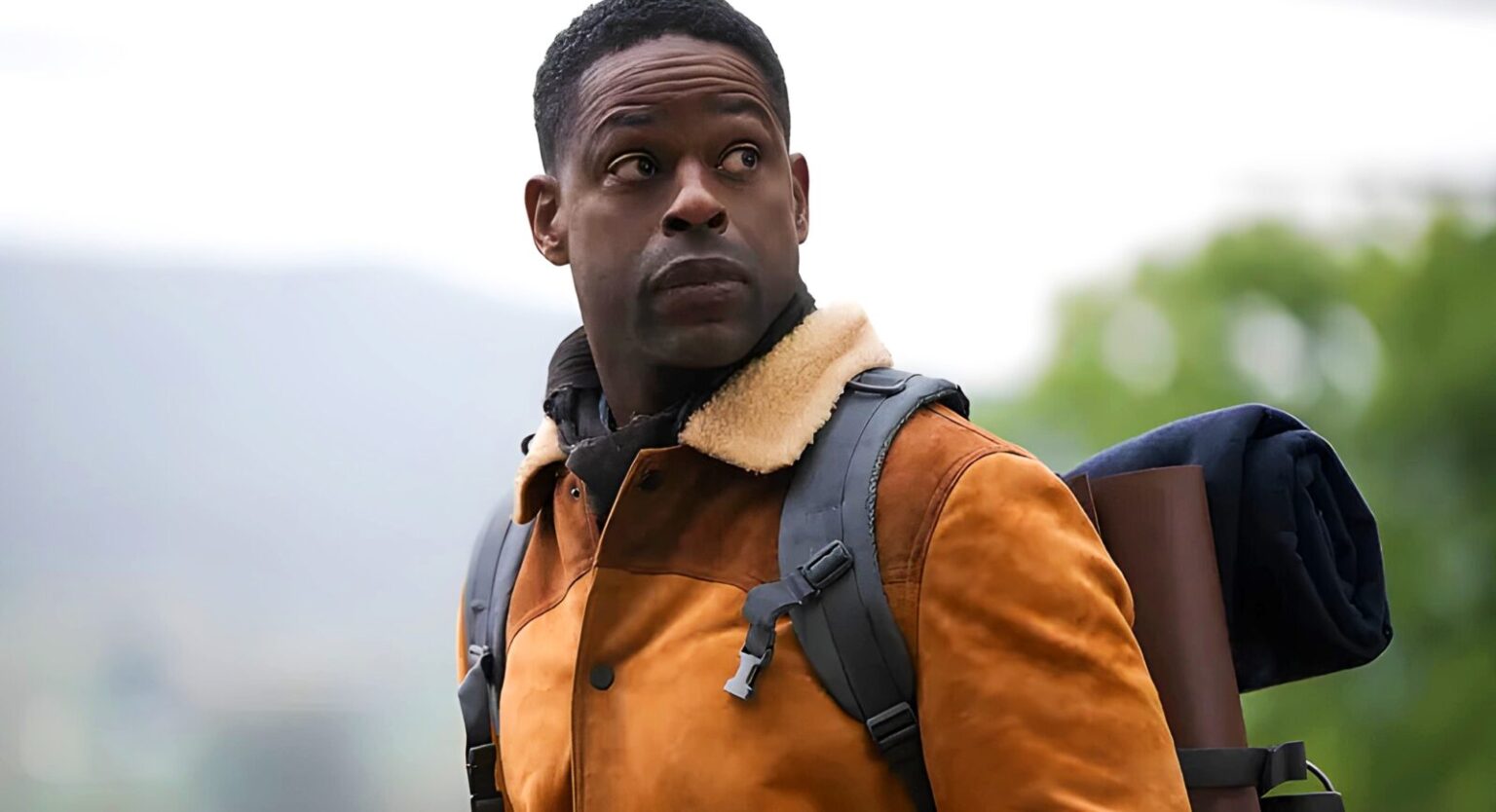
As Xavier Collins, Brown delivers a performance that is both restrained and explosive. He’s a rogue Secret Service agent, yes. A father trying to keep it together, absolutely. But in Season 2, he becomes something even more compelling: a man confronting the limits of control.
What hits hardest this season is Xavier’s vulnerability. His search for Teri isn’t just plot propulsion. It’s grief, hope, and guilt braided together. The show gives us glimpses of Teri’s survival story, revealing how she navigated the years above ground and how she managed to send signals into the void. These parallel threads, Xavier on the move and Teri fighting her own battles, add a layered tension that feels far more personal than last season’s murder mystery engine.
There’s a scene midway through the season where Xavier’s optimism collides with brutal reality, and Brown plays it with such raw honesty that I had to pause for a second. That’s the trick Paradise pulls repeatedly. It lulls you into a genre groove and then hits you with something achingly human.
Back to the Bunker, But Not the Same One
By Episode 3, “Another Day in Paradise,” we finally descend back into the Colorado compound. And it is not the pastel-toned Pleasantville simulation we once knew.
With Sinatra comatose after being shot, the power vacuum has turned toxic. Newly elected President Henry Baines is scrambling to maintain order. Jeremy Bradford, Cal’s teenage son, is becoming a symbol for dissent. Gabriela Torabi is unraveling as the myth of the woman she revered collapses in real time.
This is where the political thriller side of Paradise reasserts itself. But unlike Season 1, there’s no central whodunit. Cal’s killer has already been revealed. Instead, the tension comes from systemic rot. What happens when a billionaire’s curated utopia loses its architect? What happens when the illusion of safety fractures?
The bunker storyline this season feels darker and more cynical. It’s less about solving a mystery and more about exposing a system. The inner workings of the compound, the secret projects, the layers beneath layers, all point to one recurring theme: control doesn’t disappear when the world ends. It calcifies.
The Human Cost of Survival
Episodes like “A Holy Charge” and “The Mailman” are where Season 2 truly flexes. These chapters dig into rage, grief, paranoia, and the psychological toll of prolonged instability. Trust becomes currency. Anger becomes armor.
What impresses me most is how the show resists easy villainy. Even the characters making terrible choices are rooted in fear or ambition rather than cartoonish evil. Paradise understands that in extreme circumstances, morality bends. Sometimes it snaps.
And yet, for all its darkness, the series never fully surrenders to nihilism. There’s still a belief in connection. In family. In the stubborn refusal to give up on each other. That balance, between bleak realism and fragile hope, is what keeps this sci-fi drama from feeling like just another dystopian entry in an overcrowded genre.
Ambition, Power, and the Inevitable Cracks
As Episode 7, “The Final Countdown,” closes out the screeners provided to critics, the larger thesis of Paradise Season 2 becomes clear. This isn’t just about survival. It’s about ambition under pressure.
Even at the end of the world, power structures reassemble. Billionaires still scheme. Politicians still posture. Leaders still believe they can engineer utopia if they just tighten their grip a little more.
If Season 1 asked who killed the president, Season 2 asks a more unsettling question: can any system built on control truly save anyone?
Watching it unfold in 2026 feels uncomfortably timely. We live in an era where institutions wobble and tech moguls wield alarming influence. Paradise doesn’t preach, but it doesn’t look away either. It suggests that empires rarely collapse from a single catastrophic event. More often, they erode from within.
And when something always goes awry, the cracks become fault lines.
Paradise Season 2 is heart-wrenching, ambitious, and emotionally resonant. While it trades Season 1’s tightly wound murder mystery for a broader meditation on power and survival, the payoff is richer character work and thematic depth. Anchored by a phenomenal Sterling K. Brown, this is sci-fi drama that feels both epic and painfully intimate.