

TL;DR: Netflix’s The Dinosaurs delivers impressive CGI, familiar wildlife storytelling, and a sweeping look at prehistoric evolution. While the science stays accessible rather than deeply technical, Morgan Freeman’s calm and commanding narration gives the series a unique charm, making it both an entertaining dinosaur documentary and a surprisingly relaxing viewing experience.
The Dinosaurs
There is a universal truth about dinosaur documentaries that anyone who grew up obsessing over Jurassic Park, fossil books, or the Discovery Channel will immediately understand: dinosaurs never stop being cool. It doesn’t matter how many documentaries, movies, or animated specials we get. If someone promises giant prehistoric predators rendered with cutting-edge CGI and the latest paleontology research, most of us will happily press play. Netflix’s The Dinosaurs arrives with exactly that promise, backed by the kind of production muscle you’d expect from a Steven Spielberg–produced natural history series. The show wants to immerse viewers in prehistoric Earth with cinematic visuals, dramatic wildlife storytelling, and a sweeping look at the rise and fall of the most famous creatures to ever roam the planet. But after spending several hours with the series, I came away with a slightly unexpected takeaway. The dinosaurs are impressive, the visuals are polished, and the science is accessible, but the real reason to watch The Dinosaurs might simply be Morgan Freeman’s voice.
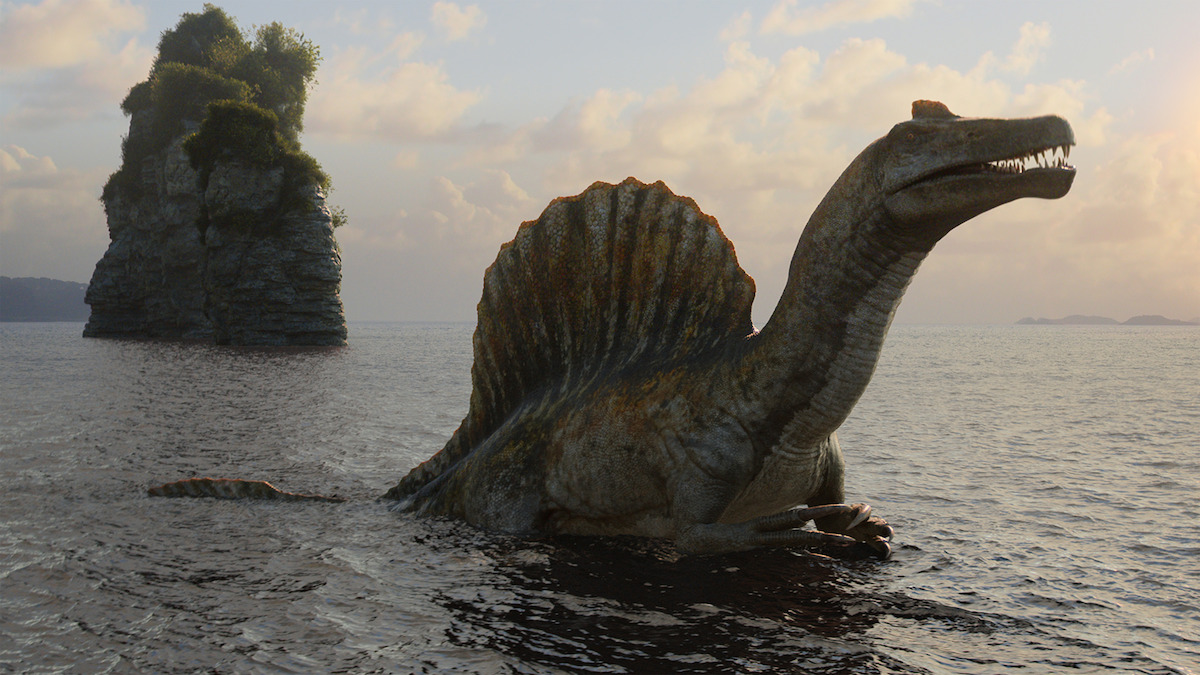
Nature documentaries have become victims of their own success over the last decade. Shows like Planet Earth and Prehistoric Planet pushed visual storytelling so far that audiences now expect jaw-dropping realism as the baseline. Massive landscapes, ultra-detailed animal closeups, slow-motion hunts, and cinematic camera work have become standard features rather than rare achievements. The Dinosaurs clearly aims to sit in that same space, presenting prehistoric life as if a BBC wildlife crew somehow traveled 200 million years into the past with drones and 8K cameras. The dinosaurs themselves are rendered with remarkable detail, from the texture of their skin to the way their bodies move through dense forests and dusty plains. Herds of herbivores move like modern elephants across ancient landscapes, while predators stalk their prey with the calculated patience of big cats. At times the illusion works so well that you briefly forget these creatures are entirely digital creations. But because audiences have already seen similar visual achievements in recent years, the spectacle occasionally feels familiar rather than revolutionary.
The opening sequence of the show immediately leans into the storytelling format borrowed from modern wildlife documentaries. A pachycephalosaurus family grazes peacefully while tension builds nearby. A younger male approaches, challenging the dominant patriarch for control of the group. What follows is a headbutting battle that feels straight out of a ram or bison documentary, except the animals involved have thick domed skulls built specifically for these prehistoric duels. Just as the confrontation reaches its peak, the scene erupts into chaos when a Tyrannosaurus rex bursts from the forest and violently interrupts the fight. It is the sort of dramatic predator reveal that dinosaur documentaries love to stage, complete with crunching bones and frantic escape attempts from the surviving herd members. Moments like this remind you that while the show borrows heavily from the rhythms of nature documentaries, it is still very much a dinosaur spectacle at heart. Predators appear suddenly, prey animals panic, and survival often depends on sheer luck.
Yet despite the visual drama, the most compelling element of the series turns out to be the narration guiding us through this prehistoric chaos. Morgan Freeman’s voice has become one of the most recognizable narrative tools in film and television. His delivery carries a unique mix of gravitas, warmth, and calm authority that instantly makes a story feel larger than life. In The Dinosaurs, his voice does something slightly different. Instead of heightening the intensity of the action, Freeman often smooths it out, wrapping even violent prehistoric moments in a tone that feels oddly relaxing. His narration moves slowly and deliberately, with a cadence that makes every line feel like the closing sentence of a myth. When he describes ancient sandstorms sweeping across Pangea or a small dinosaur cautiously approaching a carcass left behind by a predator, his voice sinks into a low rumble that feels almost hypnotic.
There were several moments during the series where I realized the show could almost function as an ambient relaxation experience if you removed the visuals entirely. Freeman’s narration carries that kind of calming rhythm. His voice dips and rises with a gentle musical quality, ending many sentences in a bassy tone that sounds like the satisfied growl of an apex predator that has already eaten. It is strangely comforting, even when he is describing brutal prehistoric survival. The effect is not unlike listening to a bedtime story about the most dangerous era in Earth’s history. Somehow the voiceover transforms scenes of carnivorous dinosaurs tearing into prey into something that feels less terrifying and more like a grand tale unfolding across millions of years.
The series also spends a surprising amount of time focusing on the smaller, less famous dinosaurs rather than just the iconic giants. One early storyline follows the tiny reptile-like creature Marasuchus, which evolves the ability to run upright on two legs. This adaptation becomes a turning point, allowing it to escape predators and survive long enough to become part of the evolutionary branch that will eventually produce dinosaurs. The show clearly enjoys highlighting these underdog species, frequently comparing them to modern animals like chickens or turkeys to make them feel familiar. At first these creatures appear fragile and insignificant, darting nervously between larger predators. But as the timeline moves forward by tens of millions of years, those small evolutionary experiments give rise to massive dinosaurs that dominate the planet.
This approach emphasizes one of the show’s central themes: evolution is rarely predictable, and dominance in nature is always temporary. Entire ecosystems rise and collapse across the timeline presented in the series. Climate changes reshape landscapes. Floods and droughts wipe out species that once seemed unstoppable. Each environmental shift clears space for new animals to evolve and take over. The Dinosaurs does a solid job illustrating this constant cycle of extinction and adaptation, showing how even the most successful creatures can disappear almost overnight when the planet’s conditions change.
At the same time, the series clearly positions itself as a family-friendly entry point into dinosaur science rather than a deep dive into cutting-edge paleontology. The narration and storytelling avoid overwhelming viewers with technical details, focusing instead on broad evolutionary ideas and simple behavioral stories. This makes the show accessible to younger audiences and casual viewers who might not know the difference between a theropod and a sauropod. However, it may leave some hardcore dinosaur enthusiasts wishing for more scientific depth. The people most likely to binge-watch a multi-hour dinosaur documentary often already know quite a bit about prehistoric life, and the series occasionally feels like it is holding back from the more fascinating complexities of modern fossil research.
Of course, the show eventually builds toward the most famous moment in dinosaur history. After millions of years of evolution and countless species rising and falling, the narrative arrives at the catastrophic asteroid impact that ended the age of dinosaurs roughly 66 million years ago. Even though everyone watching already knows this event is coming, the series still manages to frame it with dramatic weight. Freeman lowers his voice into its deepest register as the object appears in the sky, delivering the word “asteroid” with a gravity that feels almost cosmic. Below, dinosaurs continue their daily routines, completely unaware that their world is about to change forever. It is a familiar ending, but the show presents it with enough scale and atmosphere to remind viewers how sudden and devastating that moment must have been.
In the end, The Dinosaurs is a polished and visually impressive series that fits comfortably into the modern ecosystem of big-budget nature documentaries. It does not reinvent the genre or push the scientific discussion into bold new territory, but it does provide an entertaining and visually rich journey through prehistoric Earth. The CGI dinosaurs look convincing, the storytelling follows proven wildlife documentary formulas, and the educational content makes the series approachable for families and younger viewers. What truly elevates the experience, however, is Morgan Freeman’s narration. His voice adds warmth, personality, and an almost meditative quality to the show, turning what could have been a standard dinosaur documentary into something unexpectedly soothing.