
TL;DR: Monarch: Legacy of Monsters Season 2 delivers movie-quality Titan battles, deep character drama, and lore-shifting revelations. Titan X’s arrival reshapes the Monsterverse in bold ways, making this one of the most important chapters in the franchise so far.
Monarch: Legacy of Monsters season 2
After two years of radio silence, cryptic teases, and enough Reddit theory threads to power a small nuclear reactor, Monarch: Legacy of Monsters Season 2 has finally stomped back onto Apple TV+. And let me tell you right now: this isn’t just a continuation. It’s a Monsterverse-defining escalation.
Season 1 proved that the Monsterverse could do long-form storytelling without feeling like deleted scenes from a Godzilla Blu-ray. Season 2 kicks the doors off Axis Mundi and says, “You thought we were world-building? Cute.” This time, it’s past and present colliding in ways that fundamentally reshape how we view Monarch, Skull Island, and the Titans themselves.
If you’re here for a spoiler-light but deeply geeked-out Monarch: Legacy of Monsters Season 2 review, buckle up. Titan X has entered the chat.
Before we even talk about the story, we need to address the visual elephant—or rather, the 300-foot reptile—in the room.
Apple TV+ has quietly become the prestige sci-fi streaming king. I’ve said it before and I’ll say it again: when a platform invests in visual fidelity, you feel it. You don’t just see the CGI. You inhabit it.
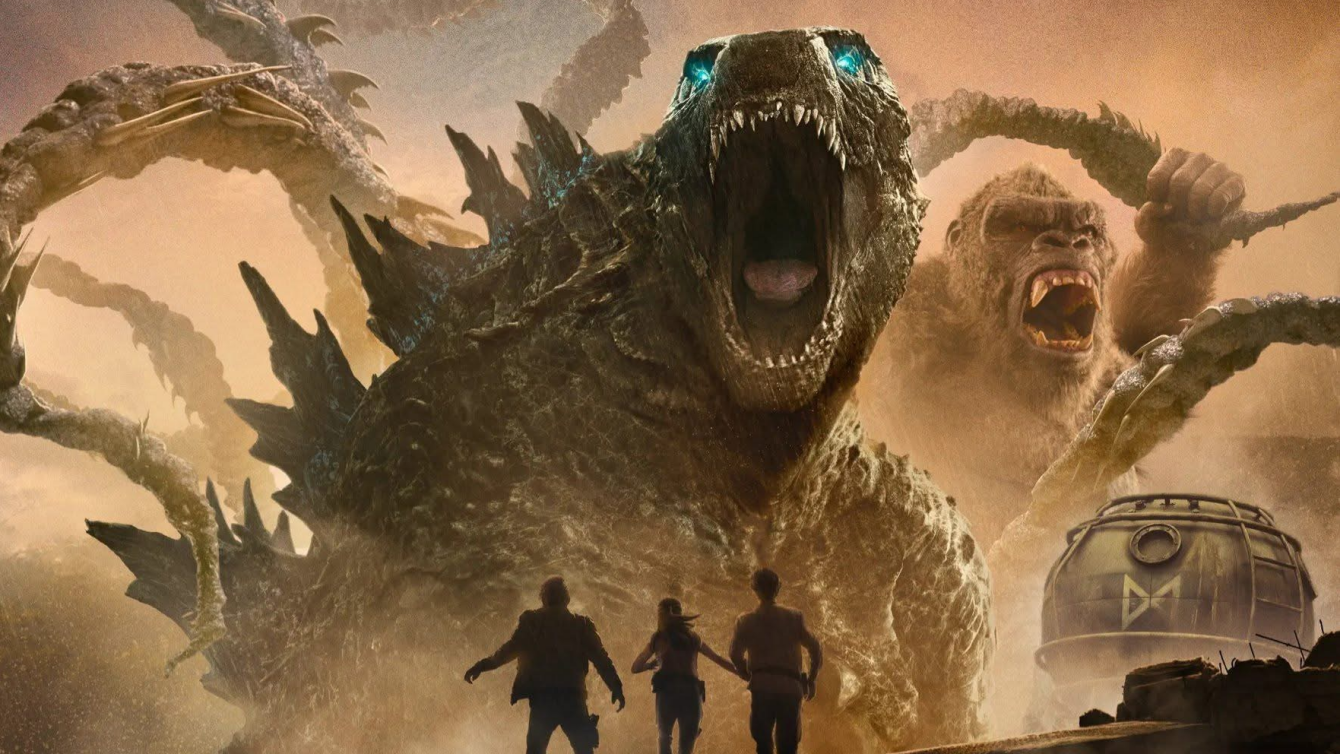
With Monarch: Legacy of Monsters Season 2, the jump in scale is immediately noticeable. Kong doesn’t look like a compressed streaming asset. He looks theatrical. The fur detail, the lighting integration, the sheer physical weight when he moves—this is blockbuster-tier CGI. Same goes for Godzilla. The big guy doesn’t just cameo; he looms.
Now let’s talk about Titan X.
Titan X is the kind of creature that feels engineered to expand the Monsterverse mythology. The design is monstrous but intelligent. There’s something ancient and deliberate about it. The VFX team clearly prioritized Godzilla and Kong in the budget hierarchy, but Titan X never feels cheap. When it rises from the ocean, water cascading off its frame, it’s pure kaiju cinema injected straight into my eyeballs.
Axis Mundi continues to be visually insane in the best way. It’s this biomechanical fever dream of bioluminescence and shifting gravity that feels like someone mashed up Journey to the Center of the Earth with Annihilation and then handed the render farm an unlimited electricity budget.
Action sequences are kinetic and readable. No murky, shaky-cam nonsense. You can see the Titans fight. You feel the impacts. When buildings crumble, they crumble with texture.
In terms of streaming sci-fi production value in 2026, Monarch: Legacy of Monsters Season 2 is absolutely top-tier.
Here’s where Monarch continues to outclass most of the Monsterverse films: the humans actually matter.
Season 1’s biggest surprise was that I cared about the people as much as the Titans. The past timeline featuring young Lee Shaw, Keiko Miura, and Bill Randa wasn’t filler. It was emotional scaffolding. Season 2 doubles down on that.
Wyatt Russell’s younger Lee is operating in morally murkier territory this time. There’s nuance. Regret. A slow-burn unraveling that feels earned. And his chemistry with Mari Yamamoto’s Keiko? Still electric. Their dynamic isn’t just romantic tension—it’s ideological friction. Science versus responsibility. Curiosity versus consequence.
Every revelation in the past timeline lands like a seismic charge in the present. That’s the magic trick Monarch pulls off again this season. What happened decades ago doesn’t just inform the present—it actively destabilizes it.
And yes, Kurt Russell returns as present-day Lee Shaw in a way that I will not spoil. What I will say is this: the writers found a way to turn what could’ve been a narrative dead end into something layered and thematically powerful.
It’s rare for a franchise built on skyscraper-leveling monsters to treat generational trauma with this much care, but Monarch does. It understands that the Titans are manifestations of humanity’s hubris. The past timeline reinforces that every single time.
Season 2 wastes zero time addressing the Skull Island cliffhanger. Cate, Kentaro, May, Hiroshi—they’re not the same people we left behind. Years have passed. Relationships are fractured. Trust is thin.
That emotional tension becomes the fuel for the Titan X storyline.
Titan X isn’t just a monster-of-the-week. It’s a narrative catalyst. Its emergence forces Monarch and its scattered survivors to confront uncomfortable truths about the organization’s history. And here’s where the writing gets sharp: Titan X feels like a consequence, not an accident.
There’s a thematic throughline about legacy. Not just legacy of monsters—but legacy of decisions.
Cate’s arc this season is particularly strong. There’s a weight to her performance. She’s navigating grief, anger, and disillusionment with Monarch as an institution. Kentaro’s growth is quieter but meaningful. May continues to operate in morally gray territory, and I love that the show refuses to simplify her.
The emotional beats hit harder because the series earns them. When alliances shift or secrets surface, it doesn’t feel like soap opera drama. It feels like tectonic plates grinding.
And then there are the Titan battles.
We get scale. We get destruction. But more importantly, we get context. Each confrontation feels like it matters strategically. These aren’t random city-smashing sequences. They’re moves in a larger geopolitical and ecological chess match.
Here’s the part that really excites the lore nerd in me.
Monarch: Legacy of Monsters Season 2 doesn’t just expand the Monsterverse. It subtly rewrites parts of it.
There are hints—especially in the finale—that the established Titan hierarchy might not be as fixed as we thought. The show teases mechanisms and historical layers that could fundamentally reframe Godzilla’s role, Kong’s position, and the origins of the Hollow Earth ecosystem.
Without spoiling anything, let’s just say the finale plants a seed that could alter how future Monsterverse films operate.
Shadowy organizations emerge. Monarch’s moral authority is questioned. The idea that Titans are simply ancient alpha predators starts to feel… incomplete.
I love when franchise storytelling takes risks. Season 2 could’ve coasted on bigger fights and familiar faces. Instead, it chooses to complicate the mythology. That’s how you keep a shared universe alive.
Will some fans resist the changes? Probably. But evolution is the point. A static Monsterverse would eventually collapse under its own spectacle.
Does Monarch: Legacy of Monsters Season 2 Have Flaws?
Of course.
There are moments where the pacing dips slightly in the middle stretch. Some secondary characters don’t get as much development as I’d hoped. And Titan X, as cool as it is, occasionally feels like it’s serving the plot more than fully defining itself as a personality-driven kaiju like Godzilla or Kong.
But these are nitpicks in a season that’s juggling dual timelines, franchise continuity, character drama, and blockbuster action.
When the finale hits, it lands with confidence. It feels like the end of a chapter, not a placeholder.
By the time the credits rolled, I had that rare feeling you get when a franchise levels up.
Monarch: Legacy of Monsters Season 2 doesn’t just set up Season 3. It sets up a new philosophical direction for the entire Monsterverse. It suggests that the story of Titans isn’t just about dominance or survival—it’s about interpretation. About who controls the narrative of these ancient beings.
If Season 3 happens—and it absolutely should—it’s going to be a very different show. Relationships have shifted. Power structures have fractured. And Titan X’s arrival has permanently altered the board.
As a long-time Monsterverse fan, this is exactly what I want. Growth. Risk. Scale. Emotional stakes that match the size of the monsters.
Monarch: Legacy of Monsters Season 2 is bigger, bolder, and more mythologically ambitious than its predecessor. With cinematic VFX, emotionally charged dual timelines, and a game-changing introduction in Titan X, it solidifies itself as essential Monsterverse viewing. A few pacing hiccups aside, this is franchise storytelling done right.