

TL;DR: Love Story transforms the highly publicized romance of JFK Jr. and Carolyn Bessette into a deeply human, emotionally grounded drama. It’s less about the tragedy we remember and more about the private moments we never saw, and that’s exactly why it works.
Love Story
There’s something inherently mythic about the name Kennedy. In American pop culture, it’s less a surname and more a franchise. Camelot. Legacy. Tragedy. The whole cinematic package. So when I heard that Ryan Murphy was tackling JFK Jr. and Carolyn Bessette Kennedy in Love Story, my first thought wasn’t “Do we need this?” It was “Oh no, this is either going to be genius or full-blown tabloid opera.”
Thankfully, Love Story lands closer to prestige drama than sensational biopic. And what surprised me most is that the series hits hardest not when it recreates the Central Park screaming match or the paparazzi flashbulb frenzy—but in the quiet, private conversations that were never printed on the front page.
It’s impossible not to compare Love Story to The Crown. Both shows dramatize modern royalty. Both blend documented history with imagined private dialogue. Both are obsessed with legacy as both privilege and curse. But Love Story doesn’t try to out-Crown The Crown. It feels messier. More American. More tabloid. Less palace intrigue, more SoHo loft anxiety.
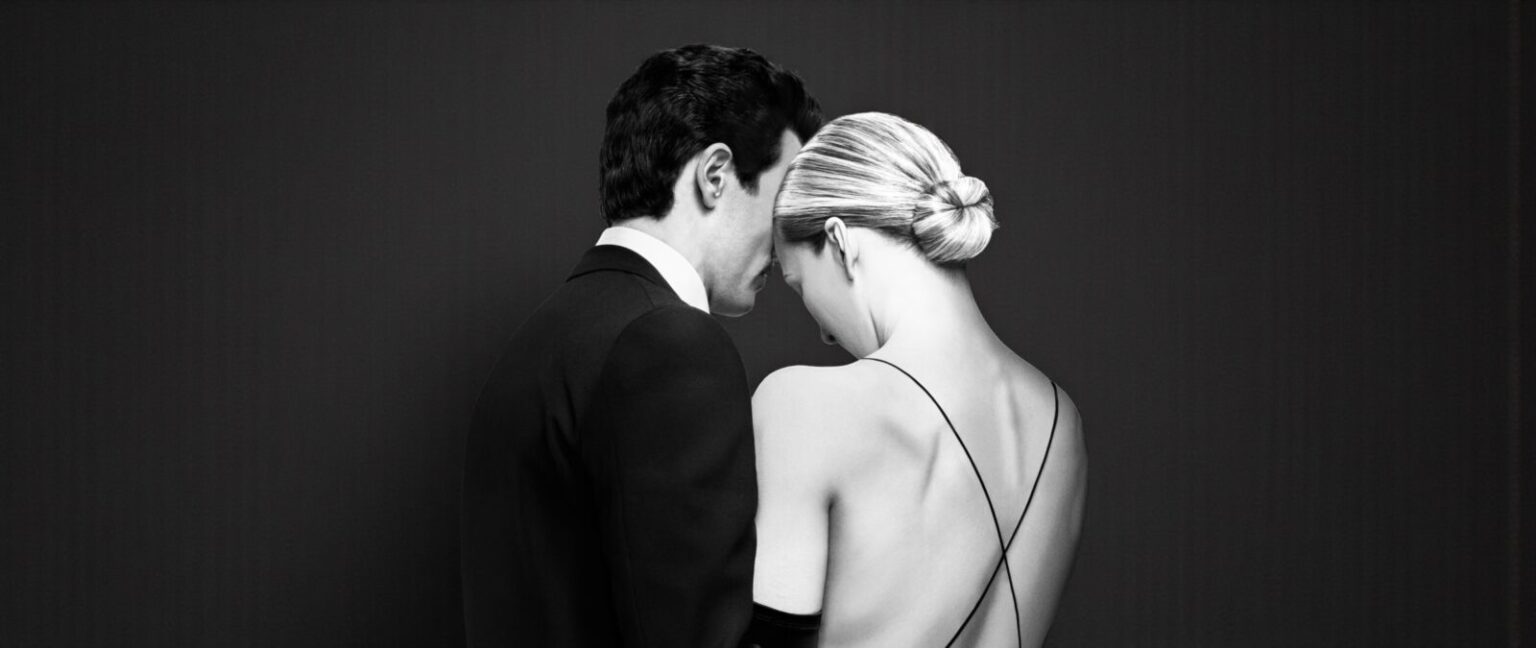
The series opens on the couple’s final day. We see JFK Jr. leaving the offices of George magazine. We see Carolyn at a nail salon, swapping bold red polish for something muted and beige. Even before anyone boards a plane, the tension is suffocating. Their body language says more than any exposé ever did. Then the show rewinds seven years earlier, where we meet a John played by Paul Anthony Kelly fresh off failing the New York bar exam and getting roasted in the press. Meanwhile, Carolyn, played by Sarah Pidgeon, is navigating the fashion world at Calvin Klein, living in stylish semi-anonymity.
When they meet, sparks fly. Not in a rom-com way. In a “two people recognizing a shared loneliness” way. That’s when Love Story starts cooking.
Casting JFK Jr. is a high-risk move. The man’s face is practically etched into American memory. But Paul Anthony Kelly doesn’t impersonate. He inhabits. He captures that strange duality—effortless charm mixed with a constant undercurrent of inadequacy. This version of John isn’t just America’s Prince. He’s a guy who failed the bar exam twice and isn’t entirely sure whether George magazine is a passion project or a desperate attempt to prove he’s more than his father’s son.
There’s a scene midway through the season where he stares at a mock-up of a magazine cover like it’s judging him. I felt secondhand anxiety through the screen.
Sarah Pidgeon has an even tougher assignment. Carolyn Bessette was notoriously private. There’s less archival footage, fewer interviews, fewer breadcrumbs to follow. So Pidgeon builds her performance from posture and silence. Before the engagement, Carolyn feels free. Loose. Effortlessly cool in that very 90s minimalist way. After the wedding, her body tightens. Her smiles become calculated. The show subtly tracks how fame rewires her nervous system.
Watching her get swarmed by paparazzi is borderline horror cinema. It’s not glamorous. It’s claustrophobic. The camera often lingers just a second too long, forcing us to sit in her discomfort. And when the marriage begins to strain, you believe it. Not because the script tells you to, but because the chemistry between Kelly and Pidgeon feels lived-in and messy.
The 90s in Love Story aren’t neon nostalgia bait. They’re textured and muted. The costume design, especially Carolyn’s minimalist Calvin Klein silhouettes, anchors the series in that late-90s Manhattan cool. Early promo images had the internet clutching its pearls over styling inaccuracies. But once the show settles in, the wardrobe evolves beautifully. The shift in Carolyn’s clothing mirrors her psychological arc, moving from effortless downtown chic to armor-like public figure polish.
Cinematography leans into warm interiors and harsh outdoor flashes, reinforcing the public versus private dichotomy. Inside their apartment, scenes feel intimate and human. Outside, everything is overexposed and chaotic. It’s a visual thesis statement. Love thrives in shadows; fame lives in blinding light.
Yes, the show recreates the famous moments. The Central Park argument. The wedding. The media circus. But those scenes aren’t the emotional peak. The later episodes lean into longer, dialogue-heavy scenes that allow both leads to unravel. No spectacle. No headlines. Just two people arguing about identity, ambition, resentment, and the suffocating pressure of public expectation.
That’s where Love Story becomes less about history and more about intimacy. I found myself forgetting the inevitable ending. That’s not easy when you already know the tragedy. But the show smartly refuses to treat the plane crash as its central hook. It’s not a countdown clock. It’s a looming shadow.
That restraint feels like growth. If you’ve watched Murphy’s past true-crime adjacent projects, you know subtlety isn’t always his default setting. Here, he dials it back. He focuses on empathy instead of shock value.
One of the more compelling threads involves John’s struggle to define himself outside of his father’s legacy. The show doesn’t mythologize him as a golden boy. It presents him as someone constantly aware of the invisible scoreboard tracking his every move. His relationship with his sister Caroline adds dimension to that shared burden. There’s a sense that they’re both trying to decode what normal even means when your childhood was national spectacle.
Meanwhile, Carolyn’s arc feels even more tragic because she never signed up for that level of scrutiny. She falls in love with a man, not a monarchy. But marrying him means marrying the spotlight, and the spotlight is relentless.
The series subtly critiques media culture without becoming preachy. Paparazzi aren’t cartoon villains. They’re part of the ecosystem. The show asks when public fascination crosses into dehumanization. In 2026, that question feels painfully relevant.
Not everything works. There are moments where the pacing drags, especially in the middle stretch. Some supporting characters feel underdeveloped. And if you’re expecting explosive melodrama, you might find the tone surprisingly restrained. But that restraint works in its favor.
As a historical drama about JFK Jr. and Carolyn Bessette, Love Story walks a delicate line between fact and fiction. It recreates iconic public moments while daring to imagine the conversations that shaped them. The performances from Paul Anthony Kelly and Sarah Pidgeon elevate the material beyond tabloid nostalgia, grounding the series in emotional authenticity.
This isn’t just a Ryan Murphy spectacle. It’s a surprisingly intimate character study wrapped in 90s aesthetics and media critique.