
TL;DR: Landman Season 2 review — Billy Bob Thornton and Demi Moore elevate Taylor Sheridan’s oil drama in its stronger, more focused second season. While still uneven and searching for a distinct identity, the performances and deeper emotional stakes show signs of the greatness this series could achieve.
Landman Season 2
There’s a certain smell that clings to Texas soil — a perfume of gasoline, sweat, and stubbornness. It’s the kind of smell that seeps into your clothes, your skin, your soul if you stay too long. Watching Landman Season 2, I could almost feel that grit settle under my fingernails again — that Sheridan-brand cocktail of ambition, loyalty, greed, and quiet masculine melancholy. It’s a world Taylor Sheridan knows well: men who speak with their hands, women who shoulder grief with quiet fury, and landscapes that look beautiful enough to make you forget the ugliness lurking beneath them. But for all its power and potential, Landman still feels like a beast straining against its own reins — a story that knows the land it walks but not yet the man it wants to become.
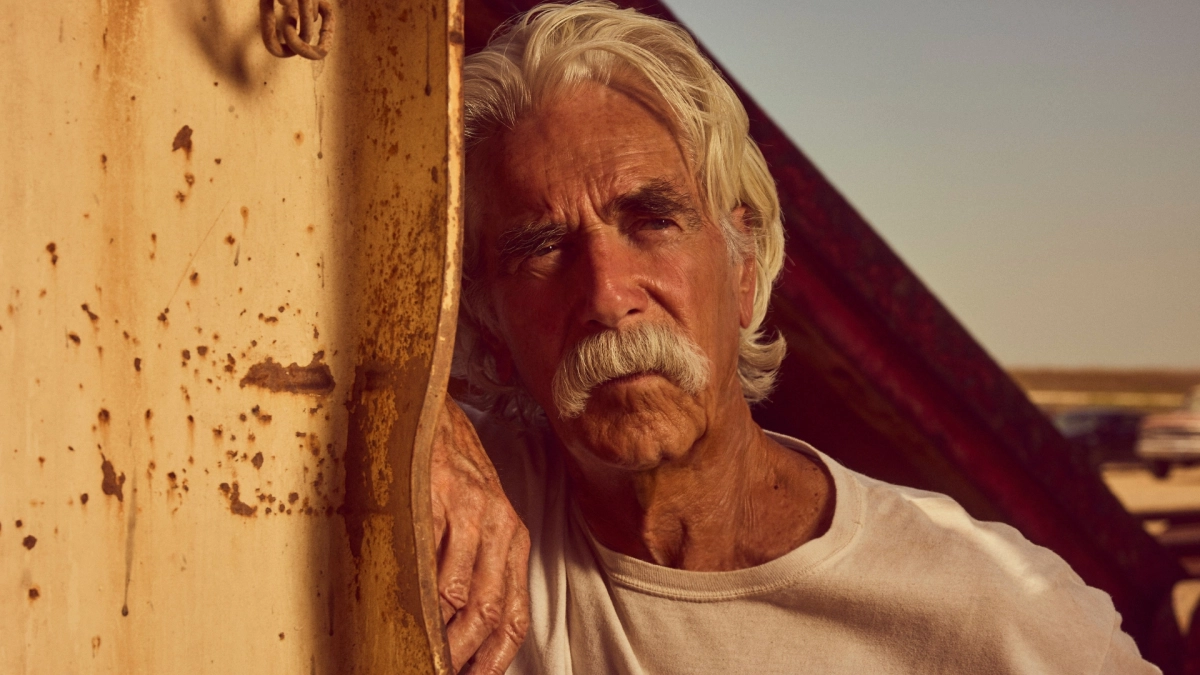
Billy Bob Thornton, in his trademark gravel and bourbon drawl, anchors the series like a ghost who refuses to rest. As Tommy Norris, he’s the kind of man who’s been burned by life so many times that even his shadow seems wary of getting close to a flame. Thornton doesn’t play Tommy so much as he exhales him — a man whose every decision feels heavy with memory. Watching him trudge across the dusty expanse of West Texas, there’s something tragic about how small he seems beneath that vast, blazing sky. You sense he’s seen too much, lost too much, and yet the oil keeps pumping, the phone keeps ringing, and the world keeps demanding his compromise. Thornton gives the kind of performance that makes you wish the series around him would rise to meet him — like an old blues riff begging for a proper band behind it.
Season 2 opens with a shift in power — Monty Miller (Jon Hamm), the oil baron puppet master of Season 1, has died, leaving his widow Cami (Demi Moore) to navigate a world that doesn’t particularly welcome women who aren’t serving drinks or dreams. And in Moore’s hands, Cami is fascinating — brittle and burning at once, a woman trying to rule an empire that was never built for her hands. There’s a scene in Episode 3 where she stands alone in Monty’s office, surrounded by portraits of men who believed the land belonged to them, and the silence is deafening. Moore carries it beautifully — her grief is not loud or performative, but lived-in, almost geological, layered like sediment over years of compromise. It’s easily the most emotionally resonant work the show has offered yet.
If Season 1 of Landman was about setting up the machinery, Season 2 feels like someone’s finally started turning the gears — only to realize the cogs don’t quite fit. Sheridan’s writing still flickers between profound and perfunctory, with dialogue that alternates between gospel and gas station philosophy. When it works, it really works: a quiet conversation between Tommy and his ex-wife Angela (Ali Larter) in the half-light of a diner window carries more truth about aging, failure, and redemption than most prestige dramas dare. But too often, Landman mistakes noise for narrative. There are cartel whispers, oil deals, sons in trouble, and women with secrets — all the right ingredients, none yet simmered to the heat of Yellowstone’s operatic heart or Tulsa King’s surprising levity.
Andy Garcia enters the frame this season like a serpent in silk. As Galino, the cartel-connected financier whose money slithers into the oil fields, Garcia is magnetic — charming, dangerous, and almost too elegant for the mud he’s about to wade through. His presence injects the show with something it’s been sorely missing: mystery. Thornton and Garcia together are electric, their scenes crackling with mutual respect and thinly veiled threat. You can feel the weight of decades between them, as if they’ve been circling each other for a lifetime without ever landing a punch. If Landman can find its identity anywhere, it might be in that tension — the eternal American tango between industry and illegality, profit and penance.
Yet, for all its promise, Landman still suffers from what I call “Sheridan fatigue.” His universe has expanded so quickly — Yellowstone, 1883, 1923, Tulsa King, Mayor of Kingstown, Special Ops: Lioness — that his own voice has started to echo. The beats are familiar: a morally ambiguous patriarch, a rebellious son, a sharp-tongued woman fighting for her own dignity, and a system so corrupt it feels biblical. These are themes worth exploring — they always were — but Landman often feels like the photocopy of a masterpiece: clean lines, fading ink. You can sense the potential for greatness but not yet the courage to break its own mold.
That’s not to say Season 2 isn’t better. It is — by a good margin. There’s more focus, more texture, and Moore’s arrival injects life into what was once a stagnant moral swamp. Even the cinematography feels rejuvenated: the light harsher, the horizons lonelier. You can almost taste the heat radiating off the asphalt. When the camera lingers on Thornton’s face, weathered and uncertain, you realize that this is what Landman should always have been — a meditation on what happens when the world moves faster than the men who built it.
But then the show pulls back into the procedural: a deal goes wrong, a truck explodes, a son makes a choice he can’t take back. It’s entertaining — occasionally thrilling — yet you keep waiting for the deeper cut, the wound beneath the story’s skin. The best of Sheridan’s work — Hell or High Water, Wind River — always found poetry in the pain. Landman keeps circling it, like an oil rig pumping endlessly at a dry well.
There’s an idea buried in this show that could make it great. It’s the idea that America’s veins still run black with oil — that progress, even now, comes at the cost of someone else’s soul. Thornton embodies that truth in every gesture, every slow blink. Moore gives it shape, Garcia gives it danger. What Landman needs now is a heartbeat — a willingness to stop drilling for plot and start drilling for truth.
If it can do that — if it can slow down, listen to its own silence, and trust that its audience is as patient as its protagonist — Landman could become something rare. Not just another Taylor Sheridan series about tough men and tougher women, but a true American elegy: a story about how we’ve all been complicit in the machinery that keeps the lights on.
Until then, Landman remains a show of promise. The gears are grinding, the oil is flowing, and the performances — especially from Thornton and Moore — remind us what this story could be. It’s not gold yet, but you can smell it in the dirt.
Verdict:
Landman Season 2 is an improvement — leaner, sharper, and more emotionally grounded — but it still stops short of greatness. Billy Bob Thornton and Demi Moore carry the season with quiet fire, while Andy Garcia’s arrival hints at the richer, darker world this show could still become. If Taylor Sheridan can find the courage to let his characters evolve — to let their souls crack beneath the weight of their own ambition — Landman might finally strike gold instead of just drilling for it.