

TL;DR: Keeper is what happens when Double Fine makes a playable fever dream about ecology, creation, and light. Gorgeous, weird, a little clunky, but absolutely unforgettable.
Keeper
There’s a specific kind of video game weirdness that feels less like a product of human design and more like a dream that’s accidentally found its way into code. You know the type: textures that look like they were painted by a sleep-deprived Muppet, landscapes that hum like they’re alive, and mechanics that make you question whether the designer was inspired by a programming bug or a fever hallucination. Keeper, the new game from Double Fine, lands squarely in that territory—and somehow manages to make its surreal, ecologically-minded premise feel both tender and transcendental.
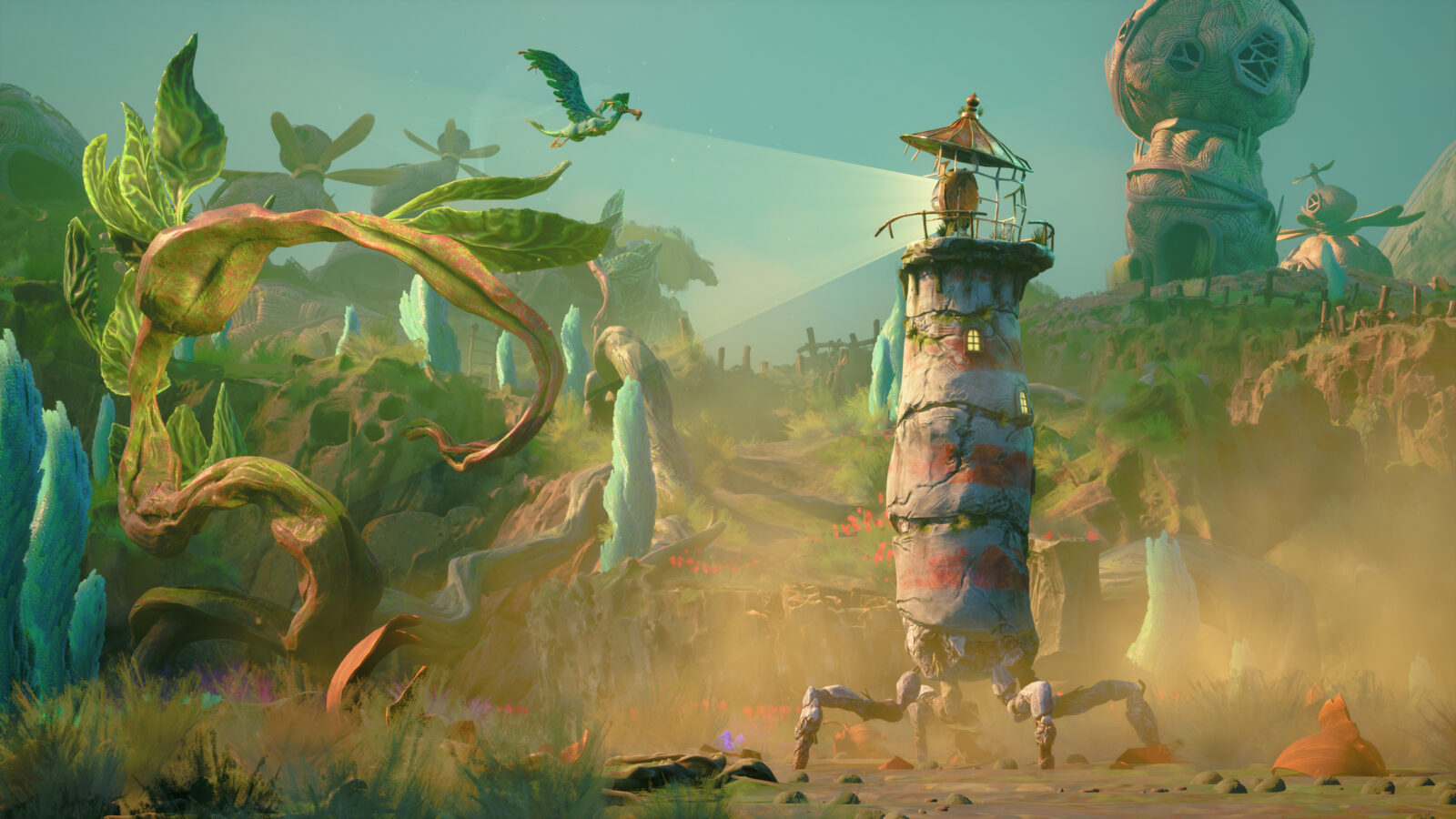
When you first boot it up, Keeper doesn’t so much introduce itself as it unfurls. A landmass of impossible colors—bubblegum blues, neon pinks, and a dozen shades of bioluminescent weird—oozes across your screen. It’s like someone fed a Hayao Miyazaki forest spirit to a lava lamp. The world pulses, mutates, and grows in real time, each section alive with evolutionary chaos. You half expect the title screen to blink at you and whisper, “Are you ready to take care of this?”
The answer, as it turns out, is complicated.
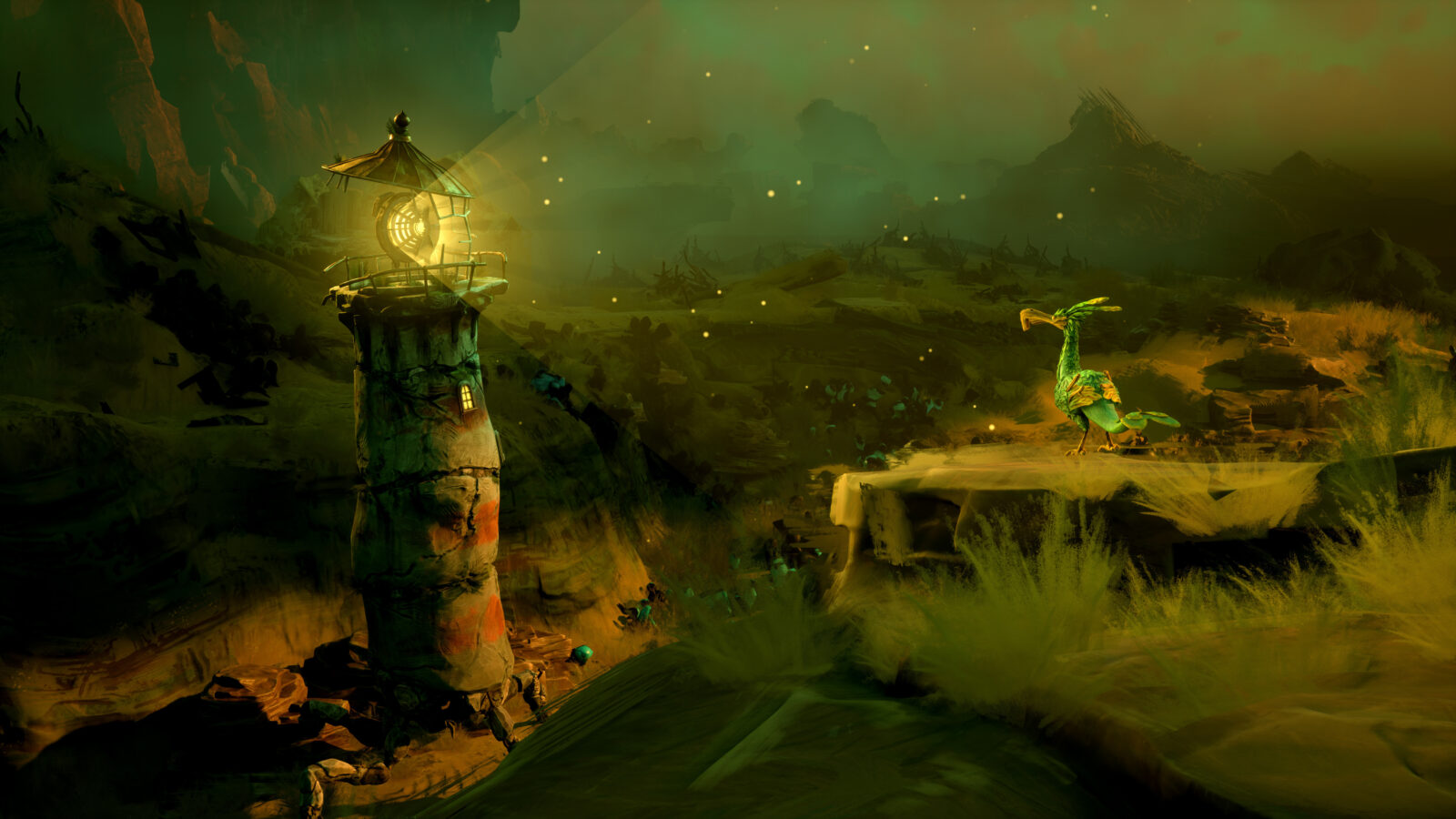
Because in Keeper, you play not as a knight, a robot, or a chosen one, but as a lighthouse. Yes, an actual lighthouse. And this isn’t some quirky gimmick—Double Fine fully commits to the bit. You trundle through lagoons, deserts, and fungal valleys as a gigantic tower of light on stubby mechanical legs, beaming radiance into the world like a cosmic gardener. Your light doesn’t just illuminate; it animates. Shine it on the right patch of soil, and it erupts into growth—a bloom of alien flora that writhes like it’s half-dancing, half-screaming with joy. Trees and tendrils unfurl before your eyes, painting the land in real time. Sometimes creatures scuttle out to feast on what you’ve made. Sometimes they flee. Sometimes, they just sit and stare back at you, reflecting your beam like an accusation.
It’s mesmerizing, and a little bit unsettling.
Double Fine has always excelled at that balance between wonder and unease. Psychonauts 2, their last big release, treated the mind as a literal landscape of trauma and imagination, wrapping its melancholy themes in cartoon psychedelia. Keeper takes that same energy and transposes it onto an ecological fantasy. It’s less about inner turmoil and more about the fragility of outer life—the weird, symbiotic dance of creation and decay. Every moment feels alive, but also precarious, like the whole world could evaporate if you stop shining for too long.
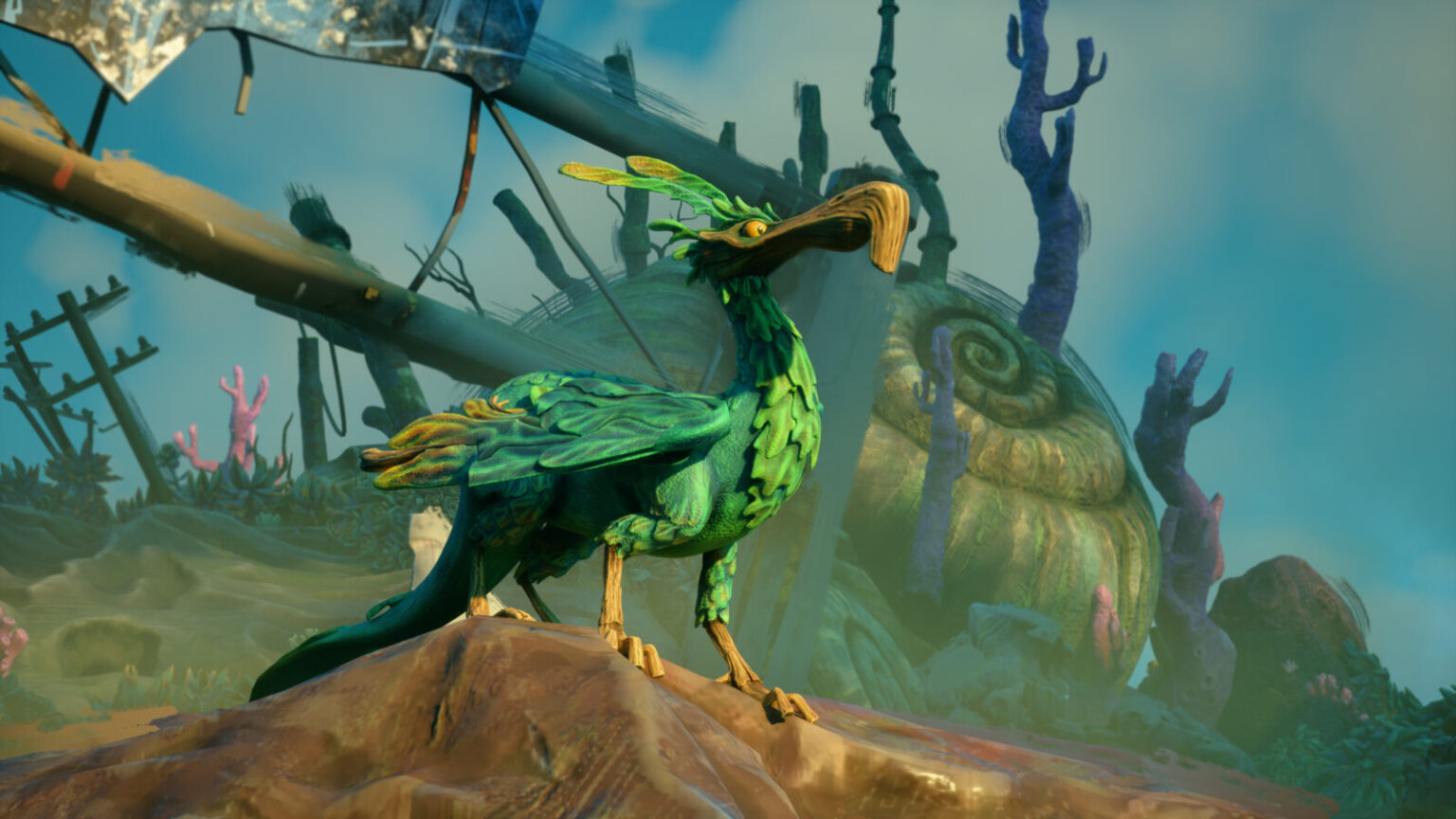
And yet, for all its visual splendor, the act of playing Keeper can feel oddly mechanical. Your light, for instance, serves as both brush and key. It activates puzzles scattered through the world, which often boil down to aligning gears, flipping switches, or asking your adorable bird companion, Twig (who, yes, has a driftwood beak), to peck something open. It’s whimsical, sure, but these moments often feel like chores interrupting a meditation. The game seems caught between two instincts: the surrealist impulse to let you drift through its ecosystems like a god of gentle chaos, and the pragmatic need to give you something resembling structure.
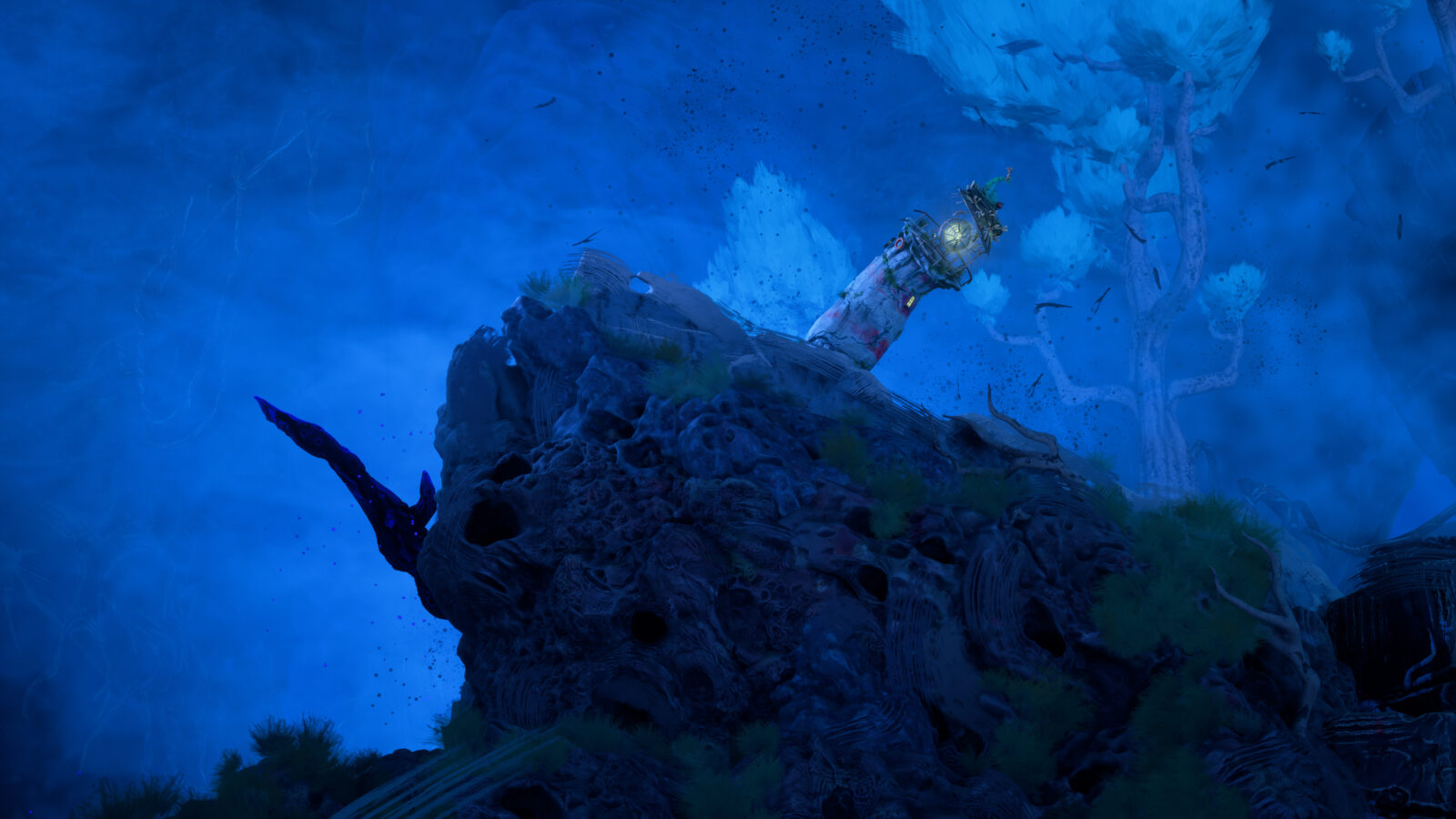
Early puzzles are especially guilty of killing the vibe. You’ll be standing before a stunning vista—a canyon of coral-colored stone, its ridges crawling with phosphorescent moss—and suddenly, the game demands you rotate a crank or line up a cog. It’s the interactive equivalent of a record scratch. The world hums with mystery, but the mechanics too often hum with bureaucracy.
But then, something shifts.
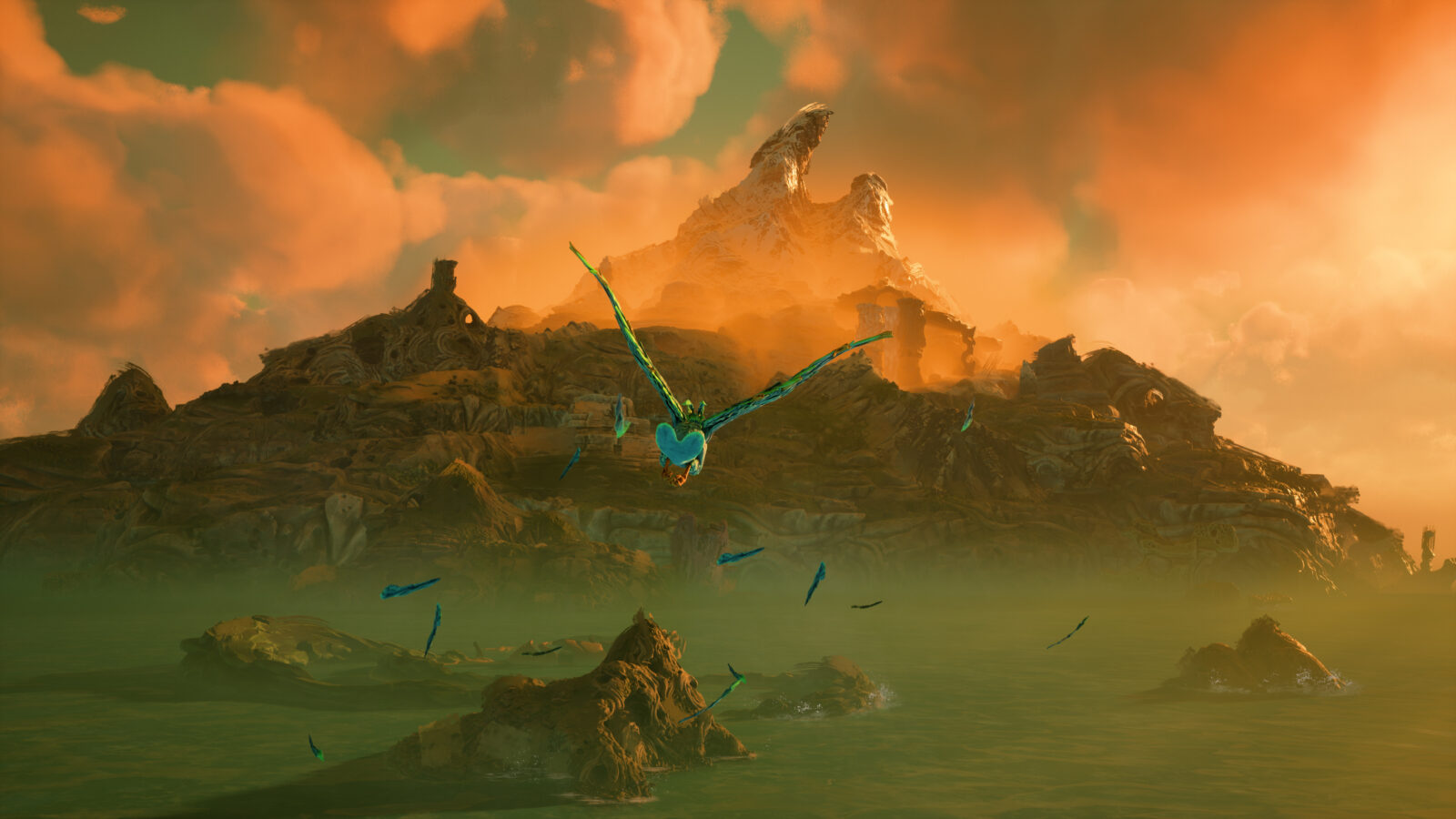
Keeper starts to find its rhythm once it leans into its absurdity. At one point, your lighthouse gets coated in what looks like spun sugar. Instead of weighing you down, it makes you buoyant, letting you drift above the landscape like a helium balloon possessed by divine purpose. Another moment sees you transform into an aquatic vessel, sleek and fluid, slicing through the water like a mechanical dolphin. Later still, you become something else entirely—a molten disk that cuts through tangled jungles and iron roots with apocalyptic grace. Each transformation isn’t just a new mechanic; it’s a new philosophy of movement. The game stops asking you to solve puzzles and instead invites you to inhabit sensations.
That’s where Keeper shines brightest—literally and metaphorically. Its world-building isn’t just visual; it’s tactile. You feel the difference between trudging through sand, gliding through water, and carving through darkness. There’s a strange intimacy to it, too. Every surface, every ripple, every glint of reflected light feels handmade, like the world was sculpted out of papier-mâché by someone who loves imperfection. Double Fine’s art direction evokes 1980s fantasy films—the kind with foam monsters, visible wires, and matte-painted skies—but reimagined through the lens of a next-gen engine. It’s nostalgia reinterpreted as tactile surrealism.
And yet, despite all this splendor, Keeper often forgets how to trust its own silence.
The developers bill it as a “story told without words,” but that’s only half true. Every so often, a prompt will flash across your screen—press X to peck, press Y to glow—and you’re jolted back into the awareness that this is, after all, a game. It’s a small thing, but it punctures the spell. The most powerful sequences are the ones that let you drift wordlessly, piecing together the logic of this world through instinct alone. When Keeper stops talking, you start listening. To the hum of its forests, the slow rhythm of your lighthouse’s feet, the distant call of something unseen beneath the sea.
By the time the game reaches its finale—a sequence I won’t spoil, except to say it aims for cosmic transcendence—you’ve come to expect the unexpected. Unfortunately, the ending tries to literalize the ineffable. Presented with what should be the universe’s grand secret, you’re once again asked to match shapes and align symbols, as if enlightenment were just another lock to pick. It’s a familiar flaw for Double Fine: they build universes too big for their mechanics. Keeper’s ideas burst against the limits of its design like light trapped inside a jar.
And yet, I can’t bring myself to hold that against it. Keeper is messy, but gloriously so. It’s a rare game that feels less like entertainment and more like communion—with nature, with creation, with imagination itself. It doesn’t always work, but when it does, it brushes up against something profound: the quiet awe of realizing that even your smallest actions—your beam of light, your gentle guidance—can change a world.
Keeper may not have the mechanical polish of a Nintendo adventure or the airtight pacing of an indie darling like Journey, but it has something rarer: sincerity. It believes, wholeheartedly, in its own strangeness. And in an industry obsessed with cinematic realism and corporate polish, that belief feels revolutionary.
It’s not perfect. The puzzles range from perfunctory to maddening. The camera occasionally wrestles you like a toddler in a sugar rush. The pacing meanders. But to complain too much about these things feels like critiquing brushstrokes on a fever dream. Keeper’s imperfections are its fingerprints—they’re proof that someone made this, with hands and heart and probably a few substances.
So yes, Keeper frustrates. It confounds. But it also dazzles, sings, and shimmers. It reminds you that games can be weird, alive, and defiantly unmarketable—and still utterly worth your time.
Verdict:
Keeper is a strange, shimmering eco-fantasy that occasionally loses itself in its own eccentricities but emerges all the stronger for it. Like its lighthouse protagonist, it stumbles, it flickers, but when it shines, it illuminates something rare: the quiet beauty of life, growth, and play.