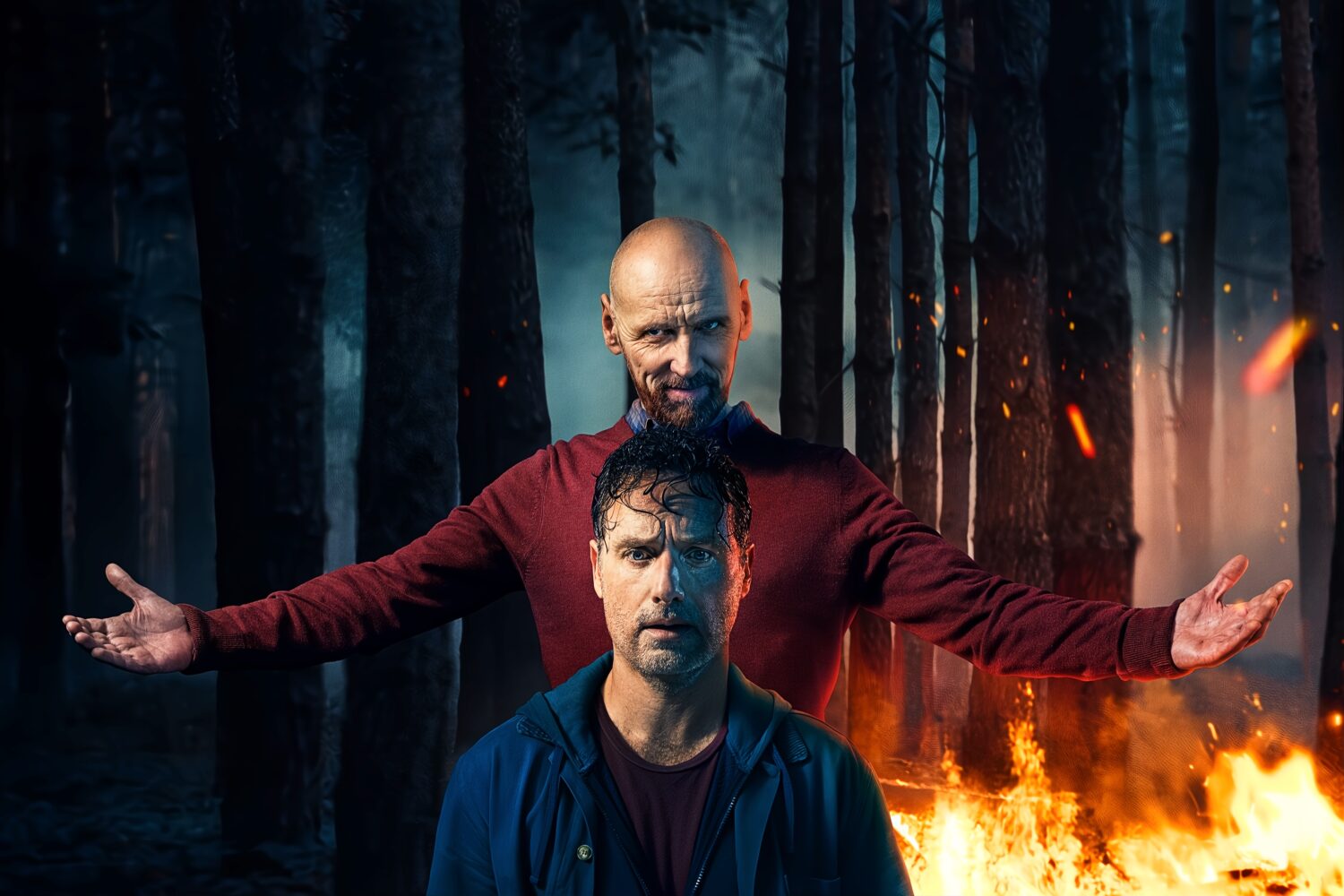
TL;DR: Coldwater is a tense, performance-driven psychological thriller that flips Andrew Lincoln’s screen persona on its head. It doesn’t reinvent the genre, but its atmosphere, dark humor, and standout cast make it an unsettling and rewarding watch, especially if you like your suburban nightmares slow, cold, and quietly vicious.
Coldwater
I’ll be honest right out of the gate: watching Coldwater felt like seeing an old friend show up to a party wearing a completely different skin. You recognize the posture, the cadence, the eyes, but the vibe is unsettlingly new. And that’s exactly what makes this six-episode psychological thriller such a compulsive watch. This isn’t comfort TV. This isn’t hero TV. This is “stare into the mirror at 2 a.m. and don’t like what stares back” TV.
For nearly a decade, my brain was hardwired to associate Andrew Lincoln with grit, grit, and more grit. Sheriff’s hat. Blood-soaked beard. Moral speeches delivered like gospel in the apocalypse. His work on The Walking Dead turned him into a modern genre icon, the kind of actor whose silhouette alone communicates leadership and resolve. Coldwater takes that image, crumples it up, lights it on fire, and asks you to sit with the smoke.
This time around, Lincoln plays John, a man defined not by courage but by its absence. He is anxious, reactive, brittle. He doesn’t charge toward danger; he flees from it, often making things exponentially worse in the process. And watching Lincoln weaponize that vulnerability is the central pleasure and discomfort of Coldwater. The show understands exactly what baggage we bring with us as viewers, and it exploits that expectation with surgical precision.
Coldwater opens like a nightmare you don’t realize you’re in until your heart is already racing. John witnesses a brutal assault in a park, freezes, panics, grabs his son, and runs. Only halfway down the street does he realize he’s left his daughter behind. That moment, that single sickening pause, tells you everything you need to know about who John is and what this series is interested in exploring. This isn’t about heroism. This is about fear, guilt, and the quiet rot that sets in when you keep choosing yourself over everyone else.
Traumatized and unraveling, John uproots his family from Glasgow and relocates them to the remote Scottish town of Coldwater, a place that looks like it was designed by the tourism board and cursed by a crime novelist. His wife Fiona, played with simmering restraint by Indira Varma, is the family’s emotional and financial backbone, a woman whose patience feels earned rather than saintly. Their marriage is already cracked when they arrive. Coldwater simply wedges its fingers into the fissures and pulls.
If this all sounds familiar, that’s because Coldwater is knowingly built from well-worn psychological thriller DNA. The isolated town. The neighbors with secrets. The sense that everyone knows more than they’re saying. But execution is king in this genre, and Coldwater nails tone with unnerving confidence. The Scottish Highlands aren’t just a backdrop; they’re an accomplice. Wide, empty landscapes create the illusion of freedom while somehow making everything feel more claustrophobic. It’s the kind of setting where silence feels accusatory.
The inciting incident that really kicks the series into gear involves a local troublemaker named Angus and a late-night confrontation that spirals violently out of control. In a moment of blind terror, John fights back for the first time in his life, convinced he’s killed a man. Enter Tommy, the neighbor you never quite trust but desperately need, played by Ewen Bremner with a smile that could curdle milk. Tommy helps John cover up the crime, and from that moment on, the show becomes a slow-burning duel between two men who recognize something broken in each other.
What Coldwater does exceptionally well is let tension accumulate in mundane spaces. Kitchens. Driveways. Jogging paths. Dinner tables. The show understands that true dread isn’t about jump scares; it’s about anticipation. It’s about watching John lie badly and knowing the lie will cost him later. It’s about Tommy saying something just slightly off and realizing it wasn’t a mistake. There’s a pitch-black sense of humor threading through all of this, the kind that makes you laugh and then feel guilty for laughing.
Yes, many of the narrative beats are predictable. You’ll figure out who not to trust early on. You’ll anticipate how certain power dynamics will shift. But Coldwater isn’t trying to outsmart you; it’s trying to suffocate you. Familiarity becomes a feature, not a flaw, because it allows the series to focus on performance and atmosphere rather than twist gymnastics. When the plot stretches credibility in the final episodes, and it absolutely does, the show is usually saved by the sheer commitment of its cast.
And what a cast it is. Lincoln gives one of the most interesting performances of his career here. Watching him strip away charisma and lean into smallness is deeply uncomfortable in the best way. His John is not likable, but he is painfully human, and Lincoln charts his arc with careful, unshowy precision. Varma’s Fiona takes longer to fully ignite, but when she does, the shift in power within the marriage is electric.
The real scene-stealers, though, are Bremner and Eve Myles as Tommy and Rebecca. Their marriage is a warped mirror of John and Fiona’s, fueled by sexual tension, shared secrets, and a mutual understanding of how far they’re willing to go. Every scene they share crackles with danger. It’s the kind of dynamic that makes you lean forward on the couch, equal parts fascinated and repulsed.
Marriage itself becomes one of Coldwater’s quiet obsessions. The show captures the exhausting loops of long-term relationships under stress, the arguments that repeat with slight variations, the way love and resentment can coexist in the same breath. Sometimes these cycles slow the pacing, but they also make the relationships feel lived-in. These people don’t communicate like characters in a thriller; they communicate like couples who’ve been disappointing each other for years.
Coldwater also flirts with true crime sensibilities, weaving a cold case into the town’s history that echoes the present-day violence. It’s not reinventing the genre, but it uses these elements to reinforce its themes of buried guilt and communal complicity. Everyone in Coldwater is hiding something, and the show suggests that the town itself survives by pretending not to notice.
By the time the final episode rolls around, Coldwater may not stick every landing, but it earns its scars. It’s the kind of series that lingers, not because of a shocking twist, but because of a feeling. A sense of unease. A reminder that the scariest monsters aren’t the ones who relish violence, but the ones who panic when it matters most.
Coldwater is not appointment television in the glossy, crowd-pleasing sense. It’s better consumed on a cold night, lights low, distractions muted. Let it seep under your skin. Let Andrew Lincoln make you uncomfortable. Let the Highlands close in. This is prestige psychological thriller television that knows exactly what it’s doing, even when it’s being cruel.