
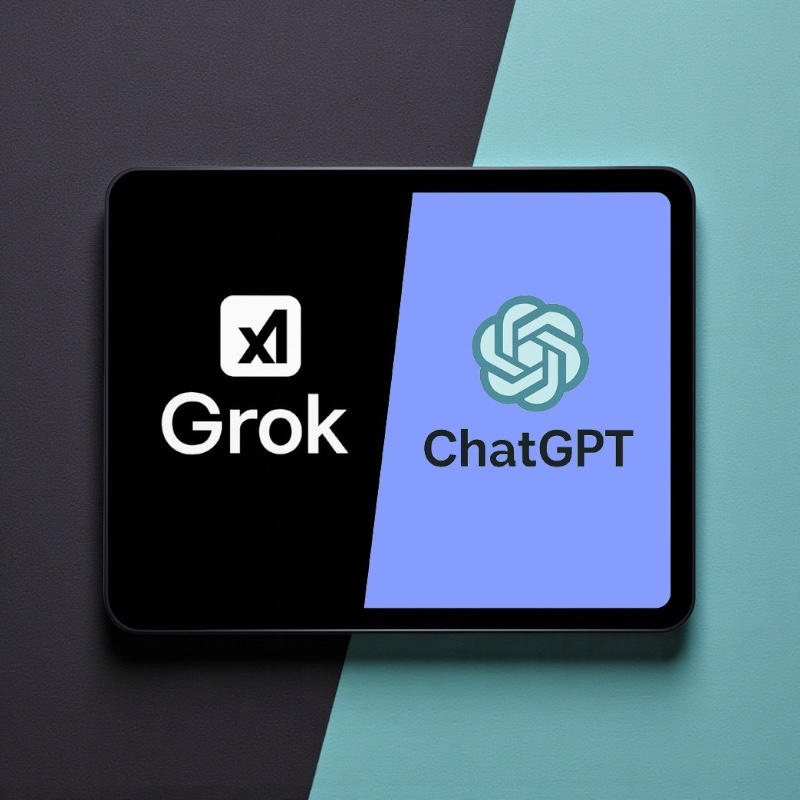
TL;DR: Grok 4.1 has personality and edge. GPT-5.2 has consistency, discipline, and better value. One feels like a conversation. The other feels like infrastructure.
GPT-5.2
I’ve been thinking a lot about why this particular AI comparison feels so charged, and I don’t think it’s just about benchmarks or pricing tiers or which model can solve Olympiad math problems without breaking a sweat. GPT-5.2 versus Grok 4.1 feels personal in a way most tech rivalries don’t, because it taps into two very different ideas of what AI is supposed to be for. Not what it can do, but what it should feel like to live with.
When GPT-5.2 launched, tucked neatly into OpenAI’s tenth anniversary celebrations, I didn’t rush to test it. That alone felt weird. A few years ago, a new GPT drop would have had me canceling plans. Now? I sighed, bookmarked the announcement, and finished my coffee. That’s not apathy—it’s saturation. AI is no longer a novelty. It’s infrastructure. And infrastructure doesn’t get graded on vibes. It gets graded on whether it quietly works when you need it most.
Grok 4.1, by contrast, still lives in the land of vibes. Elon Musk’s AI feels like it wants to be noticed. It has opinions. It has tone. Sometimes it even has a little bite to it, like it’s daring you to disagree. There’s a rebellious streak baked into Grok’s identity, the sense that it’s here to poke the establishment, not become it. And I get why people love that. In a sea of increasingly polite, safety-rounded assistants, Grok feels human in the way a slightly obnoxious friend feels human.
GPT-5.2 doesn’t care if you think it’s cool.
That’s the first thing I noticed after spending real time with it. It doesn’t posture. It doesn’t wink. It doesn’t try to be your buddy. It shows up, does the work, and waits for the next task. If Grok feels like a conversation, GPT-5.2 feels like a collaboration. It’s less interested in entertaining you than in understanding what you actually want—and then executing with minimal drama.
Grok 4.1
This difference becomes painfully obvious the moment you stop playing and start relying.
Benchmarks tell one version of that story. On paper, GPT-5.2 clobbers Grok 4.1 across most major tests. Creative writing scores aren’t just higher; they’re in a different weight class. Reasoning and general knowledge benchmarks tilt heavily in OpenAI’s favor. Even in domains where Grok performs admirably, GPT-5.2 tends to edge ahead with more consistency. And yes, a lot of this data is self-reported right now, which should always raise an eyebrow. But when every arrow points the same way, it’s hard to dismiss.
Still, benchmarks are sterile. They don’t capture the tiny frustrations that add up over hours of use. They don’t measure how often you have to rephrase a prompt, or how frequently an answer veers off into unnecessary theatrics. That’s where my own experience kicked in.
GPT-5.2 is boring in the way good tools are boring. It respects constraints. It remembers context without clinging to it. It doesn’t argue with your premise unless you ask it to. When you tell it to match a specific tone or structure, it doesn’t reinterpret that request as a suggestion. It follows instructions like it understands that your time matters.
Grok 4.1, meanwhile, sometimes feels like it’s auditioning. It’s clever, occasionally incisive, and undeniably fun—but it can also be slippery. It pushes back when you don’t want pushback. It embellishes when you asked for precision. There are moments when that spark leads to genuinely interesting results. There are others where you just want to grab it by the shoulders and say, “Please. Just answer the question.”
This tension carries over into availability and ecosystem reach. On the surface, both GPT-5.2 and Grok 4.1 are equally accessible. You pay, you log in, you chat. But ChatGPT has quietly embedded itself into the digital environment in a way Grok hasn’t yet matched. GPT-5.2 isn’t just something you visit; it’s something you bump into everywhere. Productivity tools, creative workflows, enterprise systems, APIs—it’s already there, waiting. Grok still feels more like a destination than a layer.
Multimodal features don’t really shift the balance. Both platforms can generate images. Both can produce video through companion tools. Neither is leading the pack in visual generation, and that’s fine. These features feel supplemental rather than essential. Nice to have, not reasons to subscribe.
Pricing, though, is impossible to ignore. GPT-5.2 lives behind a $20 monthly ChatGPT subscription. Grok 4.1 asks for $30 at the entry level. That ten-dollar gap isn’t massive, but it’s symbolic. When the cheaper option also happens to be the more reliable one, the math becomes very simple. Value isn’t just about features; it’s about how much friction you’re willing to tolerate for the money you’re spending.
After extended use, I realized something that surprised me: I trusted GPT-5.2 more. Not because it dazzled me, but because it didn’t. I stopped second-guessing its outputs. I stopped double-checking whether it misunderstood the brief. It faded into the background, which is exactly what a tool should do when it’s working well.
Grok 4.1 still has a place. It’s engaging. It’s bold. It feels culturally aware in a way that resonates with certain users. But GPT-5.2 feels inevitable. Like the thing that slowly replaces half your workflow without ever announcing that it’s doing so.
Verdict
GPT-5.2 doesn’t win by being louder or more charismatic. It wins by being steadier, cheaper, and more dependable across real-world use. Grok 4.1 remains an interesting, sometimes delightful alternative, but GPT-5.2 feels like the model designed for the long haul—the one you quietly come to rely on without even noticing.