TL;DR: Stylish, engaging in short bursts, and occasionally satisfying, but too repetitive and shallow to justify the climb.
Full Metal Schoolgirl
There’s something about the words “Full Metal Schoolgirl” that promise chaos. You hear it and you already know you’re stepping into a world that runs on overclocked anime energy, the kind of game that should leave your retinas buzzing and your neurons somewhere between exhilarated and exhausted. And to its credit, Full Metal Schoolgirl does start that way—it bursts out of the gate like a caffeinated opening credit sequence from a mid-2000s J-rock-fueled mecha show. The colors, the speed, the sheer brashness of it all feel like an old-school anime fan’s fever dream made playable. But somewhere between the first few runs and the fiftieth identical corridor, the dream curdles into a grind. I wanted to love it. I wanted to be that person in the corner of Discord yelling, “No, seriously, this game gets good once you unlock the plasma hammer!” But alas—sometimes the vibes just aren’t enough.
I’ve played a lot of roguelikes. Enough to know that when one starts to bore you by run number three, that’s a bad omen. The whole point of the genre is surprise: new synergies, new maps, new ways to feel like an underdog punching above your weight class. But Full Metal Schoolgirl doesn’t believe in surprise. It believes in spreadsheets disguised as levels—a series of sterile hallways and cube-shaped rooms that all feel like they were procedurally generated by an intern with a hangover. Every few floors you’re rewarded with another chunk of Maternal Jobz Corporation’s soulless architecture, and the game really wants you to care about its satire of late-stage capitalism. Robots are literally called “the working dead,” and the girls are out to avenge their overworked father. It’s not a bad setup! It just never grows beyond a blunt punchline stretched across 100 floors of repetition.
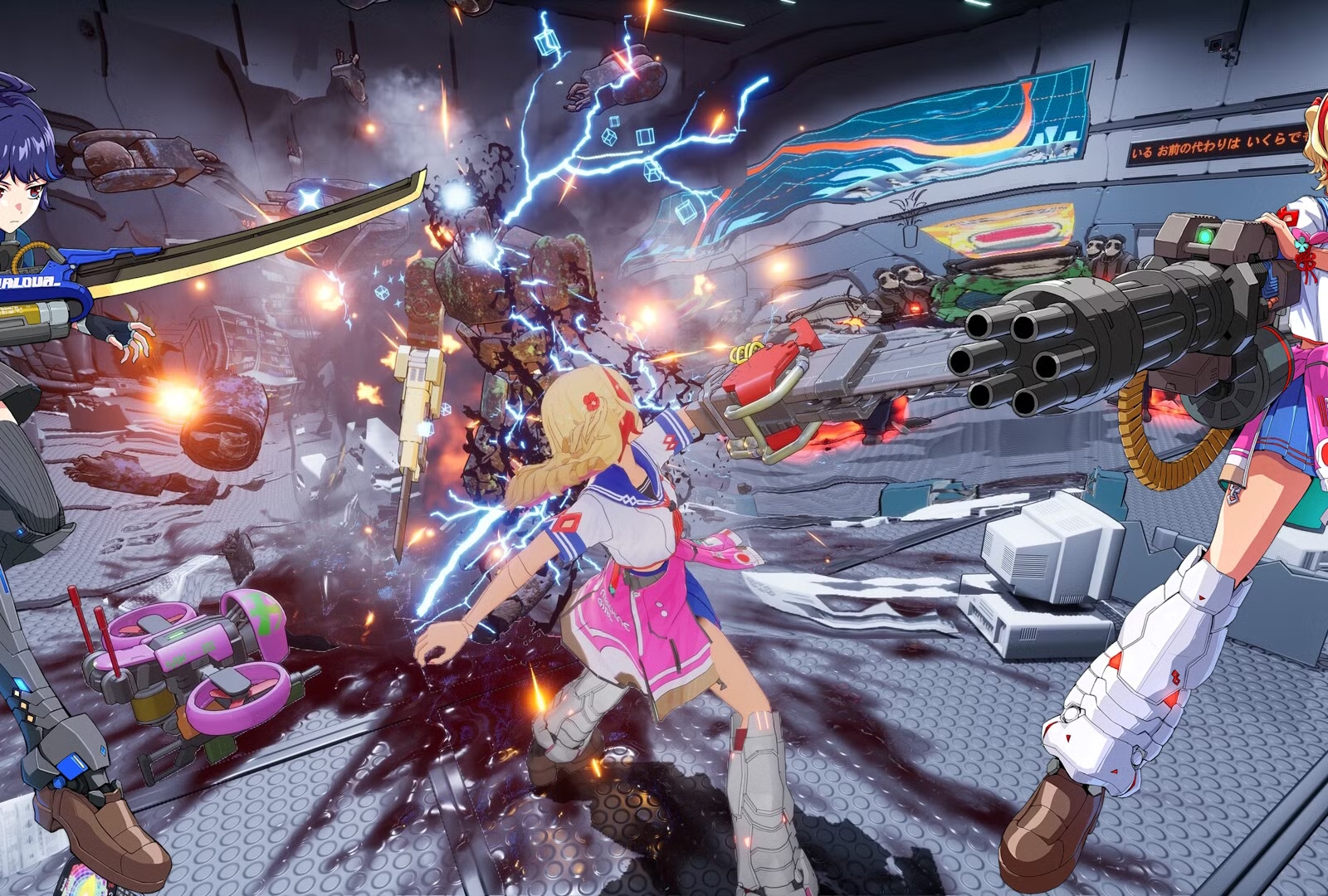
I started as Ryoko because her design had that perfect blend of punk rebellion and tragic backstory energy. Akemi, her sister in arms (and depending on your choice, the one who gets captured), gets taken by the corporation early on, and that’s the last time the story really feels like it has stakes. The game sets itself up like Hi-Fi Rush—sharp, stylish, anti-corporate energy with humor and heart. But where Hi-Fi Rush rode its rhythm all the way to catharsis, Full Metal Schoolgirl sputters out after its second joke about overworked office bots. It’s not that I mind anime tropes; I live for that mix of melodrama and mecha nonsense. What I mind is when they’re deployed like checkboxes—some awkward humor here, some quirky dialogue there, and a lot of chatter that doesn’t add much personality. You get the sense that the writers were torn between parodying anime and desperately wanting to be one.
What makes it all the more frustrating is that the combat could’ve been something. Every once in a while, amid the chaos, you feel the potential snap into focus. You dash through a cluster of drones, swing your energy blade in an electrified arc, and unload a charged SMG blast into a boss’s shield. For half a second, the screen explodes with color, particle effects, and that sweet little hit feedback that every shooter dreams of perfecting. It’s bliss—and then it’s gone, buried again under the monotony of another twenty floors that look and play exactly the same.
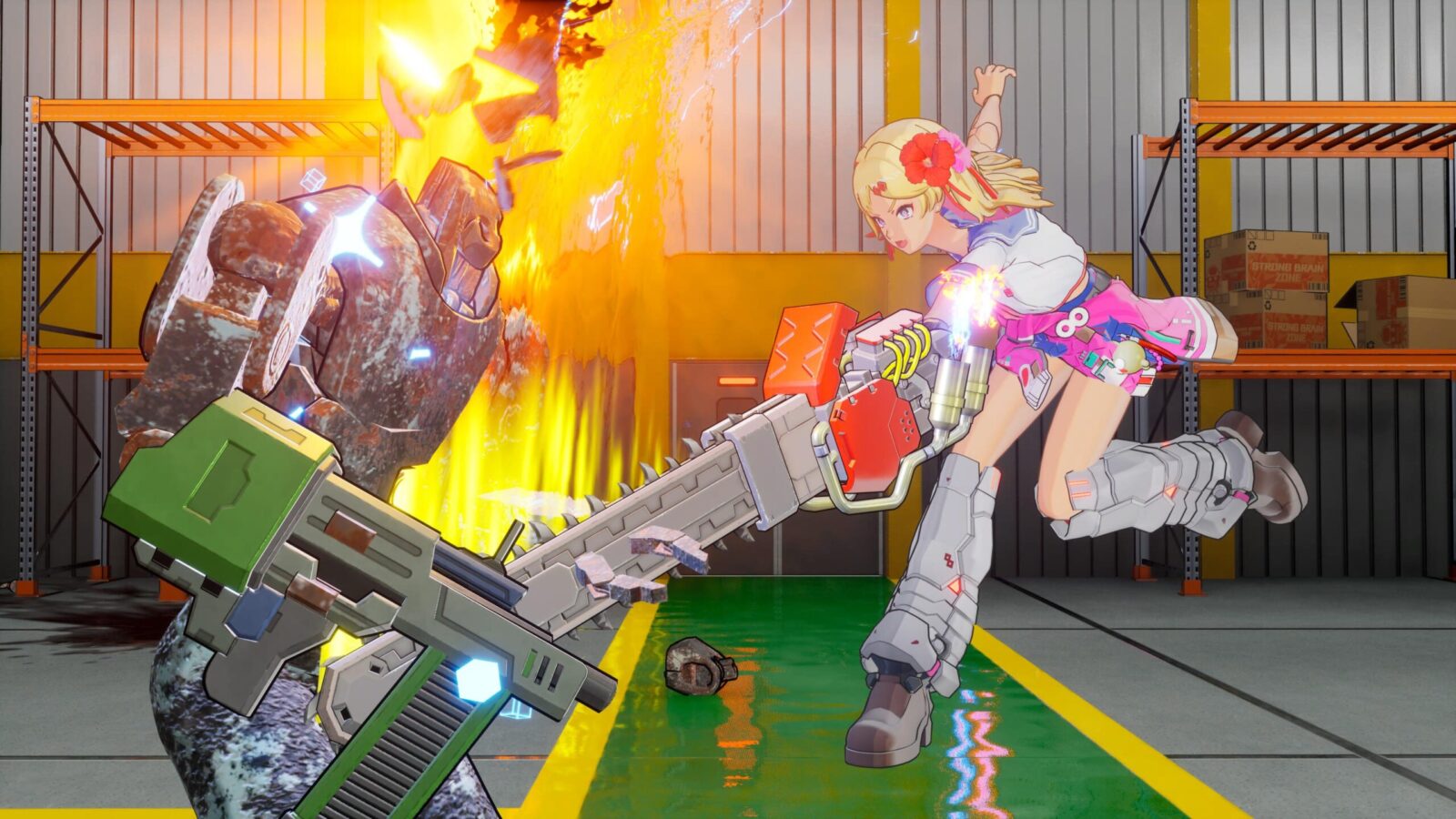
It’s almost cruel how Full Metal Schoolgirl teases you. The moment you think, “Oh, maybe it’s picking up!” it tosses you back into procedural purgatory. Empty rooms, broken door logic, challenges that make no sense. The level design feels like someone pressed “randomize” one too many times in Unity. Sometimes you open a door and there’s just… nothing. Not a collectible, not a trap, not even a mildly sarcastic NPC. Just existential digital void. It’s the gaming equivalent of walking into an empty conference room during a work meeting—you’re not sure if you missed something important or if the world itself forgot you.
Still, I kept going. Because that’s what roguelikes do to you. They whisper, “Just one more run,” and suddenly it’s 3 a.m., your eyes are fried, and you’re emotionally invested in a random stat roll on a plasma cannon. Full Metal Schoolgirl has flashes of that hypnotic pull—the part of your brain that loves optimizing, tinkering, and mastering systems. But the systems here are half-baked. The progression feels less like discovery and more like filing taxes. Every upgrade requires money you earn by grinding through identical enemies. Every failed run means trudging back through the same copy-paste floors. And while it tries to add stakes by making checkpoint keys single-use, it just ends up punishing your time more than your skill.
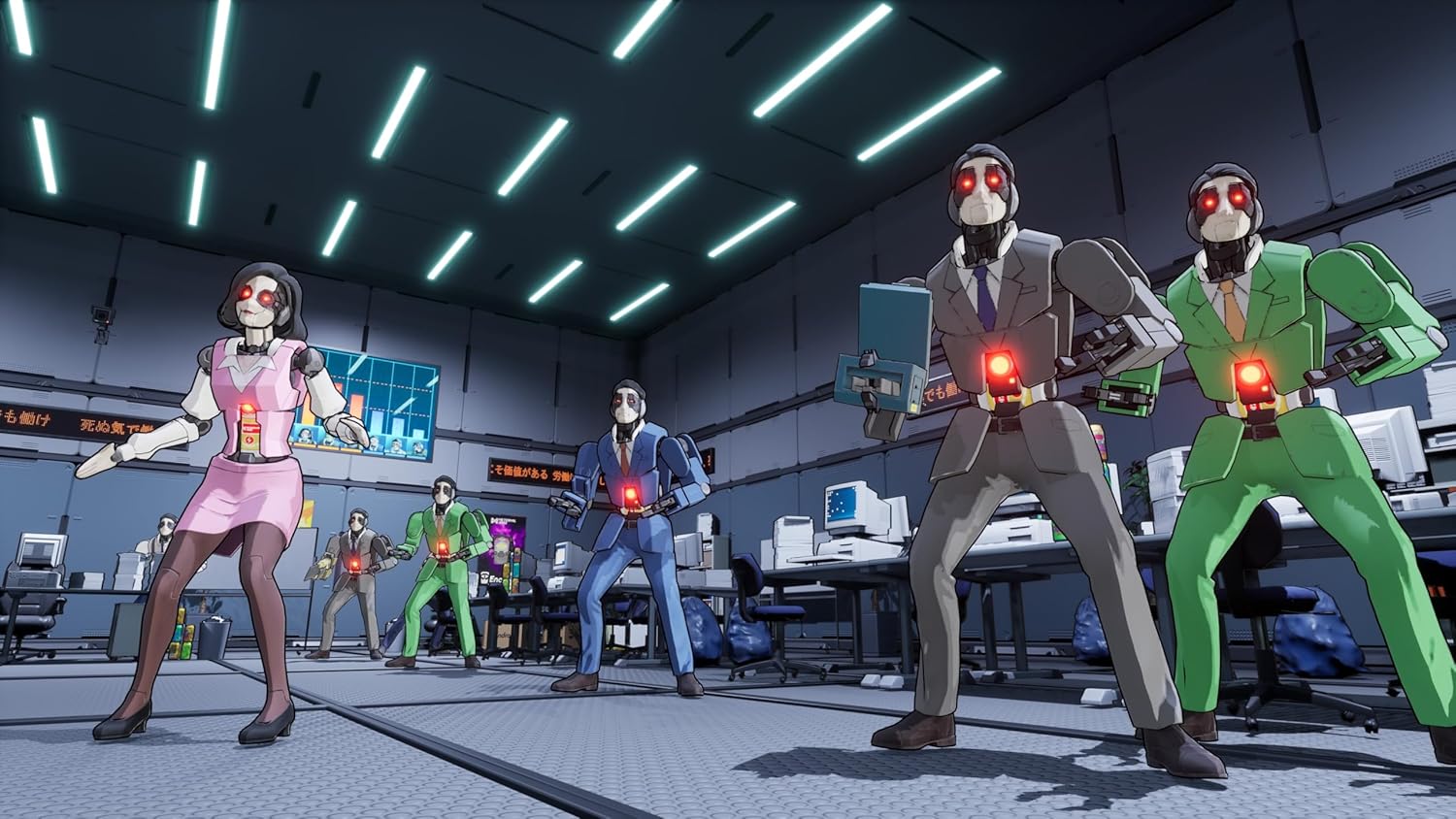
Let’s talk bosses, though. Because if there’s a sliver of redemption in Full Metal Schoolgirl, it’s in those moments where the music swells and a massive mechanical nightmare drops in from the ceiling. Suddenly, the flat lighting gives way to dynamic shadows, the attacks have patterns worth memorizing, and the game almost feels like it’s been saving its energy just for these encounters. They’re not revolutionary—most have painfully predictable tells—but at least they demand your focus. Dodging area-of-effect blasts, timing your Punishment attack, managing your overheating SMG—those are the times when the game actually clicks. You glimpse what it could’ve been if it had more confidence in its own spectacle.
But then the boss dies, you get your one-use checkpoint key, and you know what’s next: back to another thirty floors of tedium. It’s like watching a brilliant anime director forced to pad their show with filler episodes until the next big fight. You want to scream, “Let the cool parts breathe!” but the game just shrugs and hands you another corridor.
I don’t mind grindy games. I play Destiny. I have willingly farmed loot in Borderlands until my thumbs hurt. But grind has to have a rhythm, a sense of flow and reward that makes each loop feel worthwhile. Full Metal Schoolgirl doesn’t. It mistakes endurance for engagement. It makes you work, but it rarely gives back. The procedural floors don’t evolve, the enemies don’t surprise, and even the loot feels insultingly random. I cleared challenge rooms only to be rewarded with common-level gear that felt like a cruel joke. By hour ten, I wasn’t playing to win anymore—I was playing to see if anything would change. Spoiler: it didn’t.
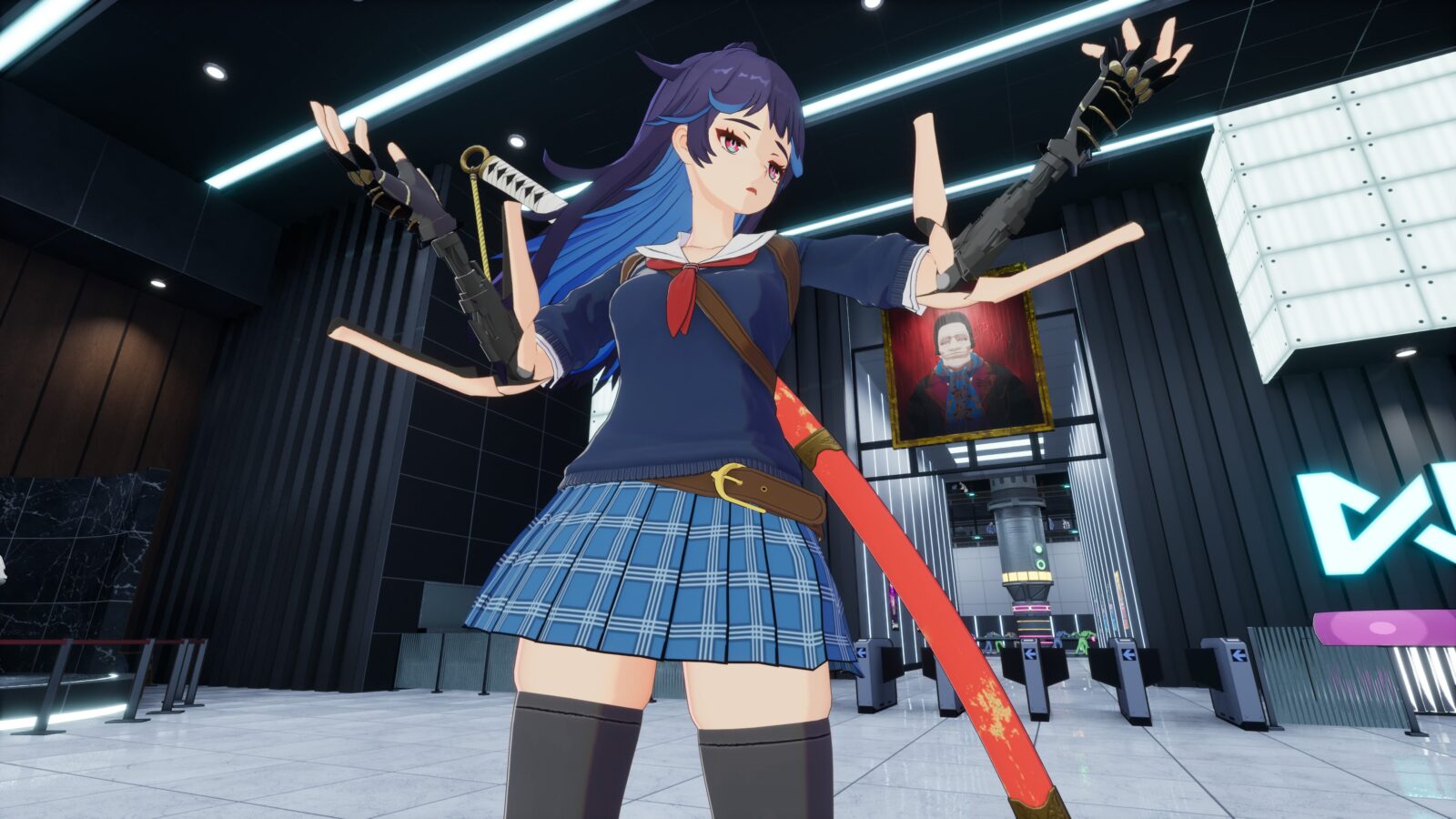
Still, I can’t fully hate it. There’s an earnestness buried somewhere under the repetition. The developers clearly love anime. They love cyborg heroes with impossible energy and righteous fury. They love anti-capitalist metaphors, even if they’re painted with the subtlety of a PowerPoint. And when the weapons hit right—the electric chaingun that hums with power, the plasma launcher that feels like firing a sunbeam—you can almost forgive it. Almost.
The last stretch of the game is where that “almost” turns into fleeting satisfaction. The enemies get tougher, your weapons finally start synergizing, and for a brief, shining window of time, it all works. Managing your energy meter, timing your dashes, deploying your auto-attack drone in sync with a perfectly aimed axe combo—it all feels like the anime action game it promised to be. You can sense the ghost of something great haunting its shell.
But then it ends. And you realize that for every hour of brilliance, there were ten of monotony. Full Metal Schoolgirl is a tower climb where the view from the top never justifies the stairs. I finished my final run, sat back, and felt nothing but relief. Not triumph, not pride—just the weary sigh of someone who stuck with a show that should’ve ended six episodes earlier.
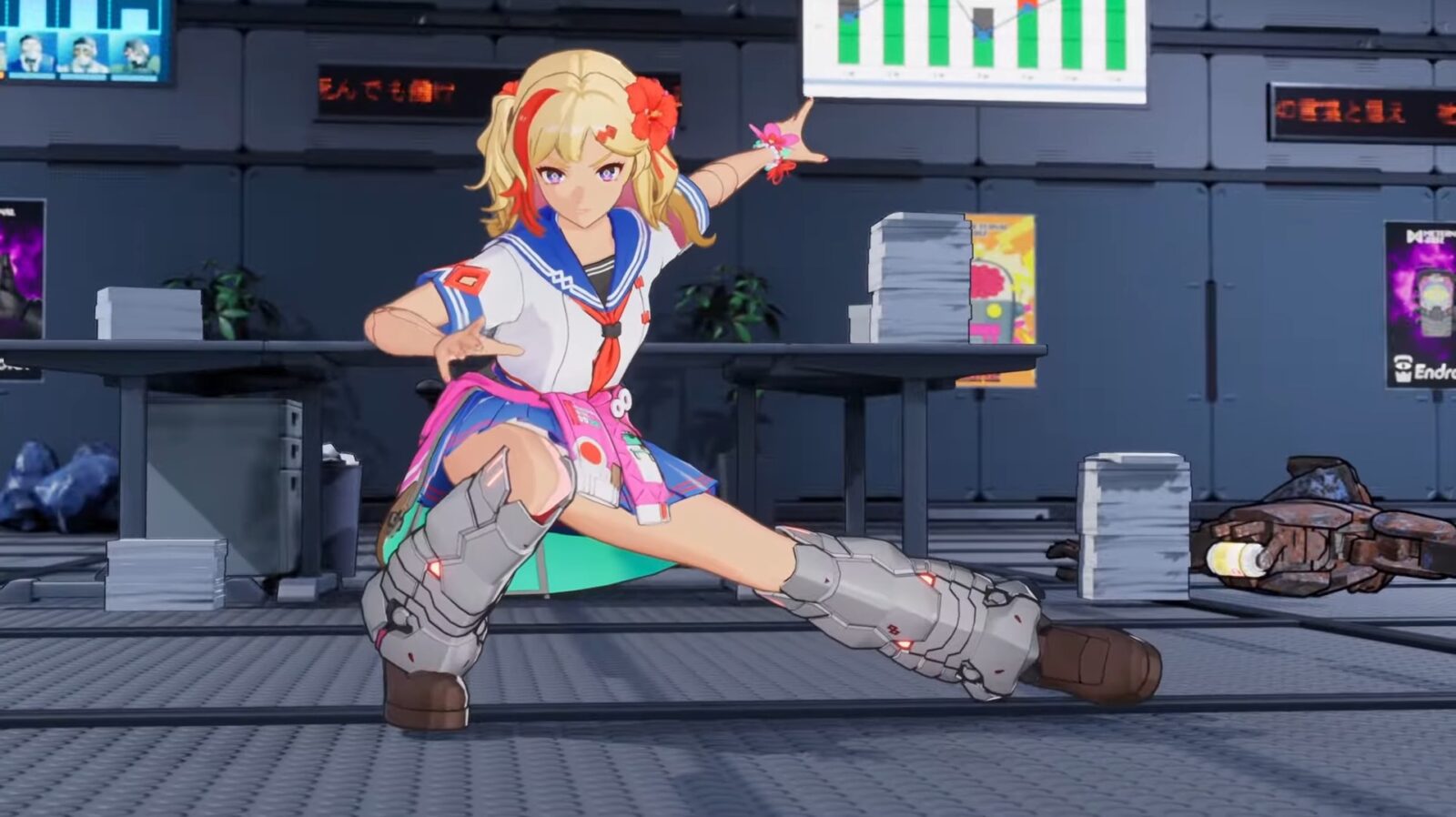
Full Metal Schoolgirl is proof that style can only carry you so far. Its heart beats with anime passion, but its structure is pure tedium. It wants to be both satire and celebration, both shooter and roguelike, but it never quite commits to any of it. I respect its ambition, even as I resent its execution. In another universe, with tighter level design, smarter progression, and dialogue that doesn’t make you cringe every ten minutes, it could’ve been a cult classic. Instead, it’s just another entry in the ever-growing pile of games that almost had it.
VERDICT
Full Metal Schoolgirl is an exhausting loop dressed up in neon aesthetics and half-baked rebellion. There’s some mindless fun buried in the grind, and the late-game combat finally delivers flashes of the kinetic anime chaos it promises. But for most of its runtime, it’s a repetitive slog that mistakes quantity for quality. I wanted to love it—instead, I walked away tired.