
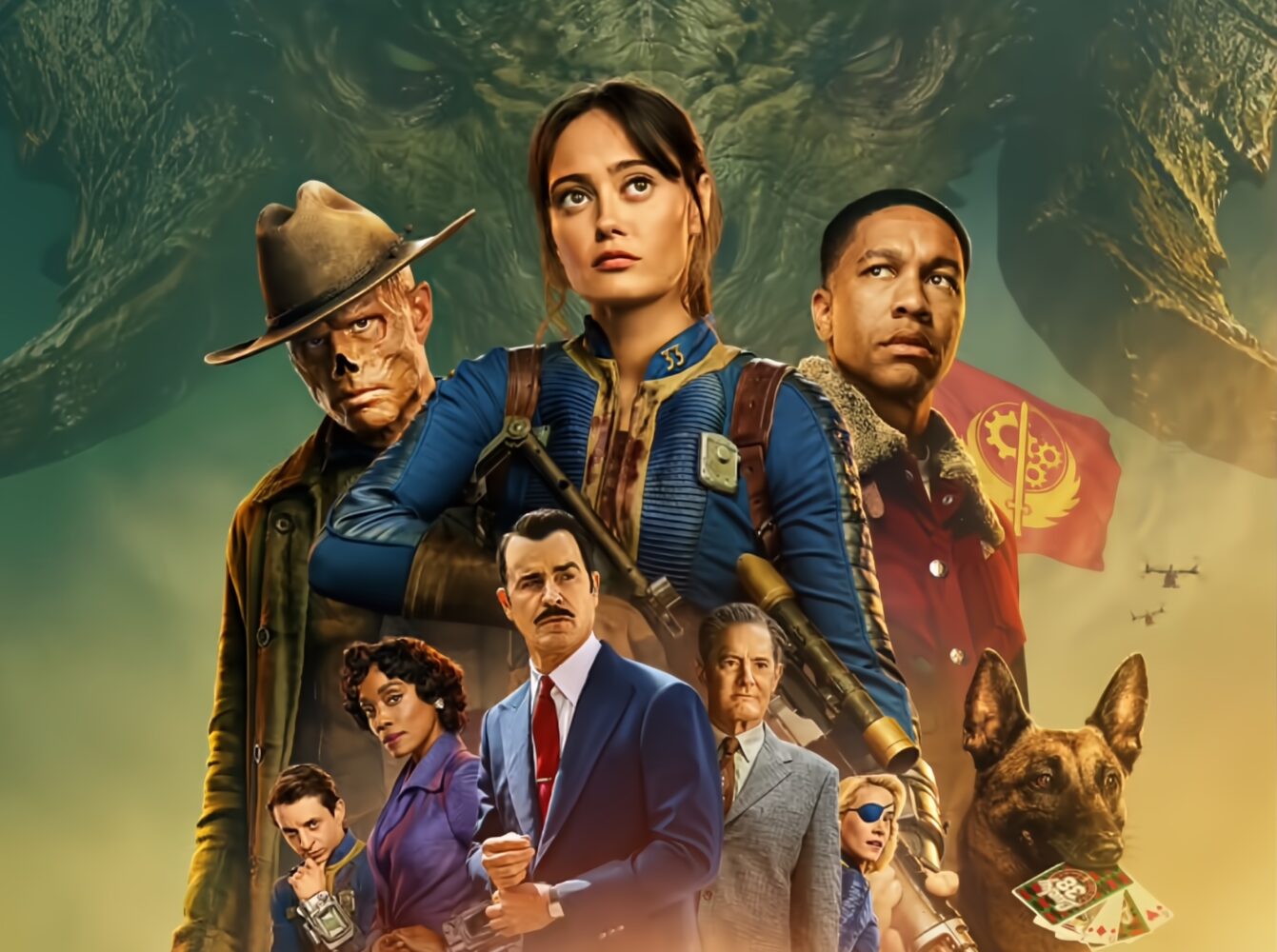
TL;DR: Fallout Season 2’s finale brings every major character to Vegas for an emotionally rich, thematically dense ending that embraces moral ambiguity, big sci-fi ideas, and character-driven storytelling. It sets up Season 3 beautifully without sacrificing the soul of the series.
Fallout Season 2
I’ve been thinking about the Fallout Season 2 finale for a solid day now, which is usually my personal litmus test for whether a TV episode really landed or just detonated a bunch of spectacle and left a mushroom cloud of emptiness behind. “The Strip,” the Season 2 finale of Fallout, is not empty calories television. It’s a full-course irradiated feast. It’s messy, ambitious, emotionally loaded, and unapologetically nerdy in the exact way this adaptation has always promised it would be.
If Season 1 was about proving Fallout could exist outside the confines of a controller and HUD, Season 2 is where the show finally starts acting like it owns the Wasteland. And this finale is the moment where all those dangling plot threads, moral compromises, and half-buried traumas collide in Vegas like a drunken Deathclaw crashing a blackjack table.
What impressed me most isn’t just that everyone ends up in the same city. It’s that everyone ends up exactly where they’re supposed to be, thematically and emotionally, even if that place is deeply uncomfortable.
Vegas isn’t just a location here. It’s a pressure cooker.
The finale opens by reminding us of one of Fallout’s oldest truths: ideology never dies, it just finds a new idiot to wear the crown. Caesar’s Legion imploding and immediately re-forming around Lacerta Legate is Fallout dark comedy at its finest. Of course the man kills a witness, eats the note, and declares continuity of power. Of course the soldiers chant like nothing changed. Fallout has always understood that authoritarianism is basically a brand logo you slap on a new skull.
But the real beating heart of Vegas is Robert House, played with icy, terrifying calm by Justin Theroux. This version of House is everything I wanted and feared he’d be. He’s not a cackling villain. He’s worse. He’s a man who genuinely believes he is the only adult in a world full of children smashing toys together.
House’s conversations with the Ghoul are some of the most philosophically loaded scenes the show has ever done. Cold fusion diodes, investor vaults, planetary-scale destruction. This is Fallout fully leaning into big sci-fi ideas without forgetting that the real horror is control, not explosions.
When House says everyone works for him eventually, it doesn’t feel like a threat. It feels like a mission statement.
If Season 2 belongs to anyone, it’s Walton Goggins. The Ghoul’s arc this year has been a slow, painful excavation of Cooper Howard, and the finale finally rips the wound all the way open.
The flashbacks are devastating not because of spectacle, but because of inevitability. Cooper answering that ringing phone is one of the cruelest moments the show has pulled off. It’s quiet. It’s mundane. And it destroys his life more thoroughly than any nuke ever could.
House telling Cooper he bet on hope and lost is the thesis statement for Fallout as a franchise. Hope is dangerous here. Hope gets weaponized. Hope gets sold to investors, governments, and shadow organizations like the Enclave, who lurk in the background of this entire episode like a corporate ghost story.
When the Ghoul finally reaches the vault and finds it empty, I felt that hollow pit in my stomach that Fallout fans know too well. The loot room is empty. The quest reward is a note. But that postcard to Colorado is everything. It’s proof of life, yes, but more importantly it’s proof of choice.
When the Ghoul removes the Pip-Boy and walks away from House, it’s the first time in 200 years he stops letting someone else define reality for him. That’s not just character development. That’s liberation.
Ella Purnell continues to be the secret weapon of this show. She plays Lucy’s transition from Vault optimism to surface pragmatism with heartbreaking precision.
The moment with the disembodied head of Representative Welch is pure Fallout nightmare fuel. It’s absurd, grotesque, and deeply sad. Lucy killing her isn’t framed as heroism or cruelty. It’s necessity. That’s the line Lucy crosses here. She doesn’t abandon her morals. She weaponizes them.
Hank, meanwhile, is revealed as something far more dangerous than a liar. He’s a believer. Miniaturization, automation, behavioral control. This is Vault-Tec ideology stripped of its cheerful branding. When Lucy implants the mind-control device into her own father, it’s one of the boldest choices the show has made. She doesn’t kill him. She rewrites him.
Fallout has always asked whether control is kinder than chaos. This episode doesn’t answer the question. It forces Lucy to live inside it.
Maximus’ arc this season has been about impostor syndrome wrapped in power armor, and the finale finally lets Aaron Moten step fully into mythic territory. The Deathclaw fight in Freeside is gloriously unhinged. Rockets misfiring, suits sparking, townsfolk placing bets like it’s a blood sport. This is Fallout embracing its pulp roots without irony.
But what elevates the sequence is Maximus ditching the armor. The roulette wheel. The stick. The memory of his father telling him he’d be a good man. That’s the core of the character. Power doesn’t make the hero. Choice does.
The arrival of the NCR is deliberately anticlimactic. They don’t celebrate Maximus. They replace him. Fallout reminding us, once again, that legends don’t matter to systems.
Lucy and Maximus reuniting outside the Lucky 38 should feel triumphant. It doesn’t. It feels fragile. Two people holding hands at the edge of a war they accidentally helped start. Vegas looming below them, House watching, the Legion approaching, the Enclave listening.
That final shot of House’s face on the monitor is chilling because nothing was resolved. Fallout isn’t about closure. It’s about consequences.
Even the post-credits stinger with Liberty Prime Alpha is less fan service and more warning. The Brotherhood didn’t learn anything. They just built a bigger god.
Verdict
“The Strip” is Fallout at its most confident and its most honest. It juggles multiple timelines, philosophies, and character arcs without dropping the ball, while still finding time to be funny, horrifying, and deeply human. It doesn’t simplify its world to make a cleaner ending. It complicates it. That’s the right choice.
Season 2 ends not with answers, but with direction. And in the Wasteland, direction is hope.