

TL;DR: Drops of God Season 2 opens with a visually stunning, emotionally restrained premiere that leans harder into character, obsession, and legacy than ever before. An Unexpected Gift is slow, sumptuous, and quietly devastating — a confident reminder of why this series is one of Apple TV+’s most unique dramas.
Drops of God season 2
I’ll be honest: I was a little nervous going into the Season 2 premiere of Drops of God. Three years is a long time in TV years, especially for a show that lives and dies on mood, subtlety, and the kind of sensory storytelling that can’t be rushed or faked. Prestige dramas don’t usually come back better after a hiatus. They come back louder, or dumber, or weirdly unsure of themselves. But Episode 1 of Season 2, An Unexpected Gift, immediately put those fears to rest by doing the most Drops of God thing imaginable: opening with near-total darkness, almost no sound, and a sequence so visually precise that I genuinely forgot to blink.
This premiere doesn’t announce itself with plot twists or bombast. It whispers. It glides. It lets craftsmanship do the talking. And somehow, that makes it feel even more confident than Season 1 ever did.
The opening free-diving sequence with Issei is a masterclass in visual restraint. There’s no dramatic score telling you how to feel, no frantic cutting, no obvious threat. Just water, darkness, and the quiet panic of a man descending deeper than he probably should. Tomohisa Yamashita plays this scene almost entirely internally. You can feel Issei’s obsession radiating off him, the way he’s pushing himself not for sport or science but for meaning.
What makes this scene so effective is how it reframes danger. The threat isn’t a shark or a cave-in. It’s the void. The possibility that there’s nothing down there except silence, and that silence might answer back. The fact that the show can make a man floating in dark water feel more harrowing than most action sequences says everything about the level of control the creators have over tone.
This descent isn’t just a cool visual flex. It’s a thesis statement for Issei’s entire arc this season. After losing the competition in Season 1, he’s untethered. Purpose has slipped through his fingers, and he’s desperately trying to replace it with something equally consuming. Wine becomes that something. Diving becomes that something. Anything to avoid sitting still with the idea that he might not be special.
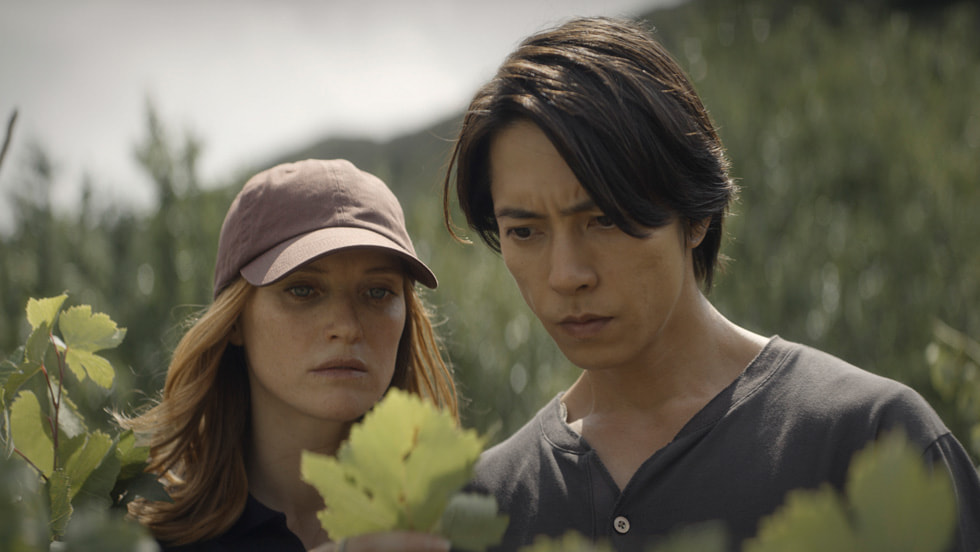
On the other side of the emotional spectrum is Camille, portrayed once again with devastating restraint by Fleur Geffrier. If Issei is drowning in the need to prove himself, Camille is suffocating under legacy. The Chassangre estate in Provence is beautiful, serene, and haunted. Every row of vines feels like a reminder that her father is gone, but also impossible to escape.
What I love about how Season 2 handles Camille so far is that it refuses to let her “win” in any conventional sense. Yes, she won the competition. Yes, she’s technically the heir to Alexandre Léger’s wine legacy. But emotionally, she’s stuck. The vineyard isn’t freedom; it’s a monument. Even her attempts to modernize it into a sustainable operation feel like acts of quiet rebellion against a ghost who still dominates every conversation.
The birthday gathering should be warm, even celebratory. Instead, it’s tense in that uniquely familial way where everyone is polite but nobody is comfortable. Issei’s resentment simmers just beneath the surface. Hirokazu’s presence complicates everything. And then Talion drops the emotional equivalent of a grenade on the table.
The bottle Alexandre left behind is one of the most elegant MacGuffins I’ve seen in a while. It isn’t just rare or expensive. It’s mythical. The ambrosia of the gods. A wine Alexandre spent his entire life trying, and failing, to trace. By passing that task on to the winner of the competition, he’s effectively turning victory into a burden.
This is where Drops of God flexes its greatest strength: making wine feel cosmic. The tasting scene between Camille and Issei, both wearing those gloriously hideous matching pajamas, is absurdly intimate. Two siblings, a single bottle, and an experience so profound it cracks reality open for Issei. The transition from sip to vision, from flavor to the Sea of Tranquility, is pure visual poetry. It’s the kind of sequence that reminds you why television can be art when it wants to be.
And crucially, the wine doesn’t mean the same thing to both of them. For Issei, it’s a calling. A new obsession. For Camille, it’s a reminder of everything she’s trying to move past. Her decision to pour the wine down the sink isn’t petulant or dramatic. It’s defensive. A refusal to let her father’s unfinished business define her life.
Once Camille rejects the quest, the episode shifts gears into something resembling a globe-trotting mystery, and it works surprisingly well. Issei becomes a wine detective, following paper trails and half-remembered stories across Europe. The auctioneer in Paris. The Lopez vineyard in Sanlúcar de Barrameda. The tragic story of Monsieur Poulenc, the collector whose obsession apparently consumed him.
There’s a beautiful irony here. Issei is chasing a mystery born of obsession, while being actively consumed by one of his own. The parallels aren’t subtle, but they’re effective. Every person he speaks to feels like a warning he refuses to hear.
The encounter with Audrey in the nursing home is quietly heartbreaking. She remembers the bottles. She remembers the trip. But the destination is gone, lost to time and trauma. This is what obsession leaves behind: fragments, not answers.
The Marseille diving sequence pushes Issei’s arc into genuinely dangerous territory. Natasha’s explanation of diver hallucinations being the result of oxygen deprivation is both scientifically grounded and thematically perfect. These visions aren’t mystical gifts. They’re warning signs. Issei doesn’t want transcendence; he wants escape.
The fact that he loses consciousness at just 17 meters is terrifying in a very grounded way. This isn’t him pushing human limits. This is a man ignoring his own body because he thinks meaning lies just beyond consciousness. Watching him pulled from the water and hospitalized feels inevitable, like gravity finally asserting itself.
The episode ends not with resolution, but with a quiet recalibration. Camille visiting Issei in the hospital and agreeing to help him doesn’t feel like surrender. It feels like love. She may not care about the wine, but she cares about him. And if he’s going to chase this impossible legacy, she won’t let him do it alone.
That final beat lands because it understands what Drops of God is really about. It isn’t wine. It isn’t competition. It’s inheritance — emotional, cultural, and familial — and the ways it shapes us whether we want it to or not.
An Unexpected Gift is a premiere that trusts its audience completely. It takes its time. It luxuriates in silence. It lets character drive mystery instead of the other way around. If this is the tone Season 2 is setting, then Drops of God hasn’t just returned. It’s deepened, matured, and sharpened its palate.